Delafield, Wisconsin · Lake Country
Garage doors built, installed and repaired the careful way.
Delafield Garage Door repairs what's broken, replaces what's worn out and installs new doors that suit the house they hang on. Springs, openers, custom wood, commercial overhead doors — one local crew handles all of it, and explains the work in plain language before it starts.
- Residential & commercial
- Repairs, openers & new doors
- Clear estimates before work begins
A local garage door company
The biggest moving thing on your house deserves some attention
Most people don't think about their garage door until the morning it refuses to open. Fair enough. It goes up, it comes down, and it does that well over a thousand times a year without asking for much. But a standard two-car door weighs somewhere between 150 and 250 pounds, and it's held in balance by springs wound tight enough to lift that weight with one hand. When something in that system wears out, you notice quickly.
That's the work we do. Delafield Garage Door looks after the doors on homes, shops and farm buildings in Delafield and the towns around it — from the older houses near downtown and the lake homes along Nagawicka to the newer subdivisions off Highway 83 and the hobby farms out toward Wales. Some days that means swapping a broken torsion spring before someone has to leave for work. Other days it's measuring an arched opening for a cedar carriage door that will take weeks to build.
Whatever the job, the approach stays the same: look at the whole door, find the actual cause, tell you what we found, and fix it properly.
How we workResidential garage door services
Everything a house door needs, start to finish
A garage door is a handful of systems working together: the door sections themselves, the springs and cables that counterbalance them, the track and rollers that guide them, and the opener that sets it all in motion. We service every one of those, on nearly any make of door. These are the jobs homeowners call about most.
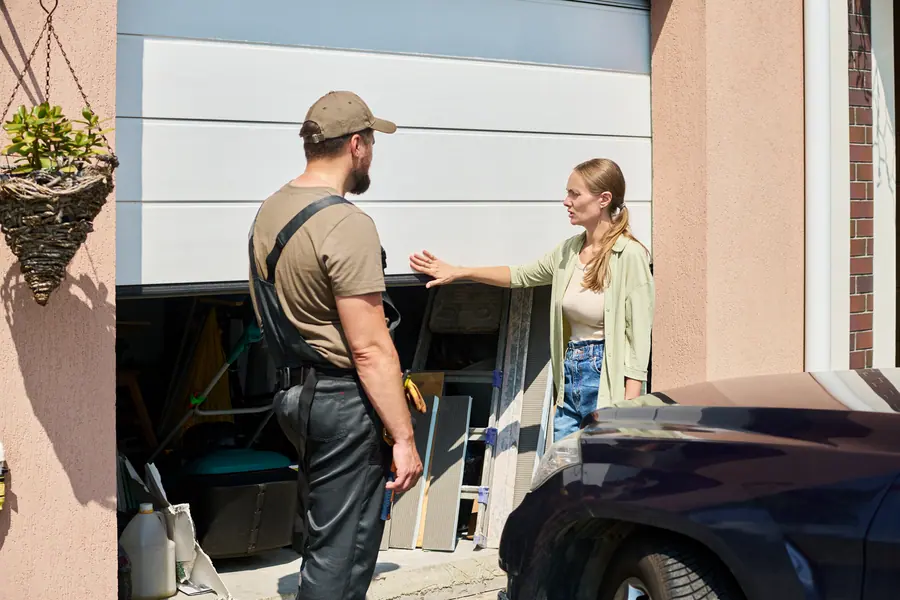
Garage Door Repair
Stuck, noisy, crooked or just not right. We diagnose the whole door and fix what's actually causing the trouble.
Learn more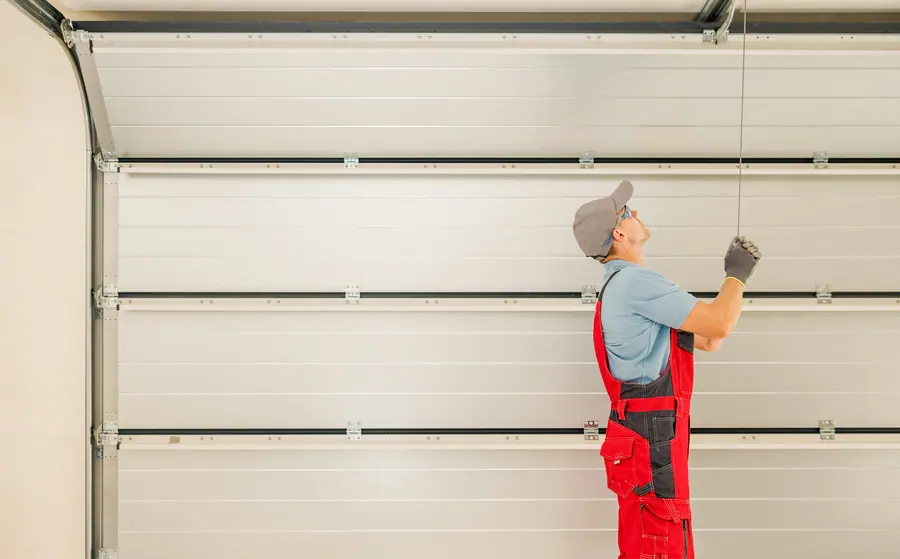
Broken Garage Door Spring Repair
Heard a bang and now the door won't lift? We install correctly sized springs and rebalance the door.
Learn more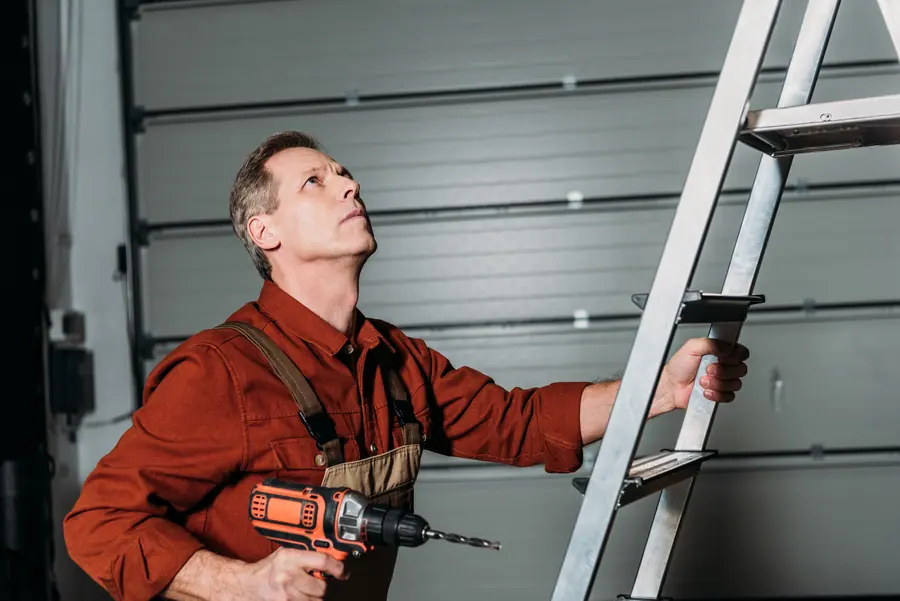
Garage Door Opener Repair
Dead motors, stripped gears, erratic behavior and remotes that don't respond — diagnosed and fixed.
Learn more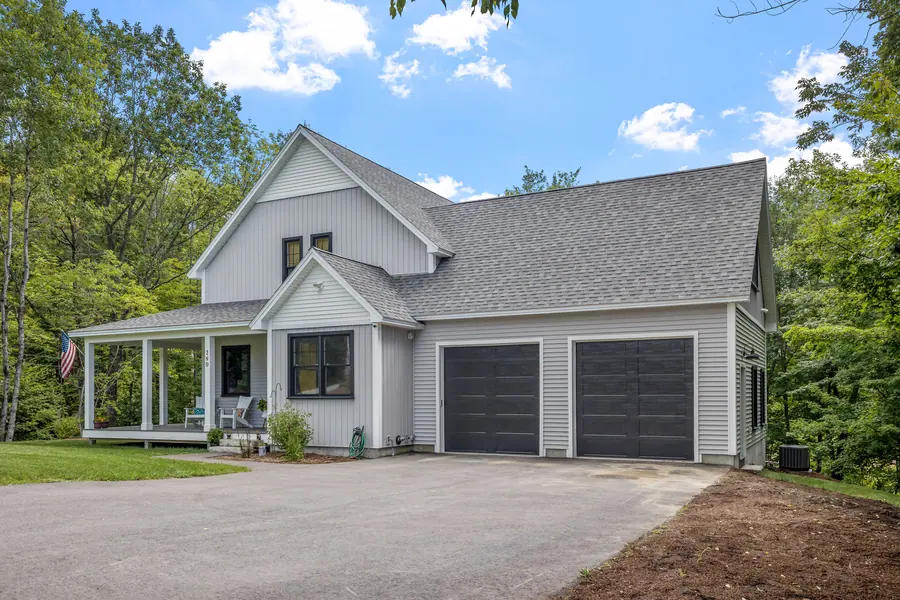
Garage Door Installation
New doors measured, installed, balanced and sealed — with guidance on style, insulation and hardware along the way.
Learn more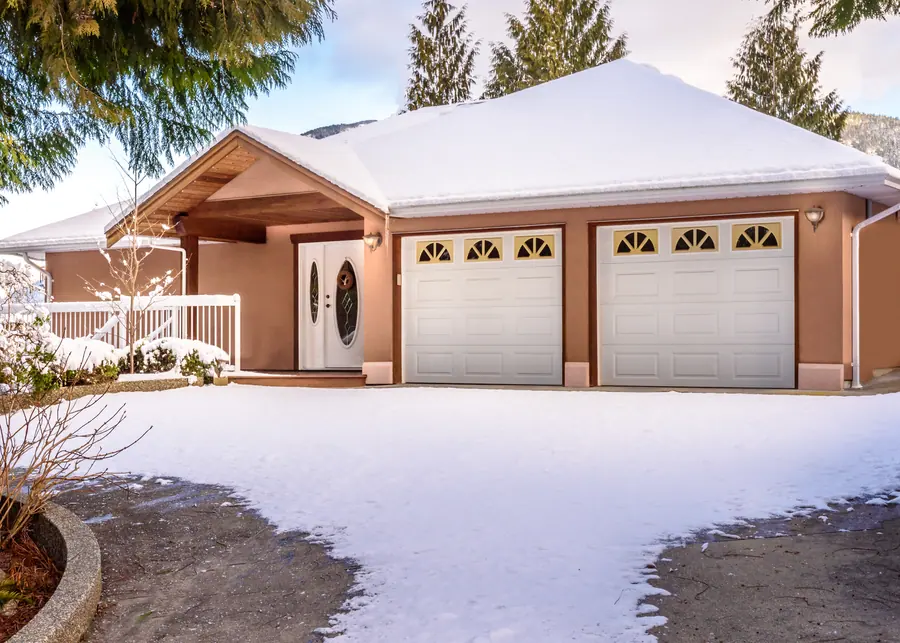
Insulated Garage Door Installation
Foam-core doors and tight seals that keep attached garages warmer, quieter and easier on the rooms beside them.
Learn more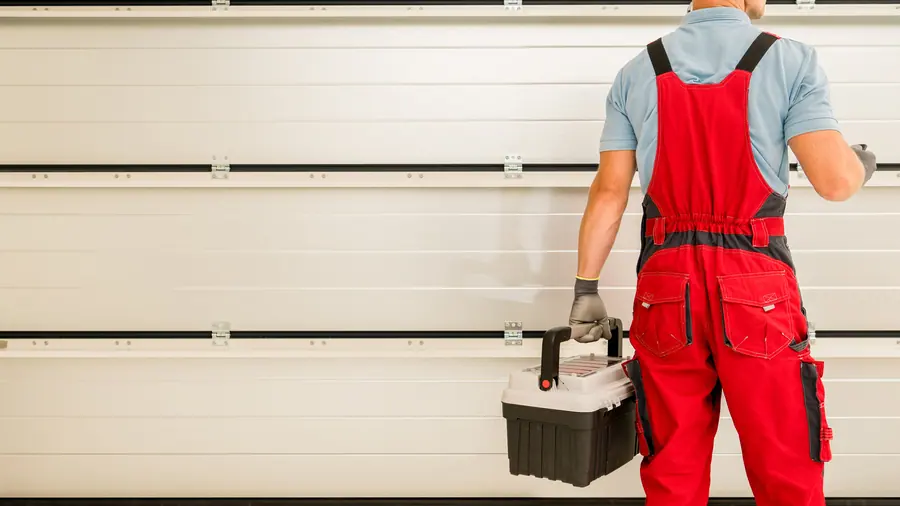
Garage Door Tune-Up & Maintenance
An hour of tightening, lubricating, balancing and testing that leaves the door noticeably quieter and smoother.
Learn moreGarage door installation
A new door, measured and hung right the first time
Installing a garage door looks simple from the driveway. Up close it's a job of small tolerances. The opening has to be measured in several places because very few are perfectly square, especially on older homes that have settled. Headroom and backroom decide which track and spring setup will fit. The springs have to be matched to the real weight of the finished door, glass and hardware included.
When we install a door we handle the whole sequence: measuring, helping you choose a construction and style that fit the house and your budget, removing and hauling away the old door if there is one, setting track plumb and level, winding and balancing the springs, and sealing the perimeter. Then we run the door by hand before the opener is ever connected, because a door that isn't balanced on its own will wear out any motor you attach to it.
Garage door installation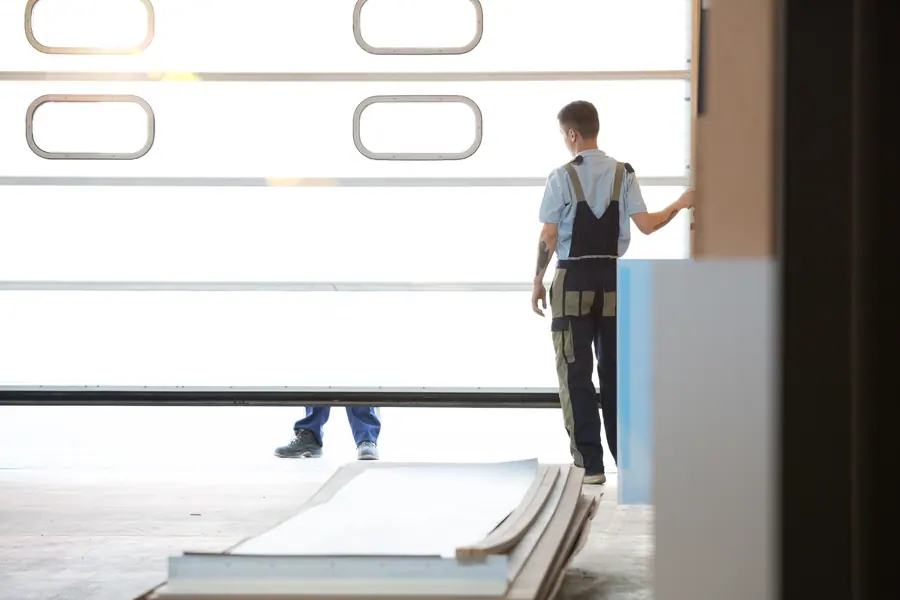
Garage door repair
Find the cause, then fix the door
A door that shudders, hangs crooked, reverses on the way down or simply won't budge is telling you something. The trick is working out what. A noisy door might need lubrication, or it might have a roller with a failed bearing chewing its way along the track. A door that feels heavy could have a tired spring — or a broken one you haven't spotted yet.
We start every repair visit by disconnecting the opener and operating the door by hand. That one step tells us most of what we need to know about balance, binding and worn hardware. From there we'll show you what's wrong, explain your options and give you a price before the repair begins. Common fixes include broken springs, frayed cables, doors off their track, worn rollers and damaged panels.
Garage door repair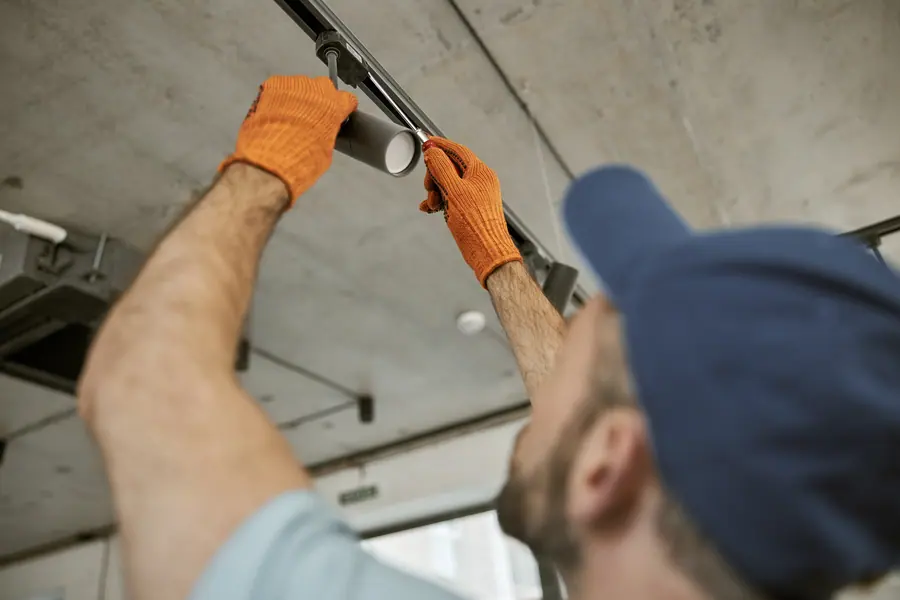
Garage door replacement
Knowing when repair has stopped making sense
We'd rather repair a good door than replace it, and we'll say so when that's the better call. But doors do reach the end. Steel skins rust through along the bottom section where road salt and slush sit all winter. Wood rots at the joints. Older uninsulated doors rattle in the wind and leak heat into January air. And sometimes the parts for a discontinued model simply can't be found anymore.
If the repair estimate is climbing toward the price of a new door, or you're patching the same door for the third time in two years, replacement usually wins on cost alone. It also changes how the front of the house looks — the garage door is often a third of what people see from the street. We'll walk you through honest numbers both ways so the decision is yours.
Garage door replacement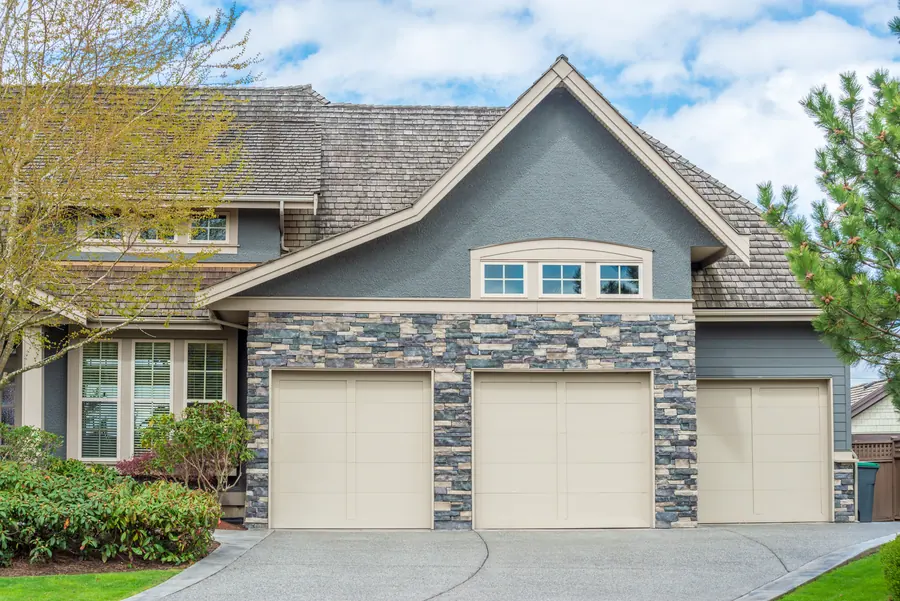
Garage door openers
Quiet, dependable openers — and the know-how to keep older ones running
The opener gets blamed for a lot of problems it didn't cause. In truth, a healthy opener on a balanced door has an easy life. When one does fail, it's usually a stripped drive gear, a worn-out capacitor, a logic board that took a power surge, or safety sensors that have been bumped out of line by a trash can.
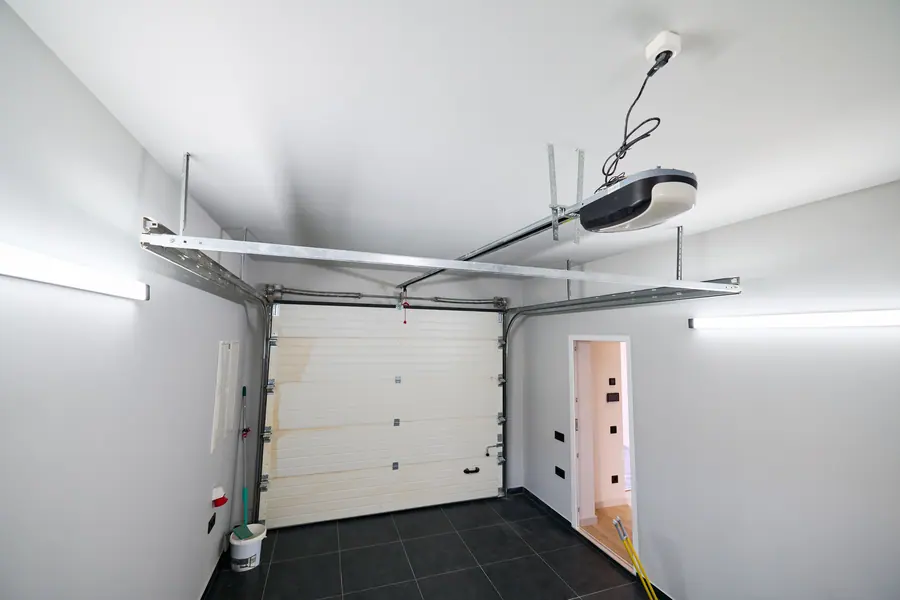
We repair those faults where it's worth doing, and we install new units when it isn't. Belt-drive openers are the quiet choice for garages under a bedroom. Chain drives are sturdy and economical. Wall-mounted jackshaft openers free up the ceiling entirely, which matters in garages with high-lift track or overhead storage. Most current models add Wi-Fi control, battery backup and motion-sensing lights.
- Opener repair and replacement
- Smart opener installation with phone control
- Safety sensor alignment and remote and keypad programming
- Battery backup for when the power goes out
Custom garage door solutions
Doors designed around the house, not picked off a rack
Delafield has more architectural variety than most towns its size. The downtown storefronts borrow from colonial Williamsburg. The lake roads mix century-old cottages with new timber-and-stone builds. In between you'll find farmhouses, Tudors, mid-century ranches and plenty of homes that don't fit a category at all. A stock white raised-panel door suits some of them. On others it looks like an afterthought.
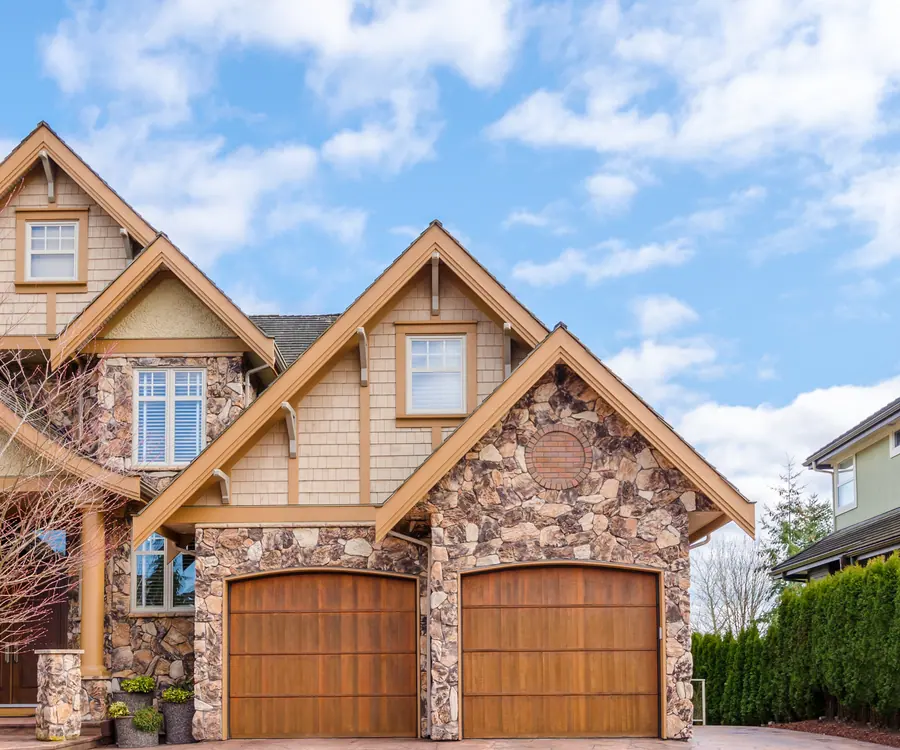
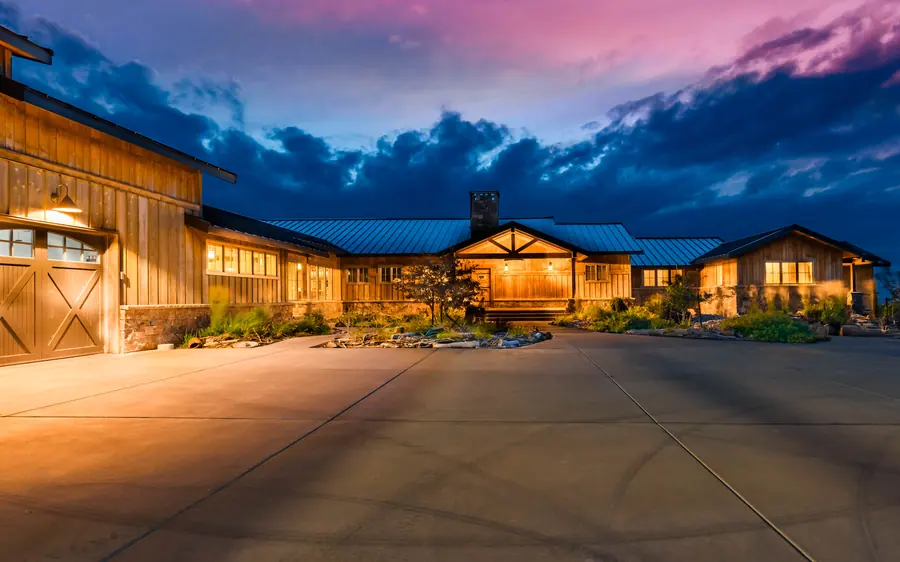
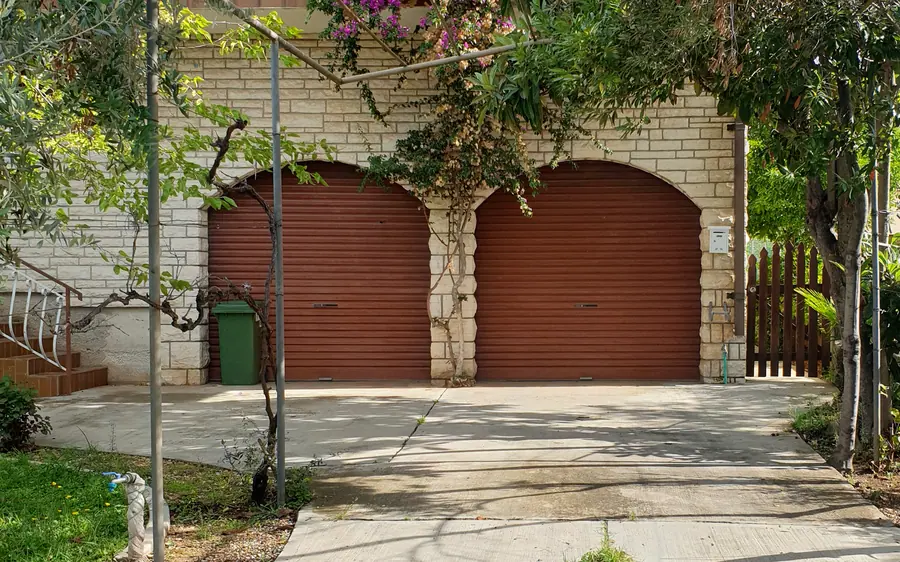
Custom work is where we get to slow down. That might mean a carriage house door with real strap hinges and divided-light windows, a stained cedar or mahogany door built to match existing trim, or a flush contemporary door with glass panels and slim aluminum frames. We also build for unusual openings — arched tops, oversized RV bays, low-headroom garages under living space — where a standard door won't work without compromise.
You choose the material, panel layout, glass, hardware and finish. We make sure the springs, track and opener are specified for what the finished door will actually weigh.
Custom garage door installationCommercial garage door services
Overhead doors for shops, warehouses and working farms
A stuck residential door is an inconvenience. A stuck commercial door stops trucks, holds up deliveries and leaves a building open overnight. The equipment is different too: heavier-gauge sectional doors, rolling steel curtains, three-inch track, high-cycle springs and operators built to run dozens of times a day.
We service and install commercial overhead doors for the businesses along the Highway 83 and I-94 corridor, the light-industrial buildings toward Pewaukee and Waukesha, and the machine sheds and pole barns scattered through the Kettle Moraine countryside. That covers sectional doors, rolling steel doors, dock doors, operators and planned maintenance programs that catch worn parts before they shut a bay down.
Commercial garage door repair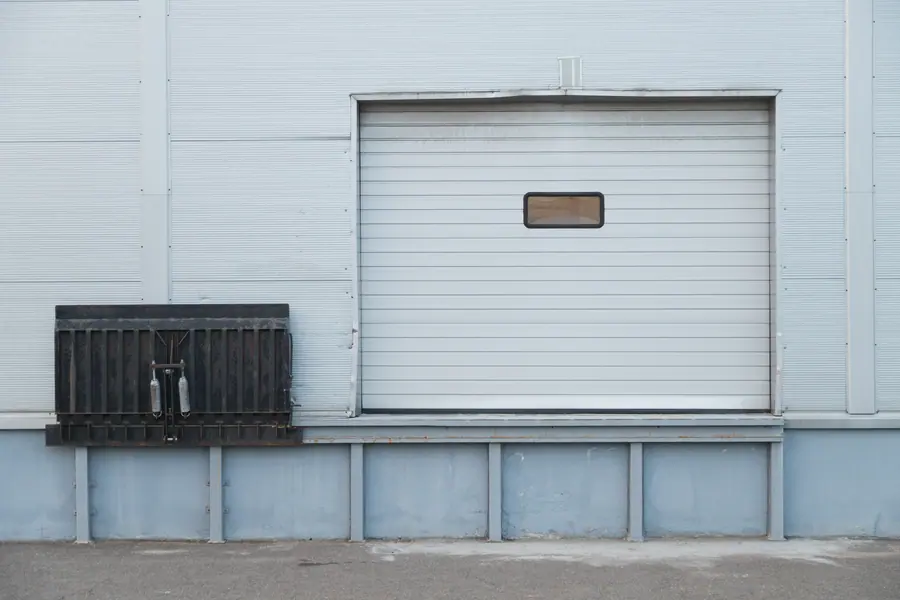
Our installation and repair process
What happens between your first call and a working door
Nobody enjoys guessing what a contractor is going to do or what it will cost. Here's how a job with us usually runs, whether it's a twenty-minute sensor fix or a full custom installation.
- You tell us what's happening
Call or send the form. A short description — "it opens six inches and stops," "there was a loud bang last night" — goes a long way toward bringing the right parts.
- We inspect the whole door
Not just the obvious failure. Springs, cables, rollers, hinges, track, opener and safety sensors all get checked, because one worn part often points to another.
- You get a clear estimate
We explain what we found, lay out the options and put a price on each. You decide what gets done. No work begins until you've said yes.
- We do the work properly
Parts matched to your door's size and weight, hardware tightened, springs balanced, track aligned. New doors are installed, sealed and tested through full cycles.
- We test it and show you
Balance, travel limits, auto-reverse and photo-eyes are all checked before we leave. We'll also show you the manual release and what to keep an eye on.
Why choose professional garage door services?
Some of this work you can do yourself. Some of it you really shouldn't.
We're happy to tell homeowners which jobs are fine for a Saturday afternoon. Wiping down photo-eye lenses, lubricating hinges and rollers, replacing a remote battery, tightening a loose bracket bolt — go ahead. You'll save a service call and learn something about your door.
Springs and cables are another matter. A torsion spring on a typical double door stores enough energy to break bones, and it releases all of it at once if a winding bar slips or the wrong fastener is loosened. The bottom brackets that anchor the lift cables are under the same tension. Every year people are seriously hurt trying to adjust these parts with tools that were never meant for the job.
There's also the question of getting it right. Springs are sized by wire diameter, inside diameter and length to match a specific door weight. Install the wrong pair and the door will either slam shut or drift open, and the opener will burn itself out compensating. A trained technician weighs the door, calculates the spring, sets the balance and checks the safety systems afterward. That's what you're paying for — along with someone who'll notice the cracked hinge or fraying cable you didn't call about.
- Correct parts, matched to your door's measured weight
- High-tension components handled with the proper tools
- Safety reverse and photo-eye function verified on every visit
- A second set of eyes on wear you might not have seen
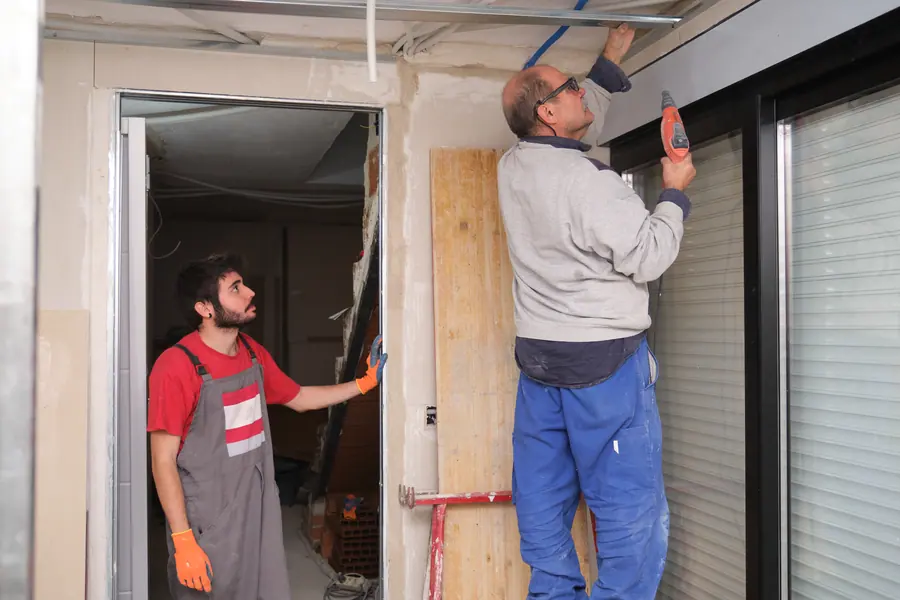
Garage door maintenance
A little attention, a couple of times a year
Garage doors are forgiving, which is why so many go a decade without anyone touching them. But the parts do wear. Springs lose tension. Rollers flatten. Hinges loosen as the door flexes thousands of times. A tune-up catches those things while they're still cheap to fix, and a door that's lubricated and balanced is noticeably quieter and easier on its opener.
In our climate, timing matters. We suggest thinking about the door once before winter and once after it.
Lubricate springs, rollers and hinges before the cold stiffens them. Check the bottom seal and perimeter weatherstripping while it's still warm enough for adhesive and vinyl to cooperate.
Keep the threshold clear of ice so the seal doesn't freeze to the slab. If the door sticks, don't keep hitting the button — free it by hand first or you risk tearing the seal or stripping the opener gear.
Rinse road salt off the bottom sections and track. Look for rust starting on cables and bottom brackets. Test the auto-reverse with a board laid flat under the door.
Good time for bigger projects: replacing a tired door, refinishing wood, or upgrading the opener before the next heating season comes around.
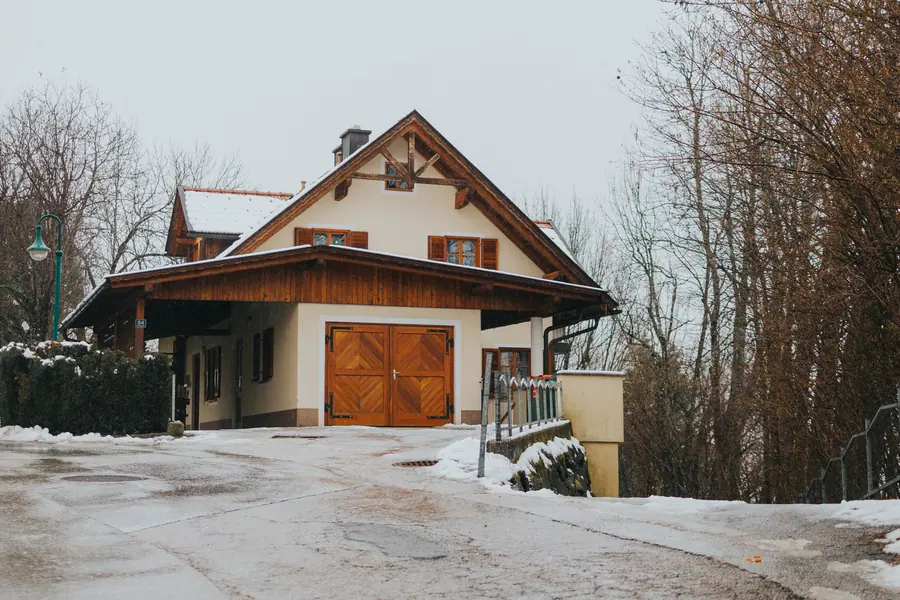
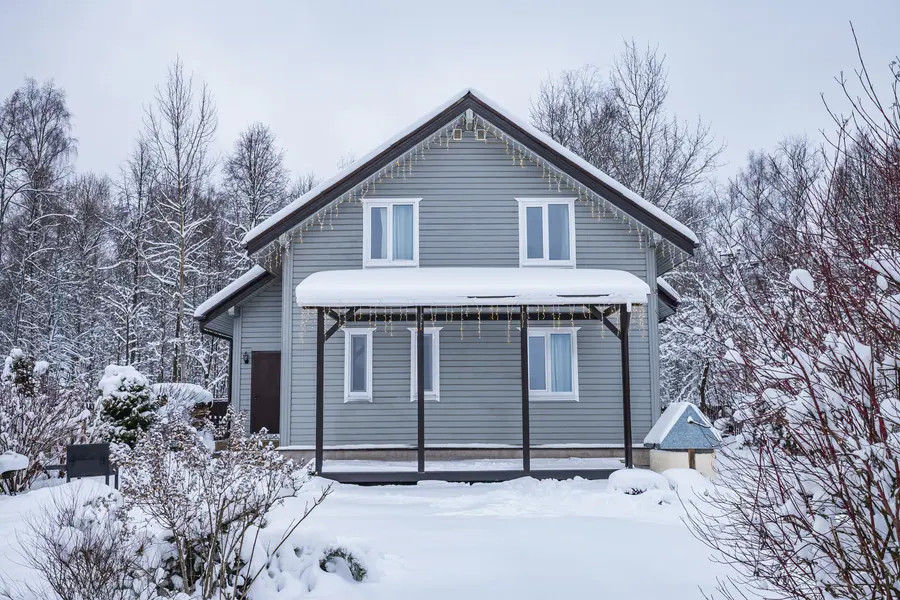
Wisconsin weather and your garage door
What a Lake Country winter does to a door
Anyone who has lived through a Waukesha County January knows the pattern: a stretch of nights below zero, a thaw that turns the driveway to slush, then a hard refreeze. Garage doors feel every part of that cycle.
Springs break more often in the cold. Steel becomes less forgiving at low temperatures, and a spring that's already near the end of its cycle life tends to let go on the coldest morning of the month. If you hear a bang from the garage in January, that's the likely culprit.
Seals freeze to the floor. Meltwater runs under the door, pools at the threshold and freezes overnight. The opener then tries to lift a door that's glued to the concrete. A fresh, flexible bottom seal and a clean threshold make this far less likely.
Lubricant thickens and openers strain. Old grease turns stiff, rollers drag, and the opener's force settings that worked in July suddenly aren't enough. Sensors can also be thrown off by low winter sun or frost on the lens.
Salt and moisture cause rust. Slush carried in on tires sits against the bottom section, the track and the lower brackets. Over several winters that's where corrosion starts.
Heat walks out through a thin door. An uninsulated steel door is one layer of sheet metal between your garage and the wind. An insulated door with a polyurethane core and proper weatherstripping keeps an attached garage noticeably warmer, which matters for the rooms beside and above it.
None of this is cause for alarm. It's simply the reason we specify hardware, seals and lubricants with cold weather in mind, and why a pre-winter check is worth an hour of anyone's time.
Before-and-after project gallery
What a difference the work makes
Each of our service pages includes a before-and-after comparison with notes on what was addressed and why. The images are illustrative examples rather than photographs of specific customer jobs, chosen to show the kind of change you can expect. Here are three to start with.
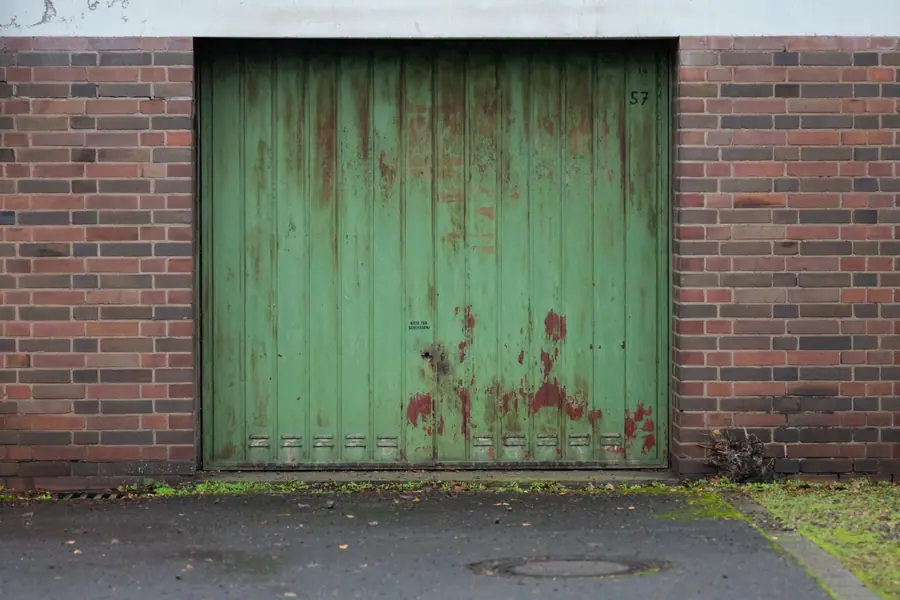 BEFORE
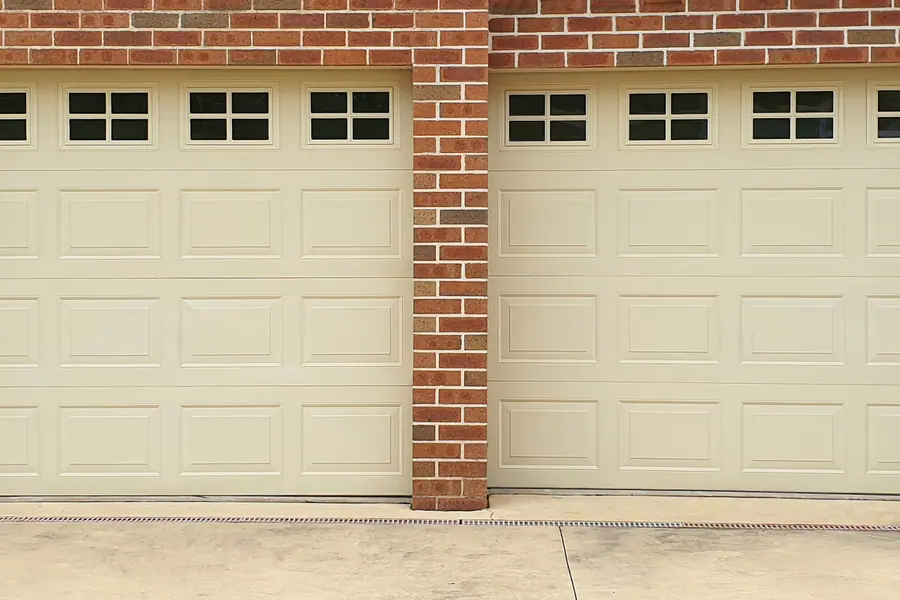 AFTER
A rusted steel door gives way to new raised-panel doors
Rust and flaking paint replaced with insulated raised-panel doors and glass.
Read the project notes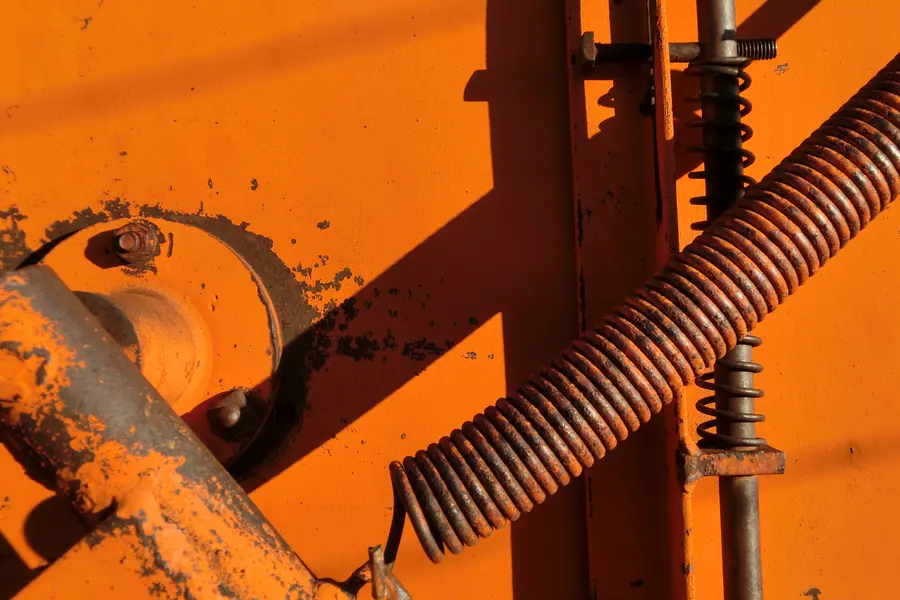 BEFORE
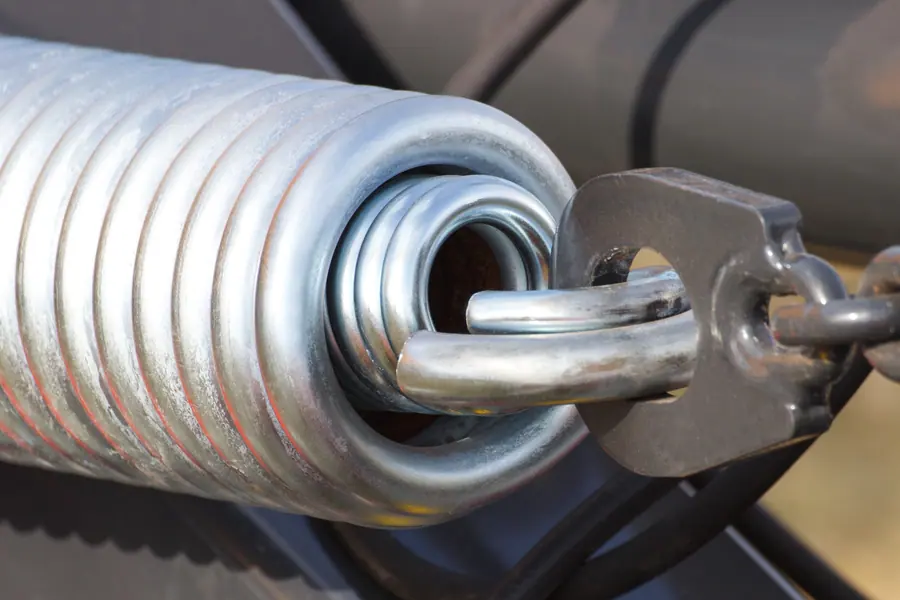 AFTER
A rusted, fatigued spring replaced with a clean new one
Corroded coils and pitted hardware versus a bright, properly seated replacement spring.
Read the project notes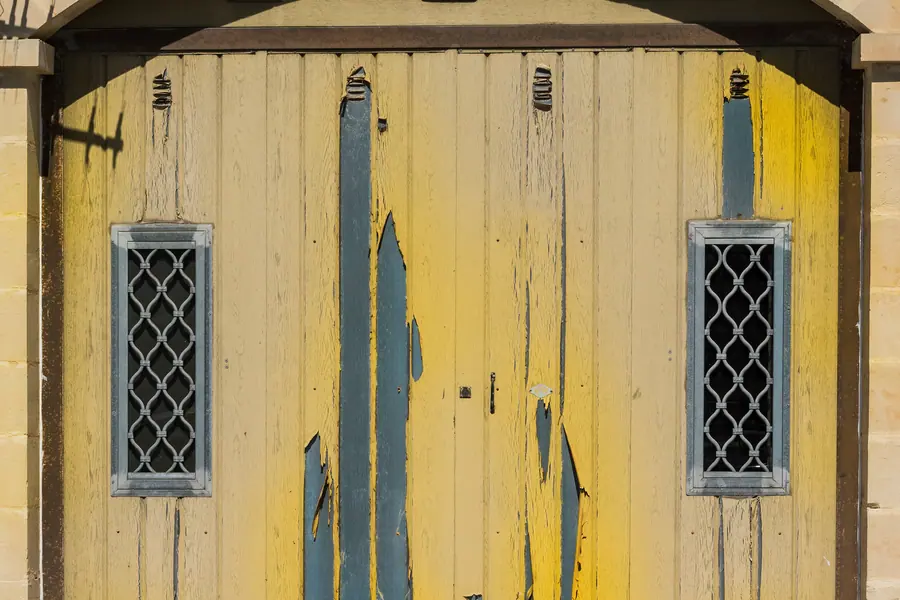 BEFORE
 AFTER
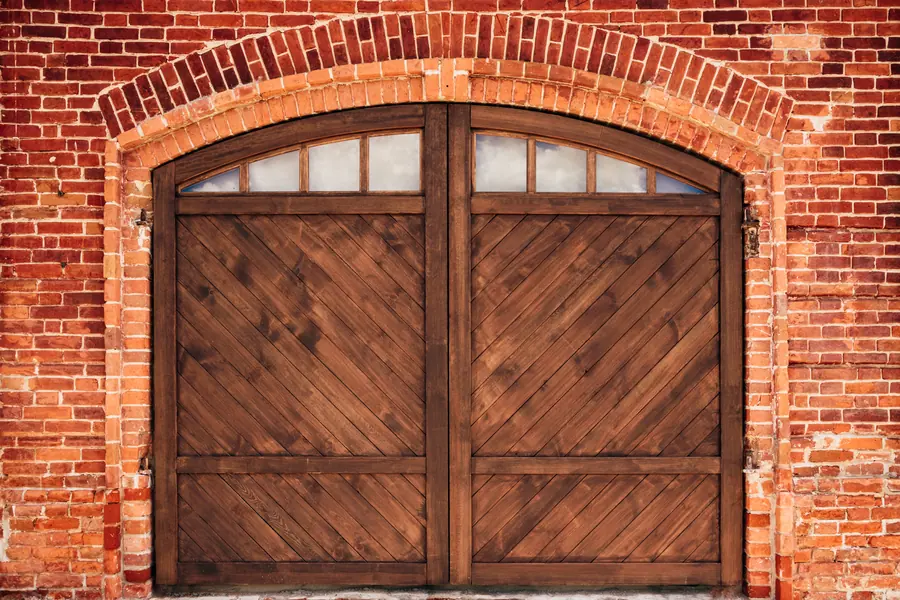
Peeling arched carriage doors replaced with a custom arched wood design
A failing painted arch-top door becomes a stained, cross-braced custom piece.
Read the project notesFeatured garage door designs
Styles we're asked about most around Delafield
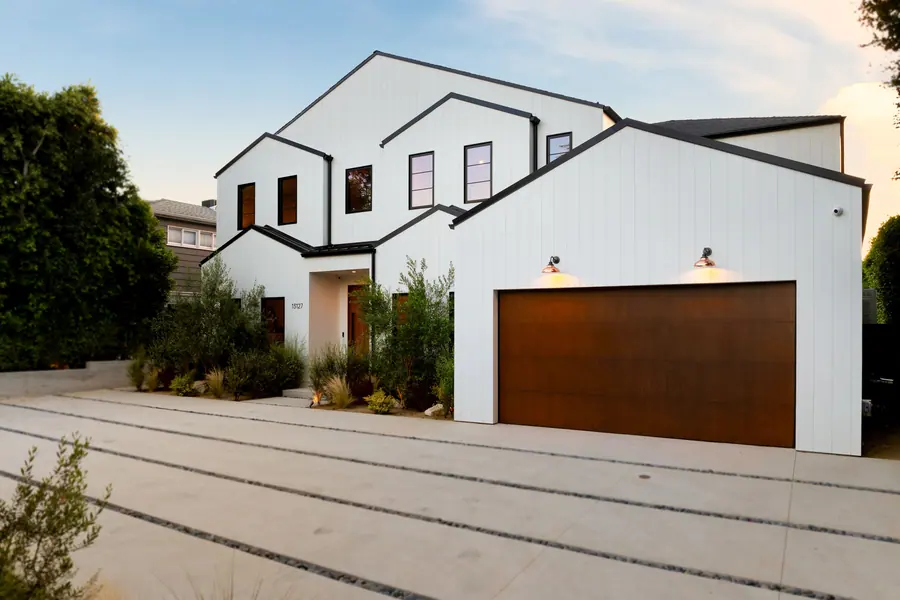
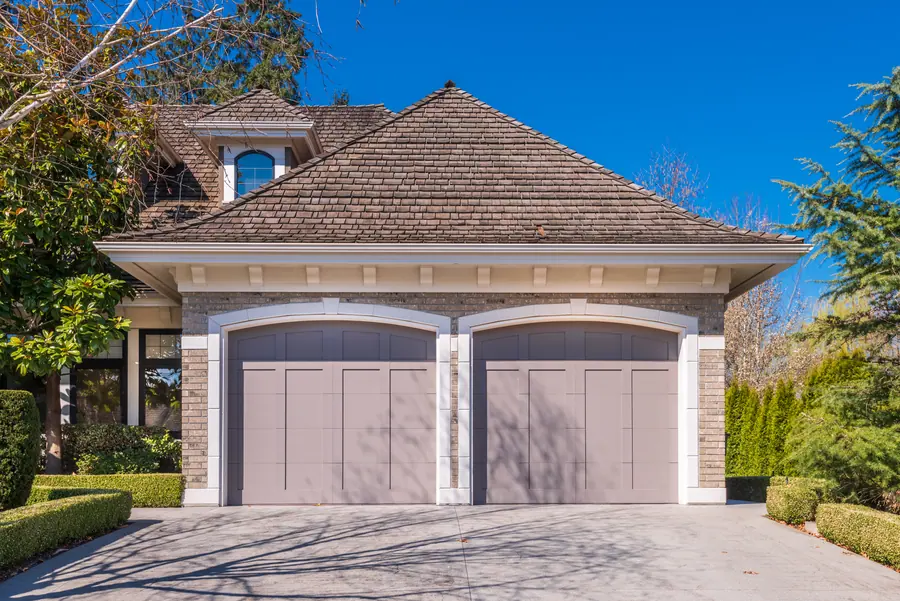
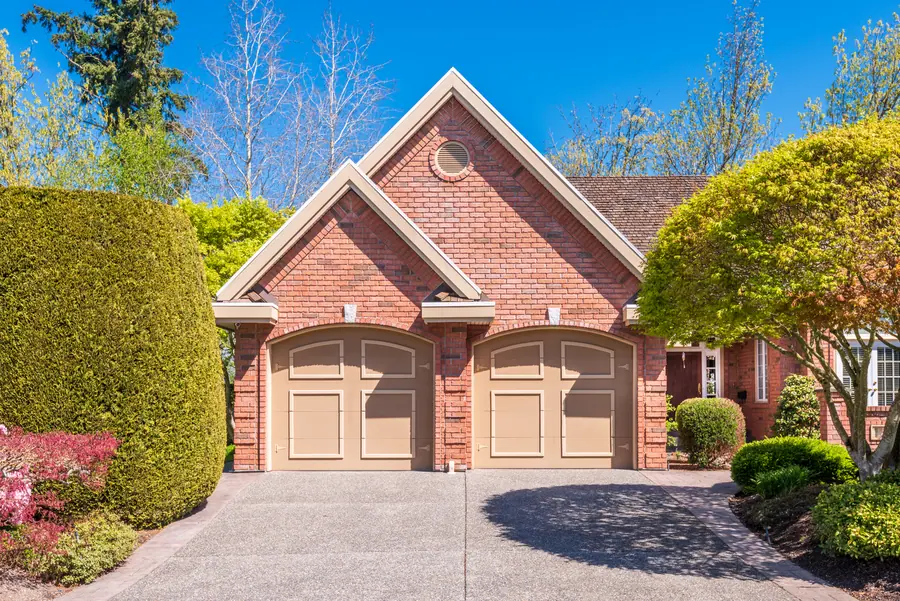
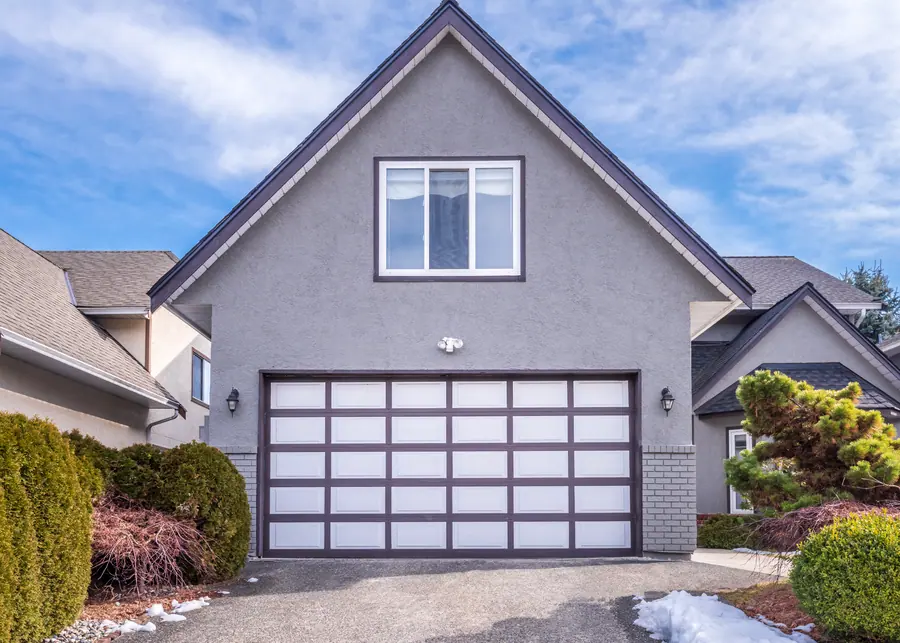
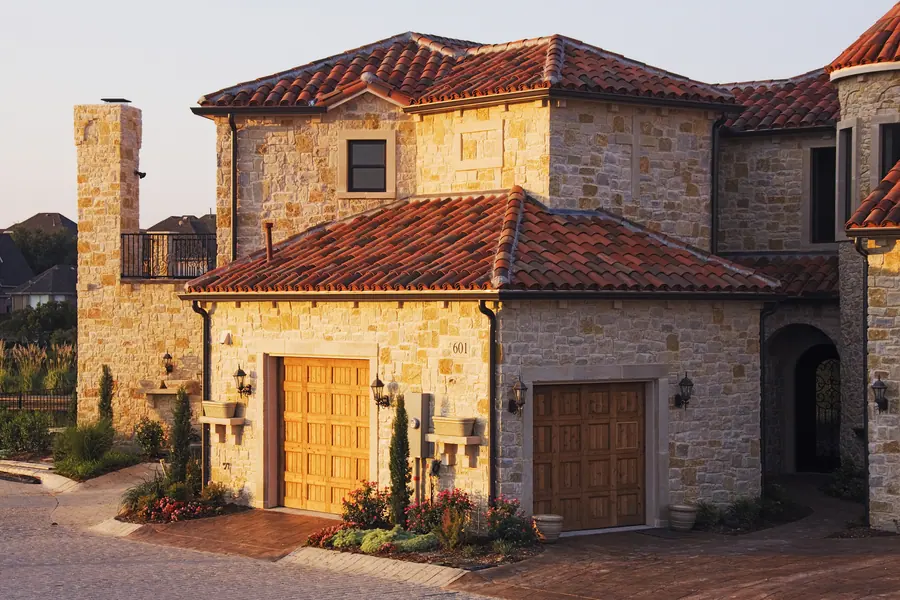
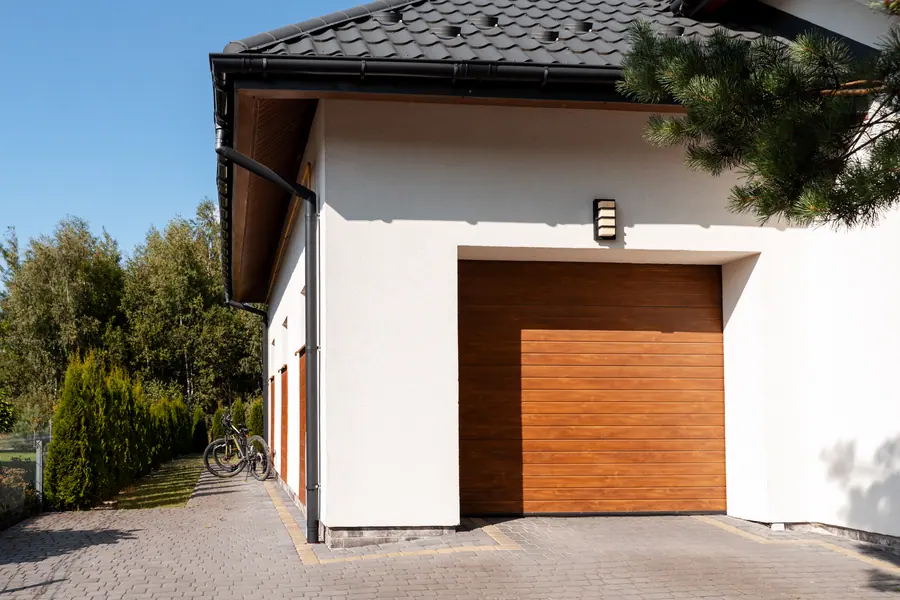
If you're replacing a door and aren't sure where to begin, start with the house. These reference designs cover the looks that tend to sit well with Lake Country architecture. Scroll sideways for more, or visit the full gallery.
Service areas
Delafield and the communities around it
We're based around Delafield and work throughout western Waukesha County's Lake Country. If you're within a reasonable drive of the Highway 83 and I-94 interchange, chances are we cover your street. That includes lake properties on Nagawicka, Pewaukee and Okauchee, village neighborhoods in Hartland and Wales, and rural addresses in between.
Not sure whether you're in range? Ask. If we can't get to you, we'll tell you right away rather than leave you waiting.
Service area details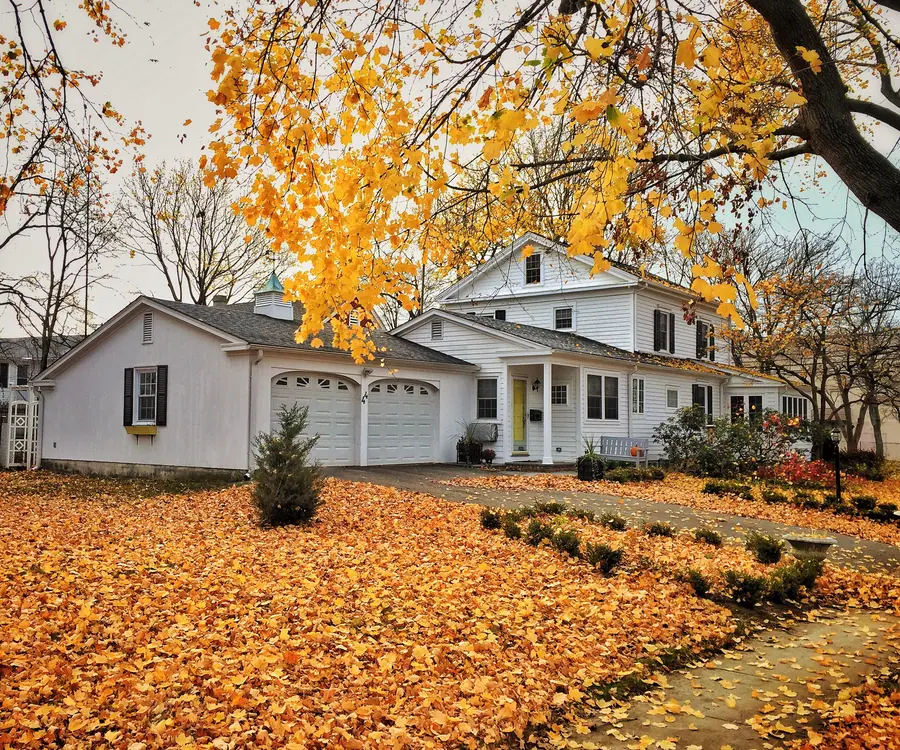
Frequently asked questions
Questions we hear every week
Have one that isn't here? Add it to the estimate form and we'll answer it when we reply.
My garage door won't open and I heard a loud bang. What happened?
Almost certainly a broken spring. Look above the door: if there's a gap of an inch or two in the coil on the torsion bar, that's it. Don't try to lift the door with the opener, and don't pull the red release cord while the door is up. A door with a broken spring is dead weight. Leave it closed and call us.
Should I repair my garage door or replace it?
It depends on what's failing. Springs, cables, rollers and openers are wear items and are almost always worth replacing on an otherwise sound door. Widespread rust, rotted wood, several damaged sections or a door with no insulation in an attached garage push the answer toward replacement. We'll give you both figures and an honest opinion.
How long does a garage door spring last?
Springs are rated in cycles — one open and one close. Standard springs are typically rated for around 10,000 cycles, which works out to roughly seven to ten years for a household that uses the door three or four times a day. High-cycle springs are available and last considerably longer for a modest increase in cost.
Why does my door reverse before it closes all the way?
Most often the photo-eyes near the floor are misaligned, dirty or blocked. Check that both indicator lights are solid and nothing is in the beam. If the door hits the floor and then reverses, the close-limit or force setting probably needs adjusting. In winter, ice on the threshold can cause the same thing.
Is an insulated garage door worth it in Wisconsin?
For an attached garage, yes. An insulated door keeps the garage warmer in winter, which helps the rooms that share a wall or ceiling with it. Insulated doors are also stiffer, quieter and more resistant to dents because the foam core bonds the steel skins together.
How long does it take to install a new garage door?
A standard replacement door on an existing opening is usually a single visit of a few hours. Custom doors take longer to arrive because they're built to order, and the lead time varies with the manufacturer and material. We'll give you a realistic timeline when you order.
Can you work on any brand of door or opener?
In nearly all cases. Residential doors and openers from the major manufacturers share common spring, cable, roller and track standards, and parts are widely available. For discontinued models we'll tell you whether a repair is practical before you spend money on it.
Do you offer commercial and agricultural door service?
Yes. We repair and install sectional overhead doors, rolling steel doors, dock doors and commercial operators, and we work on the large doors found on machine sheds and pole buildings. Regular maintenance visits can be arranged for businesses that can't afford a bay being down.
Get in touch
Tell us about your door
Stuck halfway, making a noise you don't like, or ready to talk about something new? A few lines is all we need to get started.
Share what the door is doing, roughly how wide it is (one car or two) and the brand of opener if you know it. We'll follow up to talk through what you need and arrange a time to come out. If it's urgent — the car is trapped, or the door won't close — say so and call as well.
Serving Delafield, Hartland, Wales, Nashotah, Oconomowoc, Pewaukee and nearby communities.
Request an estimate
No obligation. We reply to every request.