What "garage door repair" really covers
People call us with a symptom. The door shakes on the way up. It closes, then pops back open. One side sits lower than the other. It groans like a ship. Our job is turning that description into a diagnosis, and that's harder than it sounds, because a garage door is a chain of parts that all lean on each other.
Take a door that jerks as it rises. The cause could be a roller with a seized bearing, a bent section of track, a hinge that's cracked through, a cable that's started to unravel on the drum, or a spring that has lost enough tension to throw the door out of balance. Replace the wrong one and the jerk is still there next week.
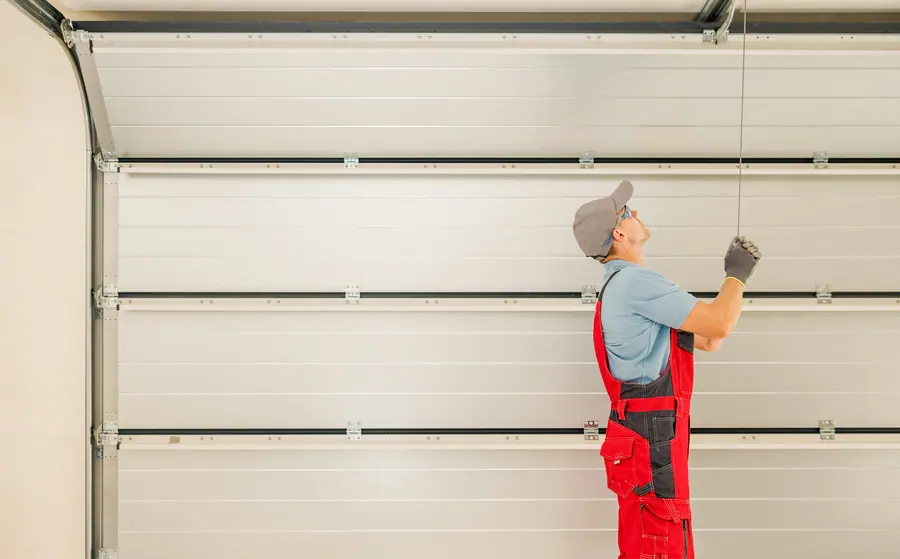
So we don't guess. Every repair visit begins the same way: we pull the red emergency release, disconnect the opener, and lift the door by hand. A healthy door feels light, moves smoothly and stays put when you let go at waist height. Anything else tells us where to look next.
The problems we're called about most
Usually a broken spring or a snapped cable. Sometimes it's the opener — a stripped gear or failed circuit board — and occasionally it's as simple as a locked manual latch or a tripped breaker.
Photo-eyes knocked out of line, an obstruction in the track, a close-force setting that needs adjusting, or ice built up on the threshold.
Dry hinges and rollers, worn roller bearings, loose track bolts, a chain that needs tensioning, or a spring coil that's binding because it has never been lubricated.
One cable has slipped or stretched, one spring of a pair has broken, or the track on one side has shifted. This one needs attention quickly because the strain gets worse with each cycle.
The springs are losing their lift. The opener may still be dragging the door up, but it's working far harder than it was designed to.
Often after the door was bumped by a car or closed on something. Don't try to force it. A door out of its track can drop.
How we work through a repair
- Listen firstYou've lived with the door. You know when the noise started, whether it's worse in the cold, and what changed. That history saves time.
- Disconnect and test by handWith the opener out of the picture we check balance, feel for binding and watch how each roller tracks through the curve.
- Inspect every componentSprings, cables, drums, bearing plates, rollers, hinges, track, brackets and fasteners. Then the opener: rail, trolley, drive, limits, force and safety sensors.
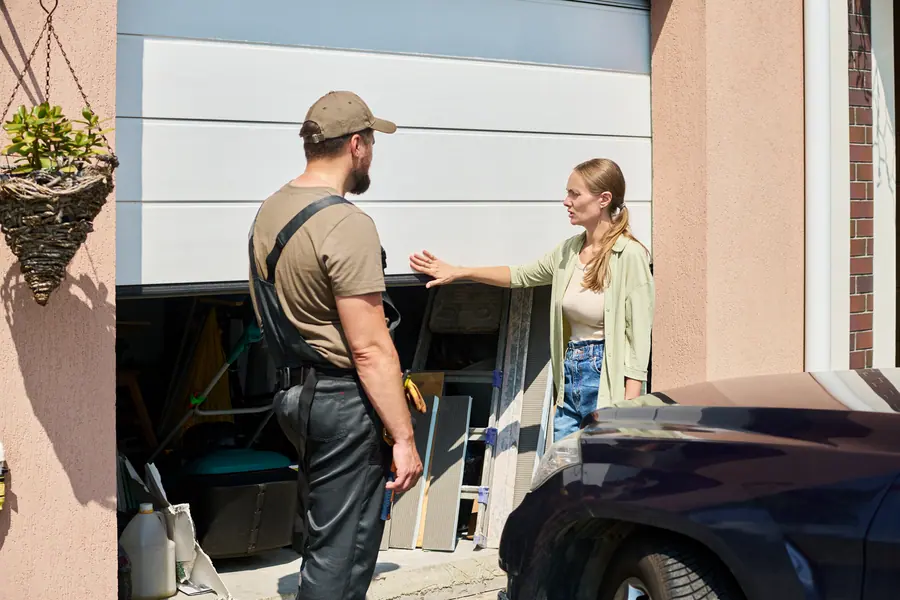
- Explain and price itWe show you the worn or broken part, tell you what it does and give you a figure before any repair begins. If there's a cheaper fix that will hold, you'll hear about it.
- Repair and rebalanceParts are replaced with components matched to your door. Afterward the springs are adjusted so the door balances on its own.
- Run the safety checksAuto-reverse on contact, photo-eye response and travel limits are tested with the opener reconnected.
Repair or replace? An honest way to decide
We're asked this on nearly every visit, and the answer is usually "repair." Springs, cables, rollers, hinges and seals are consumable parts. They're designed to be swapped out, and replacing them on a structurally sound door is money well spent.
Replacement starts to make sense when the door itself is failing. Signs we look for:
- Rust that has eaten through the steel skin, especially along the bottom section
- Wood sections that are soft, split or delaminating
- Two or more sections that are creased or bent
- An uninsulated door on an attached, heated or frequently used garage
- A discontinued model where matching panels can't be sourced
If you're in that territory, we'll price both routes. Sometimes a single replacement panel is all it takes. Sometimes a new door is the more economical answer over five years. You'll have the numbers to judge for yourself.
Why this isn't a job for a ladder and a YouTube video
Some garage door maintenance is perfectly safe to do yourself, and we encourage it. Lubricating the hinges, cleaning the photo-eyes, tightening a loose bracket on the door face — all fine.
The line is anything connected to the spring system. Torsion springs, the cables, the drums and the bottom brackets are under constant load whenever the door is down. That load is what lifts a 200-pound door, and it doesn't release gently. Loosen the wrong set screw and a winding cone can spin with enough force to take fingers. Unbolt a bottom bracket and it will fire upward along the track.
Beyond safety, there's accuracy. A spring isn't a generic part. It's specified by wire size, coil diameter and length to counterbalance a particular door weight. Most of the repeat failures we see come from a previous repair where the spring was "close enough." It wasn't, and the opener paid the price.
 BEFOREAFTER
Before & after
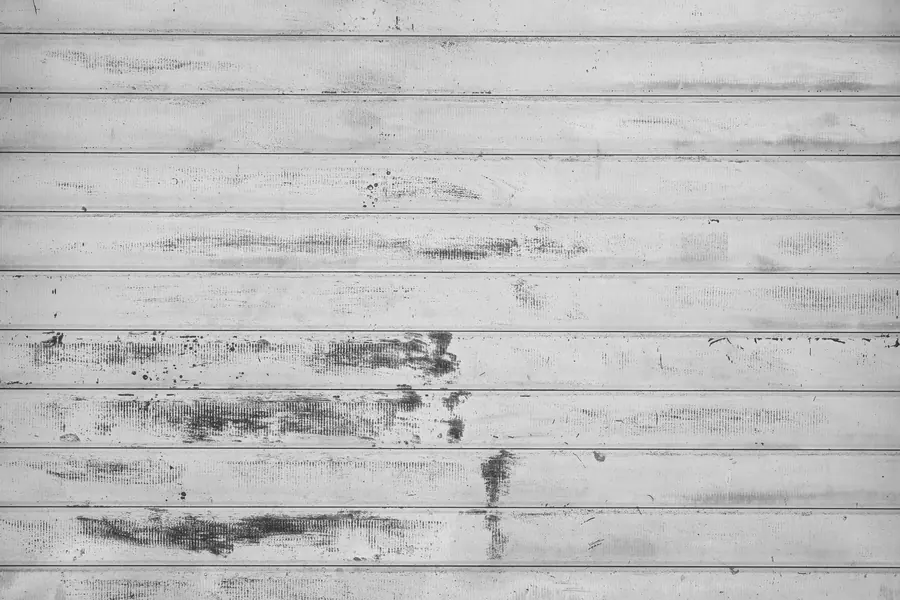
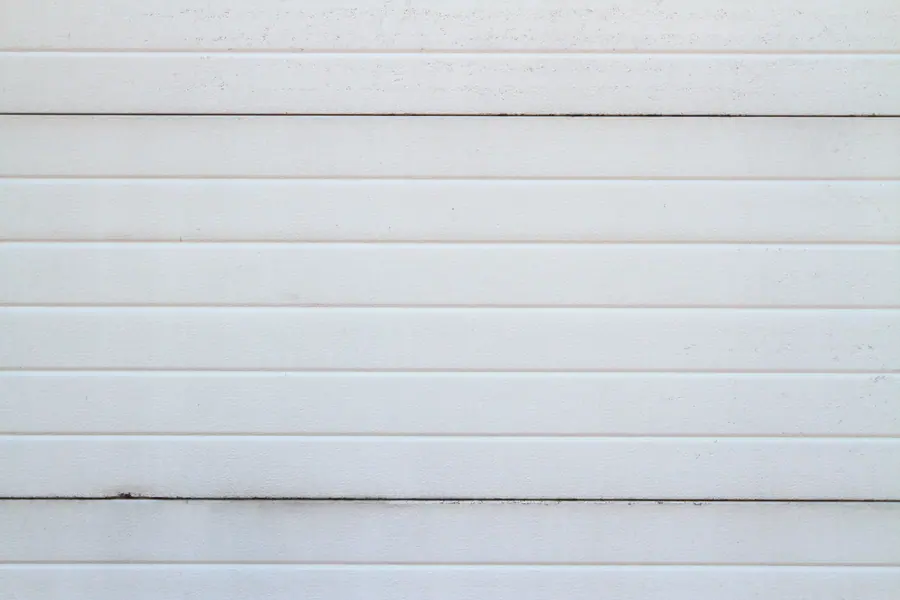
Worn, stained door sections brought back to clean working order
This comparison shows the kind of door we're often asked to rescue. The "before" sections are stained and peeling, a sign the finish has failed and moisture has been sitting on the steel. On doors in that state we usually find the hardware has suffered too: hinges loose in their holes, rollers dragging, and a bottom seal that stopped sealing years ago.
A proper repair visit deals with the mechanics first. Worn rollers and cracked hinges come out, fasteners are re-seated or stepped up a size where the holes have opened, the track is realigned and the springs are rebalanced. Sections that are sound get cleaned and refinished; any that are too far gone are replaced.
The "after" image shows the result to aim for: section joints that sit tight and straight, a clean face, and a door that closes evenly along the floor. In practical terms that means less noise, less strain on the opener and a seal that keeps January out of the garage.
Illustrative exampleThese two photographs are licensed reference images chosen to show the kind of change this service makes. They are not a record of one specific Delafield Garage Door job.
Wisconsin weather and the repairs it causes
There's a seasonal rhythm to repair calls around Delafield. The first hard cold snap brings a wave of broken springs, because steel that's been cycling for eight or nine years finally gives up when the temperature drops below zero. Thaws bring doors frozen to the slab and openers that have stripped a gear trying to break them loose. Spring reveals the rust that road salt started over the winter, usually on the cables and bottom brackets nearest the floor.
Properties close to Nagawicka or Pewaukee Lake have their own pattern. The extra humidity is hard on bare steel, and we see cables and springs corroding years earlier than they would a few miles inland.
A few habits help. Keep the threshold shoveled and free of ice. If the door doesn't move when you press the button, stop and check before pressing again. Rinse the lower track and bottom section when the salt season ends. And have the door looked at before winter rather than during it — a tune-up in October costs less than an emergency call in January.
Parts we use and why they matter
Not all replacement parts are equal, and the difference shows up in how long the repair lasts. Where there's a choice, here's what we lean toward and why.
- Springs
- Oil-tempered or galvanized torsion springs sized to the door's measured weight. High-cycle options are available for busy households.
- Rollers
- Sealed nylon rollers with ball bearings. Quieter than steel and they don't need lubricating at the wheel.
- Cables
- Galvanized aircraft cable of the correct diameter for the door's weight, always replaced as a pair.
- Hinges and brackets
- Heavier-gauge steel on wider doors, where the center hinges carry more flex.
- Seals
- Flexible bottom seals that stay pliable in the cold rather than cracking after a couple of winters.
Questions about garage door repair
How do I know if my garage door spring is broken?
Look at the spring above the door. A broken torsion spring will show a visible gap in the coil. Other clues: a loud bang from the garage, a door that only lifts a few inches, or cables hanging slack. Leave the door closed and avoid using the opener.
Is it safe to use the door if it's making a new noise?
A squeak is usually harmless. Grinding, popping or a sudden change in how the door moves is worth a look before you keep using it, because those sounds often come from a part that's about to fail.
Can you repair a door that's come off its track?
In most cases, yes. We secure the door, reset the rollers, straighten or replace the damaged track and find out why it came off in the first place. Please don't operate it in the meantime.
Do you repair all brands of garage doors?
We work on nearly every residential door and opener sold in this area. Most use standardized hardware, so parts are rarely an obstacle. If your door is an older or discontinued model, we'll confirm parts availability before recommending a repair.
How long does a typical repair take?
Many common repairs — springs, cables, rollers, sensor alignment — are finished in one visit. If a part has to be ordered, such as a matching panel, we'll make the door safe and return when it arrives.
Will you tell me if the door isn't worth fixing?
Yes. If the repair cost doesn't make sense against the age and condition of the door, we'll say so and explain why, then leave the decision with you.