The cables nobody notices until they fail
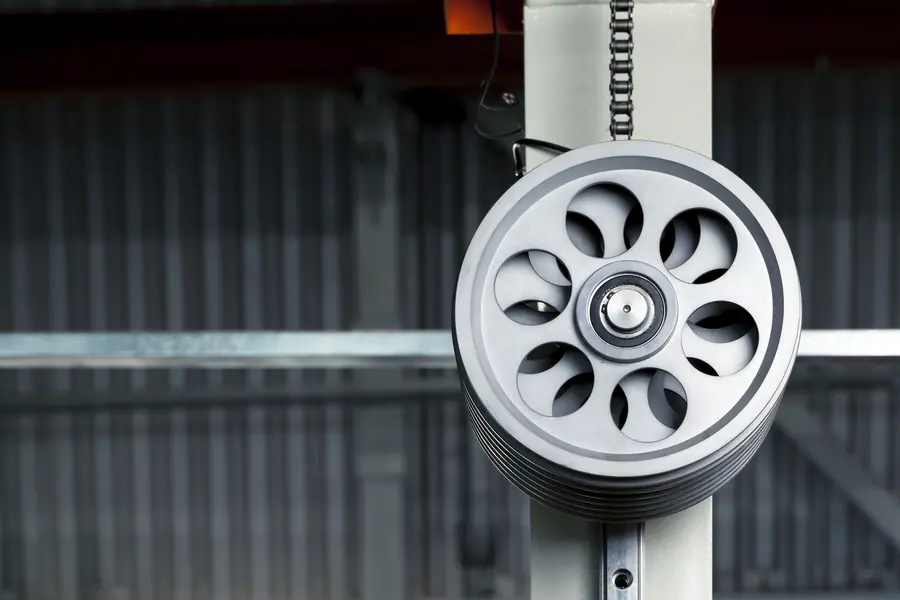
Springs get the attention, but they can't lift anything on their own. The link between the springs and the door is a pair of steel cables, each about an eighth of an inch thick, running from a bracket at the bottom corner of the door up to a grooved drum on the torsion shaft — or, on an extension system, over a set of pulleys to the springs at the side.
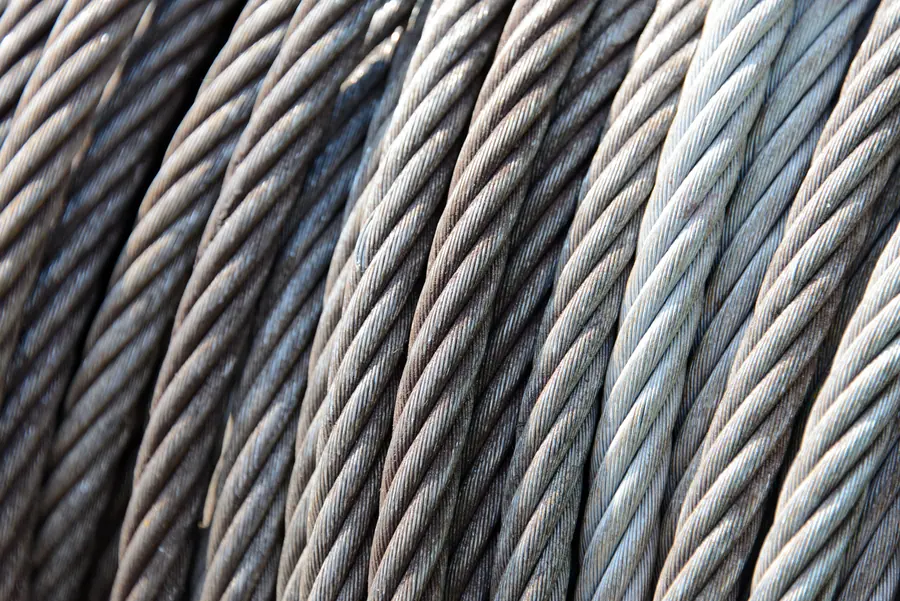
Each cable is a rope of many fine steel wires twisted together. That construction makes it flexible enough to wrap around a drum thousands of times, and strong enough to carry several times the door's weight. But the individual wires fatigue, rub and rust, and they break one at a time. A cable that looks fine from across the garage can be half gone where it meets the bottom bracket.
What a cable problem looks like
One side is higher than the other, opening or closing. The cable on the low side has slipped, stretched or broken.
It's wedged in the tracks and won't move either way. Don't force it.
You can see it drooping beside the door or coiled on the floor.
It's wrapped around the shaft beside the drum, or tangled behind it.
Fine wires sticking out like whiskers, usually near the bottom bracket or the drum.
A cable let go under load. Often accompanied by a bang, and sometimes by a broken spring too.
If you see any of these, stop operating the door. Running an opener against a slipped cable can pull the door out of its tracks, bend sections and turn a modest repair into a large one.
Why cables fail
Cables rarely break without a reason, and finding the reason is half the repair.
- Rust at the bottom. The lower few inches of each cable sit closest to the floor, where water and salt collect. That's where corrosion starts.
- Fraying at the drum. If the cable isn't tracking cleanly in the drum grooves, it rubs on itself or on the drum edge.
- A broken spring. When a spring breaks, cable tension vanishes and the cables jump off the drums. The cable itself may be fine and just need reseating.
- Worn pulleys. On extension systems, a wobbling pulley lets the cable ride against the pulley fork and saw through.
- The door hit something. If the door closes on an object, one side stops and the other keeps going, slackening a cable and letting it unwind.
- Uneven tension. Cables set to different lengths make one do more work than the other.
- Age. Ten or fifteen years of cycles is simply the end for many cables.
How we repair it
- Make it safeIf the door is crooked or jammed, we support and secure it before anything is loosened. Often the door has to be eased back to level first.
- Release the spring tensionCables can't be removed or installed with the springs wound. Torsion springs are unwound with winding bars; extension systems are worked on with the door raised and secured.
- Remove the old cablesBoth sides come off, along with a careful look at the bottom brackets they attach to.
- Inspect drums, bearings and pulleysA cracked drum or a seized bearing will ruin a new cable quickly, so these are checked and replaced if needed.
- Fit new cablesCorrect length for the door height, correct diameter for its weight, seated in the first groove of each drum.
- Set equal tensionDrums are positioned so both cables are snug with the door fully down and level on the floor.
- Rewind and balanceSprings are wound back to specification and the door tested by hand.
- Check travelWe run the door several times, watching that the cables wrap evenly and the door stays level through its full height.
Cable types and specifications
Not every cable is the same, and using the wrong one is a common cause of repeat failures.
- Diameter
- Most residential doors use 1/8-inch cable. Heavier and taller doors step up to 5/32 or 3/16 inch.
- Construction
- 7x7 cable is stiffer and common on standard doors. 7x19 is more flexible and wears better around small drums and pulleys.
- Material
- Galvanized steel resists rust and is the standard. Stainless steel is available for damp or lake-side garages.
- Length
- Determined by door height and the type of lift — standard, low-headroom or high-lift each need different lengths.
- End fittings
- A pressed loop at the bottom and a stop or button at the drum. Poorly made fittings are a frequent failure point on cheap cables.
We always replace cables in pairs. A new cable beside a stretched, tired one will never share the load evenly, and the old one is next in line to fail anyway.
Bottom brackets and drums
The parts at each end of the cable deserve a mention, because they're often the hidden cause.
Bottom brackets bolt to the lowest section of the door and hold the cable loop and the bottom roller. They carry the full spring tension, which is why many are marked with a warning and installed with tamper-resistant fasteners. They also sit right in the splash zone. A rusted bottom bracket can tear loose, and when it does the cable goes with it.
Cable drums are cast aluminum wheels with a spiral groove. Over time the groove can wear or the casting can crack near the set screws. A damaged drum lets the cable climb out of the groove and bunch up. If we see wear, we'll replace the pair.
What can go wrong if it's left
A frayed cable is still holding the door. That tempts people to wait. Here's why we'd advise against it.
When a cable snaps with the door in motion, the full load transfers to the other side instantly. The door twists in the opening. Rollers pop out of the track. Sections bend at the hinges. If the door is partway up, that side can drop. What was a cable replacement becomes cable, rollers, track and possibly panels.
There's a safety issue too. A door hanging from one cable is unstable, and anyone standing under or near it is at risk.
 BEFOREAFTER
Before & after
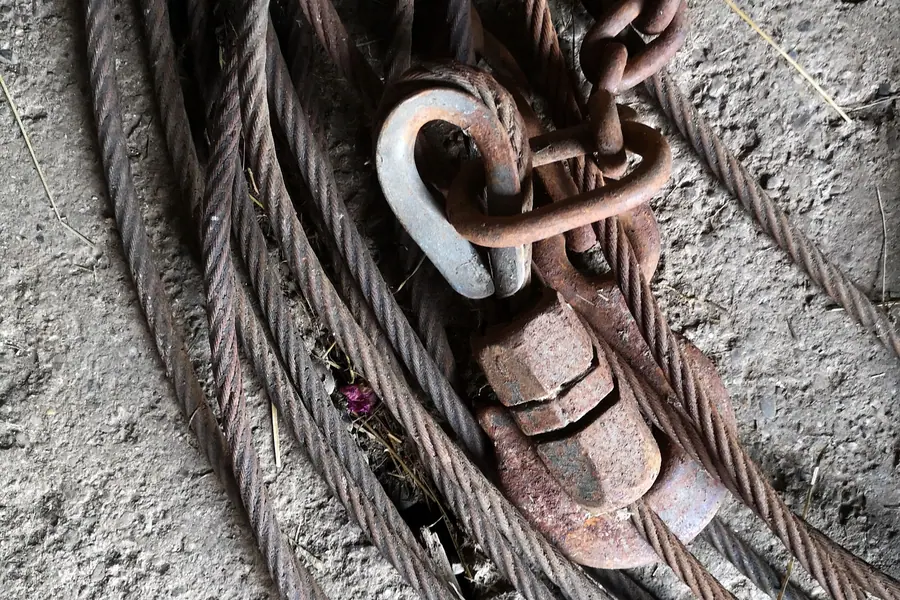
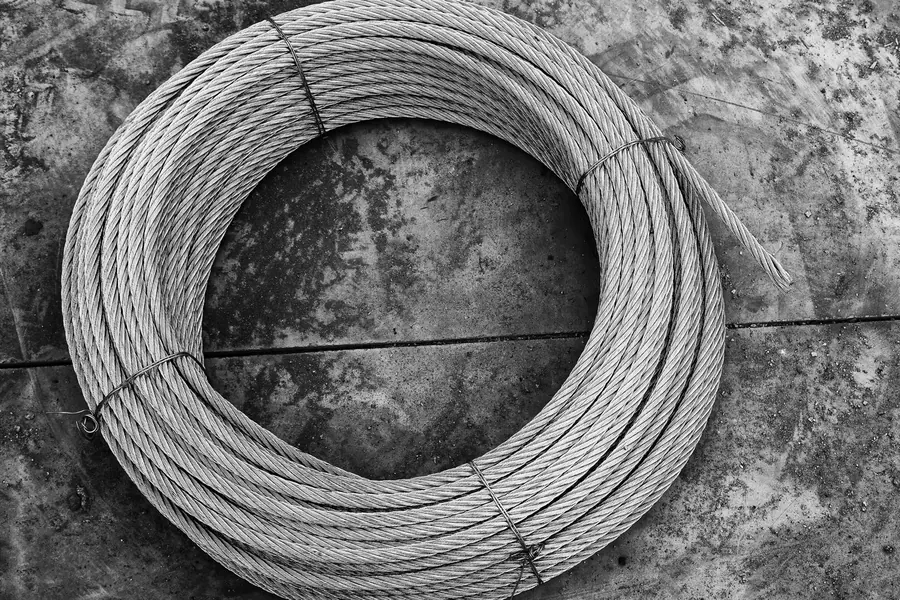
A rusted, tangled cable compared with new galvanized cable
The "before" image shows steel cable that has rusted through. The strands are brown and brittle, the rope has kinked where it was bent, and its fittings are corroded. Cable in this state has lost most of its strength. Individual wires snap when it flexes around the drum, and what remains can part without warning.
The repair illustrated is a pair of new lift cables: the old ones removed with the springs safely unwound, bottom brackets checked, drums inspected, and fresh galvanized cable installed and tensioned evenly.
The "after" image shows new cable as it comes off the reel — bright, uniform and free of kinks. The zinc coating protects the steel from the damp air and road salt that destroyed the old set. Once installed, the door lifts level, the cables wrap neatly in their grooves, and the load is shared equally between both sides, which is easier on every other part of the system.
Illustrative exampleThese two photographs are licensed reference images chosen to show the kind of change this service makes. They are not a record of one specific Delafield Garage Door job.
Cables and the Wisconsin winter
If we had to name the single biggest enemy of garage door cables in this area, it would be road salt.
From November to March, every car that comes into the garage brings slush with it. It melts, runs to the lowest point — usually the threshold — and leaves a film of brine on everything within a foot of the floor. The bottom brackets and the lowest section of each cable sit in that zone all winter. By spring, you can often see orange staining on the cable loop.
Lake properties add to it. Homes around Nagawicka and Pewaukee Lake see more humidity year-round, and steel that's damp more often corrodes faster.
Freeze-ups are the other seasonal cause. If the door is frozen to the floor and the opener is triggered, the motor pulls on a door that isn't moving. In some cases the cables go slack on the return and jump their drums.
A few practical steps help. Hose off the bottom of the door and the lower tracks once the salt season ends. Glance at the cable ends a couple of times a year. And if the garage is damp, ask us about stainless cables next time they're due.
Why cable work belongs with a professional
Cables are part of the spring system, and they're under spring tension whenever the door is down. Unbolting a bottom bracket or loosening a drum with the springs still wound releases that tension through whatever is in the way.
To change cables correctly, the springs have to be unwound, and afterward rewound and balanced. That's the same procedure, with the same risks, as a spring replacement. It needs winding bars, experience and a clear head.
It also takes a practiced eye to set the drums so the door sits dead level. A quarter-inch difference from side to side is enough to make the door bind.
Cable repair questions
Can I use my garage door with a frayed cable?
We'd strongly advise against it. A frayed cable can snap at any time, and when it does the door can jam, twist or drop.
Why did my cable come off the drum?
The usual causes are a broken spring, the door closing on an obstruction, a worn drum or uneven cable tension. We find and fix the cause, not just rewind the cable.
Do both cables need replacing?
Yes. They wear at the same rate, and a matched pair keeps the door level.
How long does a cable repair take?
Typically an hour or so, a little longer if the door has to be straightened in its tracks first or if drums and bearings are being replaced.
Are stainless steel cables worth it?
In a damp garage or close to the lakes, they can be. Galvanized cable is fine for most homes.
My spring broke and now the cables are loose. Do I need new cables?
Not necessarily. Cables often go slack when a spring breaks and can be reseated if they're in good condition. We inspect them and replace only if they're worn.