Why an inspection, specifically
Most people only have their door looked at when it breaks. A safety inspection is different in purpose. It isn't about what's stopped working; it's about what could hurt someone or cause damage if it failed.
The risks are real but manageable. Garage doors are involved in thousands of injuries every year, from pinched fingers to far worse. Nearly all of them trace back to a few things: a door that doesn't reverse when it should, a spring or cable that lets go, or someone attempting a repair on a part under tension.
Modern doors and openers have several layers of protection built in. The catch is that those protections can fail quietly. A photo-eye gets bypassed. A force setting gets turned up to overcome a sticky door. A safety cable goes missing during a repair. The door still opens and closes, so nobody knows. An inspection is how you find out.
Good times to have one done
- You've just bought a house and don't know the door's history
- The door or opener is more than ten years old
- There are young children in the home, or grandchildren visiting
- The door has been hit, forced or has come off its track
- You've noticed it closing harder or faster than it used to
- The opener was installed before 1993, when photo-eyes became mandatory on new units
- It simply hasn't been checked in years
- You're preparing a home for sale and want no surprises
What we check
- Balance
- Opener disconnected, door lifted by hand. It should move easily and hold at knee, waist and shoulder height. A door that falls or shoots up is out of balance.
- Contact reversal
- A length of 2x4 laid flat under the door. The closing door must reverse on touching it. This is the standard test for the opener's force-sensing system.
- Photo-eye function
- The beam is interrupted while the door closes. The door must stop and reverse immediately.
- Photo-eye height and mounting
- Sensors should be no higher than six inches above the floor so a child or pet lying down would break the beam.
- Force settings
- We hold the bottom of the closing door. It should reverse with modest resistance, not push through.
- Manual release
- The red cord must disengage the trolley so the door can be operated by hand in a power outage.
- Springs
- Condition, corrosion, coil spacing and age. Extension springs are checked for safety cables.
- Cables and drums
- Fraying, rust, kinks and seating.
- Bottom brackets
- Security of the fixtures that hold the cables under tension, and the presence of tamper-resistant fasteners.
- Rollers, hinges and track
- Wear, cracks, alignment and tight fixings.
- Sections
- Structural cracks, rust-through and reinforcement where the opener attaches.
- Section joints
- Whether the door has pinch-resistant joints, and the gap at each if not.
- Opener mounting
- Secure fixing to framing, a sound header bracket and a rail that's straight.
- Wall control and remotes
- The wall button mounted at least five feet up, out of small children's reach, with the door in view.
- Wiring
- Sensor and control wiring intact, stapled clear of moving parts.
What you get afterward
You'll receive a plain summary sorted by priority, not a sales sheet.
Items that present a real risk: a failed reversal test, missing safety cables, a badly frayed lift cable, a cracked bottom bracket.
Wear that isn't dangerous today but is heading that way: tired springs, rollers with failing bearings, a hinge starting to crack.
Things to keep an eye on, with what to look for.
What we checked and found in good order. It's useful to know that too.
There's no obligation to have us do any of the work. Some items you can handle yourself, and we'll say which.
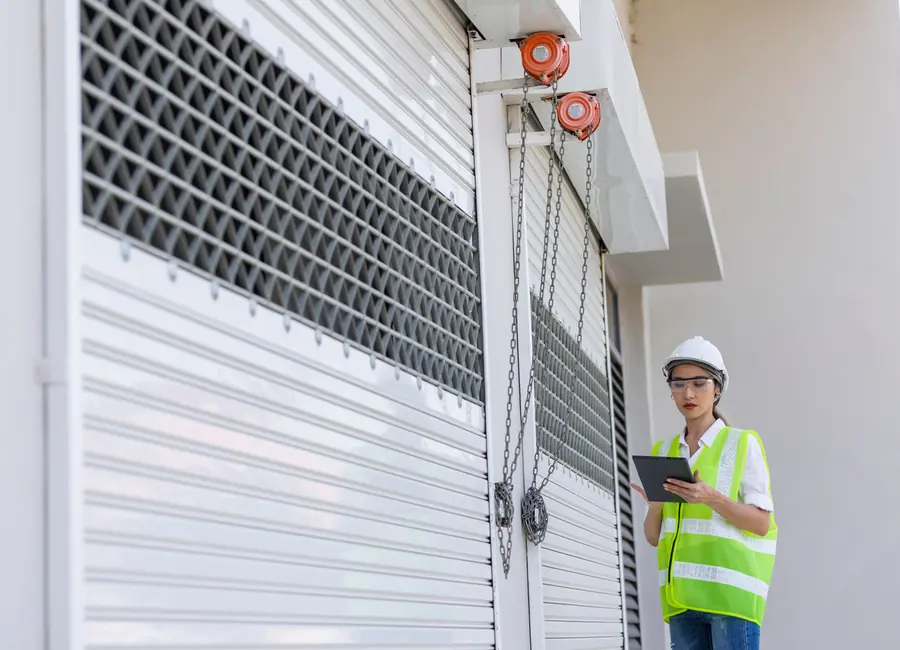
Problems we commonly uncover
Most doors pass most checks. The failures tend to cluster.
- Photo-eyes bypassed or mounted high. We find sensors taped together above the opener, or fixed two feet up the wall, where they protect nothing.
- Force set too high. Someone turned it up to get a sticking door to close. The door now pushes hard before reversing — or doesn't reverse.
- No safety cables on extension springs. Common on older single doors.
- Door badly out of balance. The springs have weakened and the opener has been masking it.
- Frayed cables at the bottom bracket. Hidden behind the track, often rusted.
- Opener header bracket fixed to drywall or trim. It should be lagged into solid framing.
- No reinforcement on the top section. The opener arm is slowly tearing the panel.
- Wall button within a toddler's reach.
- Emergency release cord missing or tied up out of reach.
Each one has a simple fix.
Simple checks you can do each month
Between professional inspections, these take five minutes and need no tools.
- Watch and listenRun the door. It should move smoothly and evenly.
- Reversal testLay a 2x4 flat on the floor in the door's path and close it. The door should reverse when it touches the board.
- Photo-eye testStart the door closing and pass a broom through the beam. It should reverse.
- Look at the cablesFrom a distance, check for broken strands. Don't touch them.
- Check the releaseKnow where the red cord is and that everyone old enough understands it's for emergencies.
If the door fails either reversal test, stop using the opener until it's corrected. Operate the door by hand if it's balanced, or leave it closed.
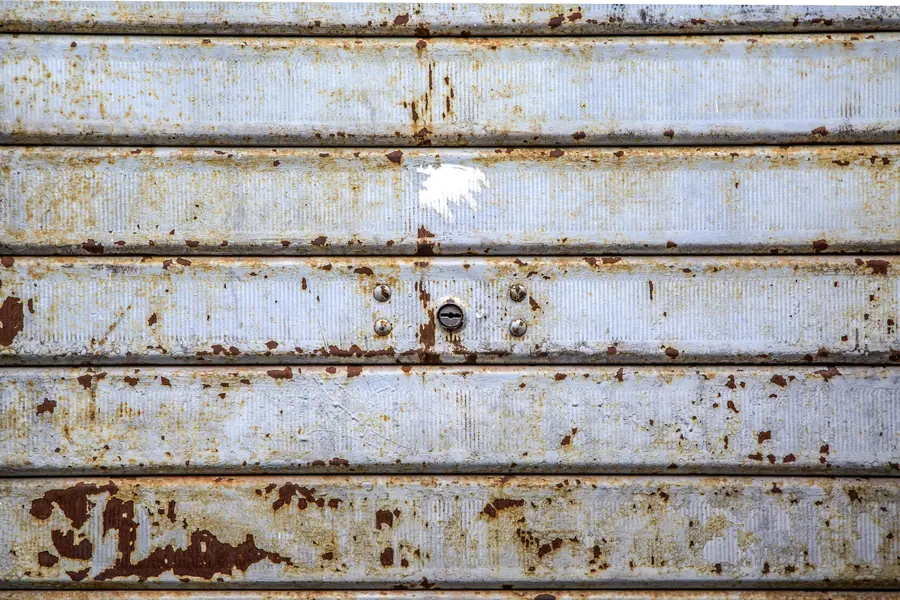
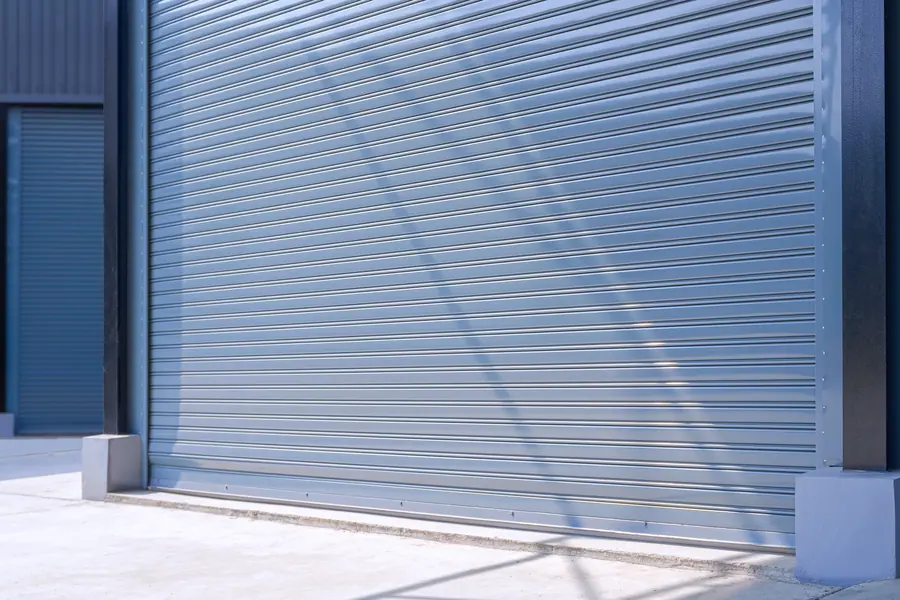 BEFOREAFTER
Before & after
Corroded door sections flagged at inspection compared with sound, straight sections
The "before" image shows steel door sections with rust breaking out along the seams and around the fasteners. This is the sort of thing an inspection is meant to catch. From the driveway it might pass as dirt. Up close, the corrosion is following the joints where water sits, and it's reaching the points where hinges and struts are fastened. Left alone, those fixings lose their grip and the section loses its stiffness.
The illustration is of what follows a flagged finding: affected sections and hardware replaced, sound steel cleaned and protected, and the door's structure verified.
The "after" image shows straight, clean slats with no corrosion and consistent lines from one course to the next. Structurally, that's a door whose hinges and reinforcement have something solid to hold. The benefit of an inspection is exactly this: finding a problem while it's a modest repair, long before it becomes a section that buckles under load.
Illustrative exampleThese two photographs are licensed reference images chosen to show the kind of change this service makes. They are not a record of one specific Delafield Garage Door job.
Safety and the Wisconsin seasons
Our climate affects several of the things an inspection looks at.
Force settings drift with the weather. A door moves more stiffly in the cold. If the opener was adjusted in winter to push through that stiffness, it may be set too high for summer. If it was set in July, it may reverse needlessly in January, tempting someone to turn it up. We set force with margin for both seasons and check that the reversal still works.
Photo-eyes misbehave in winter. Low sun shining directly into a receiver can blind it. Frost, condensation and road spray on the lenses can block the beam. Snow piled against a bracket can knock it out of line. These faults lead people to bypass their sensors, which is the opposite of a fix. See our page on sensor repair and alignment.
Cold breaks springs. Aging springs are most likely to fail in a deep freeze. An inspection in the fall flags the ones that are near the end.
Salt attacks the lowest hardware. Bottom brackets and the cable ends sit in the splash zone all winter. They're also the parts under the most tension. We look hard at them.
Power outages happen. Ice storms and heavy wet snow bring down lines. Everyone in the house should know how the manual release works, and the door needs to be balanced well enough to lift by hand. If that's a concern, battery backup is worth considering.
Why a professional inspection
The monthly checks above are worth doing. A professional inspection goes further in three ways.
First, we assess the parts you shouldn't touch: springs, cables, drums and bottom fixtures. Reading a spring for fatigue or a cable for hidden corrosion takes experience.
Second, we can correct what we find. Balancing a door, resetting force and travel, realigning sensors and fitting safety cables are routine for us and risky or fiddly for most people.
Third, we know the standards. Residential openers are built to a safety standard known as UL 325, which sets out the reversing and entrapment-protection requirements. We check your system against what it's supposed to do.
Inspection questions
How often should a garage door be inspected for safety?
Once a year is sensible for most homes, with the simple reversal tests done monthly by the homeowner.
How long does an inspection take?
Usually 30 to 45 minutes for a single door, a little longer if adjustments are made.
My opener doesn't have photo-eyes. Is that a problem?
Openers made before 1993 often lack them. They can't be brought up to current safety expectations, and we'd recommend replacing the unit.
What is the 2x4 test?
A board laid flat on the floor under the closing door. A properly adjusted opener reverses the door on contact. It checks the force-sensing safety system.
Will you fix problems you find during the inspection?
If you'd like us to. Many adjustments can be made on the spot. Larger items are explained and priced first.
Do you inspect doors for home buyers and sellers?
Yes. A clear summary of the door's condition is useful on either side of a sale.