How a rolling steel door works
A sectional door hinges and rides back along the ceiling. A rolling steel door does something different: it winds up.
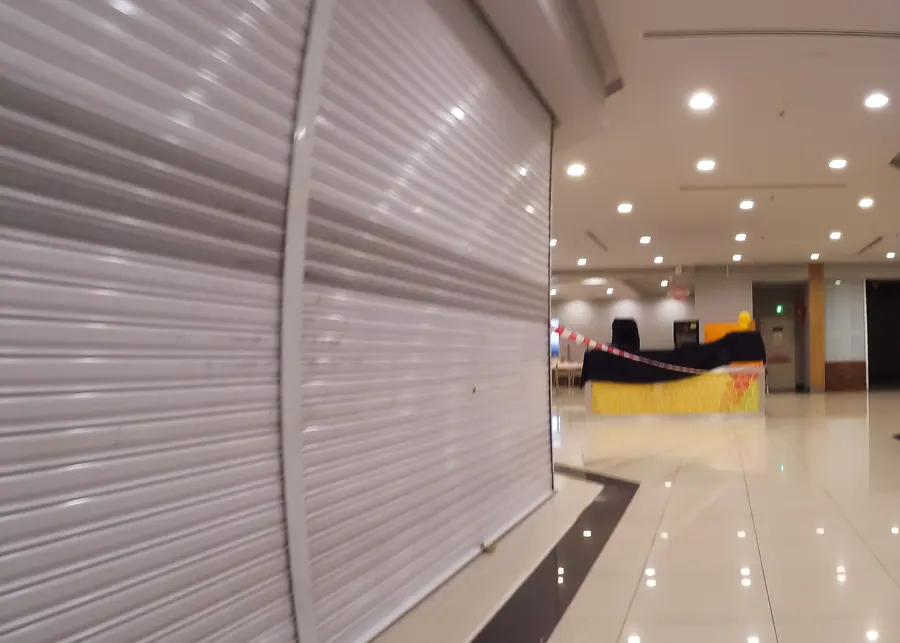
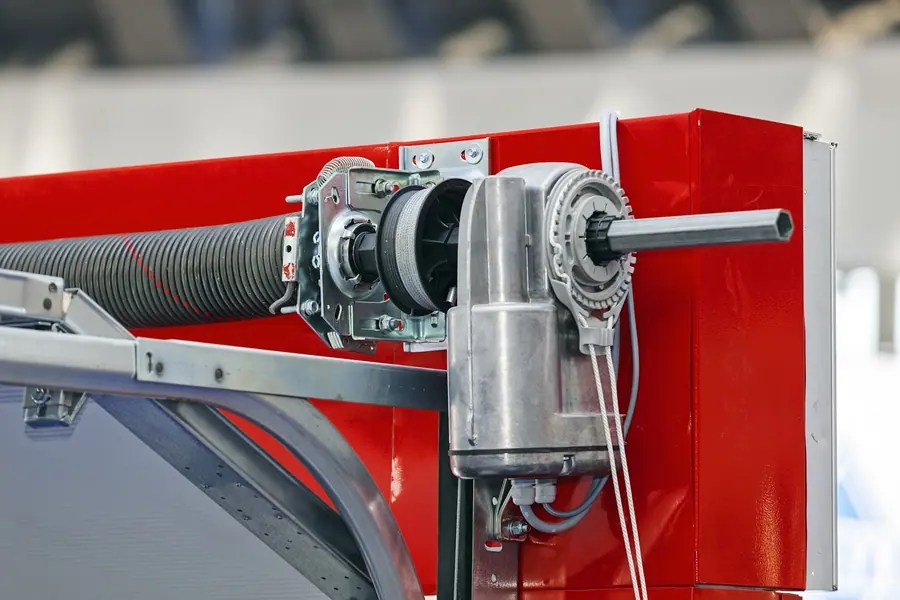
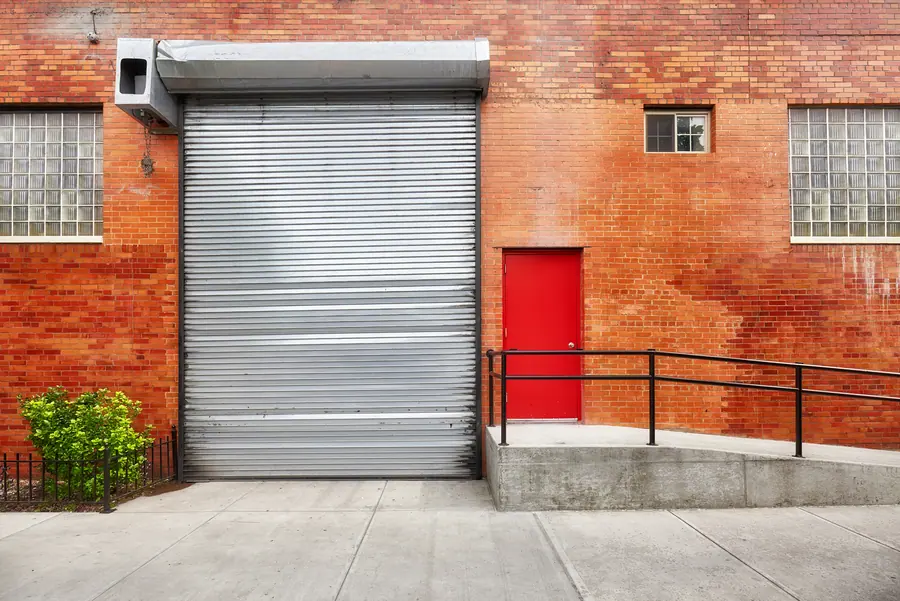
The door is a curtain of interlocking steel slats, each a few inches tall, linked along their length so the curtain can flex. At the top, the curtain attaches to a steel pipe called the barrel. Inside the barrel is a torsion spring assembly that counterbalances the curtain's weight. As the door opens, the curtain wraps around the barrel into a compact coil above the opening, hidden behind a sheet-metal hood.
At each side, the ends of the slats run in vertical steel guides fixed to the wall. Along the bottom is a rigid bottom bar, usually a pair of angles with a rubber astragal and often a lock or a sensing edge.
It's a compact, secure design with very little overhead intrusion, which is why it's used wherever space is tight or abuse is likely.
Where you'll find them
- Loading and receiving doors on warehouses and factories
- Service entrances at the back of shops and restaurants
- Parking garages and vehicle compounds
- Counter shutters over serving hatches and pharmacy windows
- Storefront security grilles
- Agricultural and municipal equipment buildings
- Fire-rated openings between sections of a building
Counter shutters and grilles are smaller, lighter relatives of the service door and share the same anatomy.
Common rolling steel door problems
- Curtain jammed in the guides
- Bent slats, damaged guides, missing endlocks or debris packed in the channel. The door stops partway and won't move.
- Door heavy or drops
- The barrel spring has lost tension or broken. The curtain is no longer counterbalanced.
- Door won't stay open
- Same cause. A door that creeps down is under-sprung.
- Door flies up
- Over-tensioned spring, or a section of curtain has been removed without adjusting.
- Bent or creased slats
- Vehicle impact. A hit at the bottom often telescopes several slats.
- Curtain coiling unevenly
- Telescoping to one side as it wraps, from damaged endlocks or a misaligned barrel.
- Bottom bar bent
- Driven into, or closed on an obstruction.
- Noisy, grinding operation
- Dry guides, worn bearings, or slats rubbing where the curtain has shifted.
- Chain hoist or crank faults
- Worn gears, stretched chain, damaged reduction drive.
- Operator won't run or stops
- Motor, brake, limit or control faults; see operator repair.
- Rust
- Especially on the lower slats, bottom bar and guide bases.
The parts we work on
Individual slats can be replaced. The curtain is partly unwound, damaged slats slid out and new ones threaded in. Profiles must match.
Small castings riveted to slat ends that keep the curtain aligned in the guides and resist wind. Missing ones cause a lot of trouble.
Straightened where possible, replaced where torn or crushed. Fastenings to the wall are checked.
Tension adjusted at the tension wheel, or the spring assembly replaced if broken. This is the high-energy part of the door.
Straightened or replaced, with new astragal.
The end brackets carry the whole door. Worn bearings are replaced.
Dented hoods that rub the coil are reshaped or replaced.
Push-up, chain hoist and crank mechanisms serviced.
Slide bolts and cylinder locks freed, aligned or replaced.
Our repair approach
- Secure the door and the areaA rolling door that has lost spring tension is the full weight of its curtain waiting to come down. We control that first, and lock out any operator.
- Identify the typeService door, insulated, fire-rated, grille or shutter; manual, chain or motor operated. It changes the parts and the procedure.
- InspectCurtain, endlocks, guides, bottom bar, barrel, brackets, bearings, hood and operator.
- Free the jam carefullyForcing a stuck curtain creases more slats. We find what's binding and release it.
- Repair or replace componentsSlats, guides, bottom bar, bearings and hardware as needed.
- Set the spring tensionAdjusted so the door is balanced through its travel. If the spring has broken, the barrel assembly is rebuilt or replaced.
- Lubricate and alignGuides cleaned, moving parts lubricated with a suitable product, curtain tracking checked.
- TestFull cycles by hand and under power, with limits and safety devices confirmed.
About barrel springs
The spring inside the barrel is the part owners understand least, because it's out of sight.
It works like the torsion spring on a sectional door, but it's enclosed in the pipe and tensioned from one end through a wheel or adjuster at the bracket. As it ages it loses lift; the door gets heavier and the operator or chain hoist strains.
Often the cure is an adjustment — adding tension at the wheel. If the spring has broken, the barrel has to come down, which means supporting the curtain and removing a very heavy assembly from above the opening. It's a significant job, done with proper lifting gear.
Never attempt to release or adjust a tension wheel without the correct tools and training. The stored energy is considerable and the mechanism can spin violently.
A note on fire-rated doors
Some rolling steel doors are fire doors, designed to close automatically when a fusible link melts or an alarm triggers. They're subject to specific inspection and testing requirements under fire codes, and repairs must maintain their rating.
If your door carries a fire label, tell us when you call. We'll advise on what we can service and where a certified fire-door inspection is required.
When to repair and when to replace a coiling door
Rolling steel doors last a very long time, and most repairs are worth doing. Replacing a handful of slats, a bottom bar or a set of guides is routine.
Replacement becomes the better option when a large part of the curtain is damaged or rusted through, when the slat profile is obsolete and can't be matched, when the barrel assembly has failed on an old door, or when the opening would be better served by an insulated door. We can quote a replacement rolling door or an insulated sectional door for comparison.
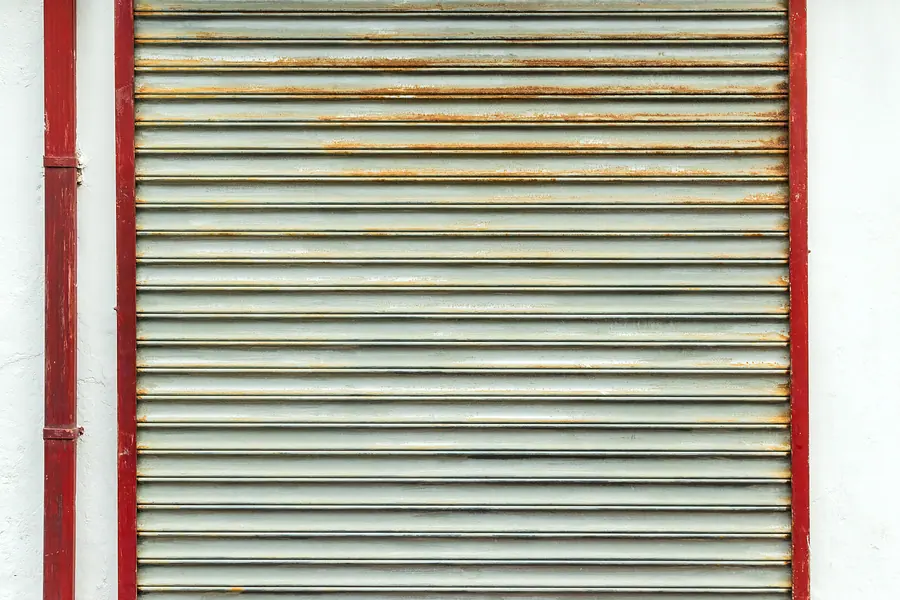
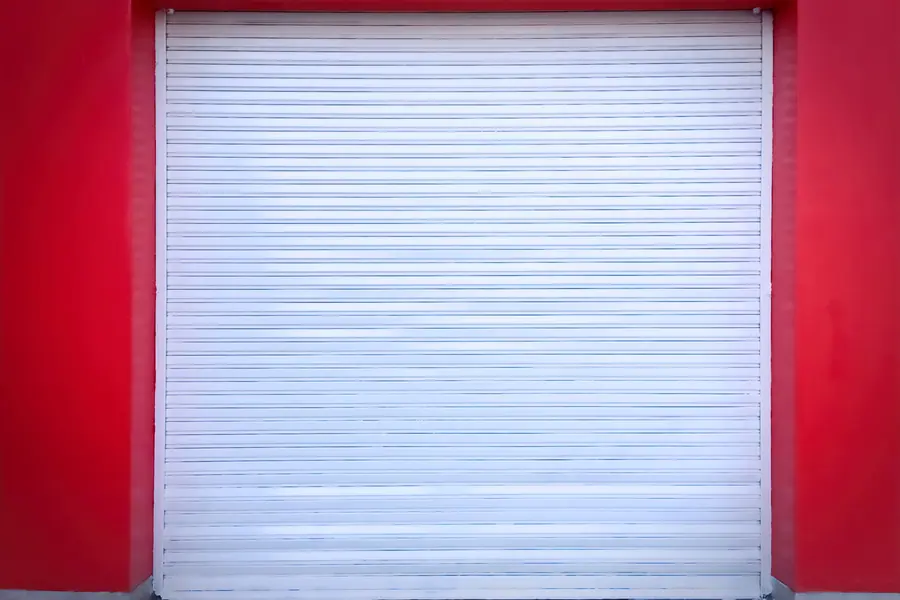 BEFOREAFTER
Before & after
A rusted rolling steel door compared with a clean, freshly finished one
The "before" image shows a rolling steel door set in a faded red frame, its slats streaked with rust from top to bottom. Corrosion like this roughens the surfaces that slide against each other, so the curtain drags in its guides and grinds as it coils. The bottom bar and lower slats, closest to the ground, are usually the worst. Left alone, the door becomes steadily harder to move until it jams.
The work illustrated is a restoration: corroded slats and bottom bar replaced, guides cleaned and realigned, the barrel spring retensioned, and the curtain and frame refinished.
The "after" image shows a clean white curtain with even, straight slats in a bright red surround. It coils smoothly and sits square on the sill. For the building, that means a door that opens without a fight, closes fully and locks, and presents a far better face to customers and delivery drivers.
Illustrative exampleThese two photographs are licensed reference images chosen to show the kind of change this service makes. They are not a record of one specific Delafield Garage Door job.
Rolling steel doors and Wisconsin weather
These doors are built for hard use, but our winters find their weak points.
Salt and corrosion. The bottom bar and lower slats sit in slush for months. Rust there is the most common long-term problem we see. Galvanized curtains hold up better than primed steel, and a rinse each spring helps.
Ice in the guides. Meltwater runs down the curtain into the bottom of the guides and freezes. The slat ends lock solid. Running an operator against that bends slats and can damage the drive.
Frozen bottom bars. The astragal freezes to the sill. Again, forcing it does harm. Keep the threshold clear and drained.
Wind. A wide curtain acts like a sail. Windlocks on the slat ends hold it in the guides during gusts; if they're missing or broken, the curtain can blow out.
Cold and lubricant. Heavy grease in the guides stiffens and collects grit. We use dry or light lubricants suited to low temperatures.
Heat loss. A standard rolling door is uninsulated steel with gaps at the guides and hood. For heated buildings, insulated slats with perimeter seals reduce the loss, though a sectional door will generally seal better.
Unheated agricultural buildings. Dust and chaff pack into guides. A clean-out before each busy season keeps the door moving.
Why coiling doors need a trained hand
Rolling steel doors look simple and are anything but simple to work on. The curtain is heavy. The spring is hidden and powerful. The barrel is overhead. And the parts are specific to each manufacturer's profile.
Attempting to free a jammed curtain with a forklift or a pry bar — we've seen both — turns two bent slats into twenty. Adjusting the tension wheel without the right pins and bars injures people.
A trained technician brings the equipment to support the curtain, the knowledge to identify the profile and source matching parts, and the experience to balance the door so its operator or hoist isn't overloaded.
Rolling steel door questions
Can individual slats be replaced on a rolling steel door?
Yes, provided a matching slat profile is available. Damaged slats are slid out and new ones threaded into the curtain.
Why is my rolling door so hard to lift?
The barrel spring has probably lost tension or broken. It needs adjustment or replacement by a technician.
My rolling door is stuck halfway. What should I do?
Don't force it. Keep people clear, lock out the operator, and call us. Forcing a jammed curtain bends more slats.
How often should a rolling steel door be serviced?
At least once a year for typical use; more often for high-cycle doors. Fire-rated doors have their own inspection requirements.
Can a manual rolling door be motorized?
Often, yes. An operator can be added to many chain- or push-up-operated doors, along with the required safety devices.
Is a rolling door or a sectional door better for my building?
Rolling doors are compact and rugged. Sectional doors insulate and seal better. The right choice depends on headroom, security, traffic and whether the space is heated.