What a tune-up is, and isn't
A tune-up is a single service visit with a defined scope: go over the whole door and opener, adjust and lubricate everything that needs it, and report on anything that's wearing out.
It isn't a repair. If a spring is broken or a cable has snapped, that's a repair call. And it isn't a sales visit. The point is to get more life out of the door you have.
Who's it for? Just about anyone whose door hasn't been touched in a year or more. It's especially worthwhile if the door has become louder, slower or jerkier; if you've just moved in and don't know its history; or if winter is coming and you'd rather not find out the hard way.
For homeowners who want this done on a regular cycle, our residential maintenance page describes how we set that up.
The tune-up, step by step
Here's what happens, in the order we do it.
- Watch and listenWe run the door through a full cycle under power and note noises, hesitation, shaking and how it lands.
- Disconnect the openerThe release is pulled so the door can be assessed on its own.
- Balance testThe door is lifted by hand and stopped at knee, waist and shoulder height. It should stay put at each.
- Inspect the springsFor rust, gaps, uneven coils and signs of fatigue. On extension systems, safety cables are confirmed.
- Inspect cables and drumsLooking for broken strands, corrosion and proper seating.
- Check every rollerEach is spun and rocked on its stem to judge the bearing.
- Check every hinge and bracketFor cracks, wear and loose fasteners.
- Tighten hardwareHinge screws, track bolts, bracket lags, opener mounts, strut fasteners. Every one.
- Check and adjust the trackPlumb, spacing, level and fixings. Minor alignment is corrected.
- Clean the trackWiped out, with debris removed. No grease.
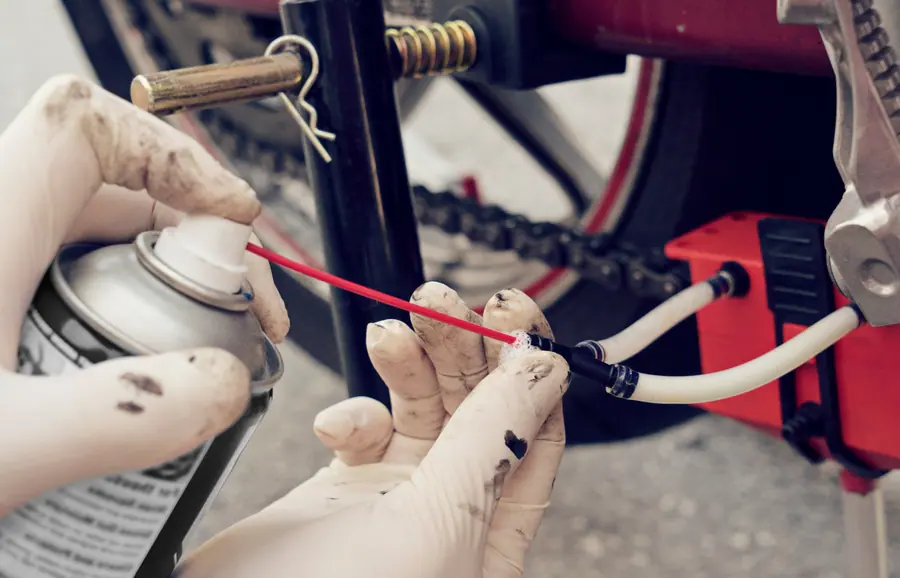
- LubricateSprings, hinges, roller bearings, end bearings and the center bearing, using a cold-rated garage-door lubricant.
- Adjust spring tensionIf the balance test showed drift, tension is corrected.
- Inspect the sealsBottom seal and perimeter weatherstripping, for cracks, gaps and stiffness.
- Reconnect and service the openerRail lubricated where the design calls for it, chain or belt tension set, mounting checked.
- Set travel limitsSo the door opens fully and closes to a firm, even seal.
- Set forceEnough to run reliably in cold weather, not so much that it won't reverse.
- Test the safety reverseWith a 2x4 laid flat under the door.
- Test the photo-eyesBeam broken during closing. Lenses cleaned and alignment confirmed.
- Test the manual releaseIt should disengage and re-engage cleanly.
- Check remotes, keypad and wall controlBatteries and function.
- ReportA plain summary of what we found and did.
What you'll notice afterward
It's quieter. Often dramatically. Dry hinges, unlubricated springs and loose hardware account for most door noise.
It moves evenly. No more shudder at the start or lurch through the curve.
It closes properly. Square to the floor, with the seal compressed along its full width.
The opener sounds relaxed. A balanced, free-running door takes very little effort to move.
It's safer. The reversing systems have been tested and, if needed, corrected.
You know where you stand. If the springs have a couple of years left or the rollers are on their way out, you'll know.
What a tune-up catches early
The real value is in the things we find before they fail.
- Springs near the end
- Rust between coils, stretched gaps, a door that's become heavy. Replacing them on your schedule beats a breakdown.
- Cables starting to fray
- Usually at the bottom bracket, where you wouldn't see it.
- Rollers with failing bearings
- Wobbling or rough when spun. Cheap to replace now; hard on the track if left.
- Cracked hinges
- Most often center hinges on double doors.
- Loose track brackets
- The first step toward a door coming off its track.
- An opener straining
- A sign the door is out of balance, caught before the gear or motor gives out.
- Marginal photo-eyes
- Brackets bent, lenses cloudy, wiring nicked.
- Hardened or torn seals
- Before winter exposes them.
- A missing reinforcement bracket
- Before the top section cracks.
What's included and what's extra
We keep this simple.
The full inspection, tightening, lubrication, balance adjustment, opener adjustment, safety testing and a written summary.
Replacement parts — springs, cables, rollers, hinges, seals, opener components — and any repair beyond adjustment.
We'll tell you what's worn and what it would cost. You decide whether to have it done then, later or not at all.
Many small items can be installed during the same visit if you'd like, since we carry common parts.
The products we use
The wrong lubricant does more harm than none, so it's worth saying what goes where.
- On springs, hinges and bearings: a silicone- or lithium-based spray formulated for garage doors, which stays fluid in the cold and doesn't attract dust
- On nylon rollers: lubricant in the bearing only, never on the wheel
- On the opener rail: whatever the manufacturer specifies for that drive type; many belt drives need none
- On tracks: nothing. They're cleaned and left dry
- On seals: a light silicone wipe on the bottom seal's contact face helps stop it freezing to the floor
General-purpose penetrating sprays are solvents, not lubricants. They quiet a squeak for a week and wash out whatever grease was there.
How often to book one
For most homes, once a year. For a door that cycles heavily — a large family, a home business, the main entry to the house — or one in a damp or lake-side garage, every six months is better.
New doors benefit from a tune-up after the first year, once springs and hardware have settled.
 BEFOREAFTER
Before & after
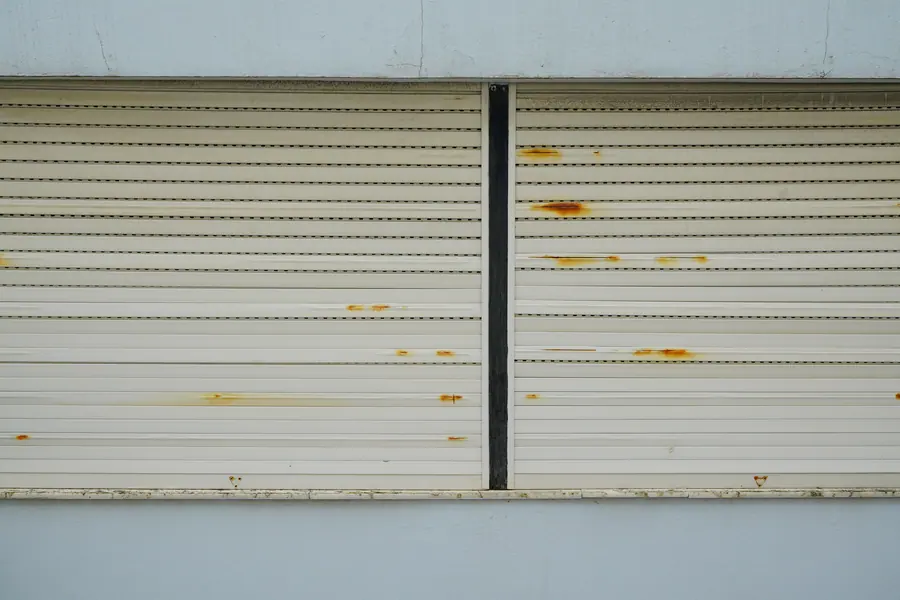
Grimy, rust-streaked doors compared with clean, evenly aligned ones
The "before" image shows two doors side by side with rust streaks, grime on the slats and uneven lines at the bottom. Nothing is broken, exactly. They've simply gone a long time without anyone cleaning, adjusting or lubricating them. Doors in this state tend to be noisy and stiff, and their hardware wears faster than it should because it's running dry and out of alignment.
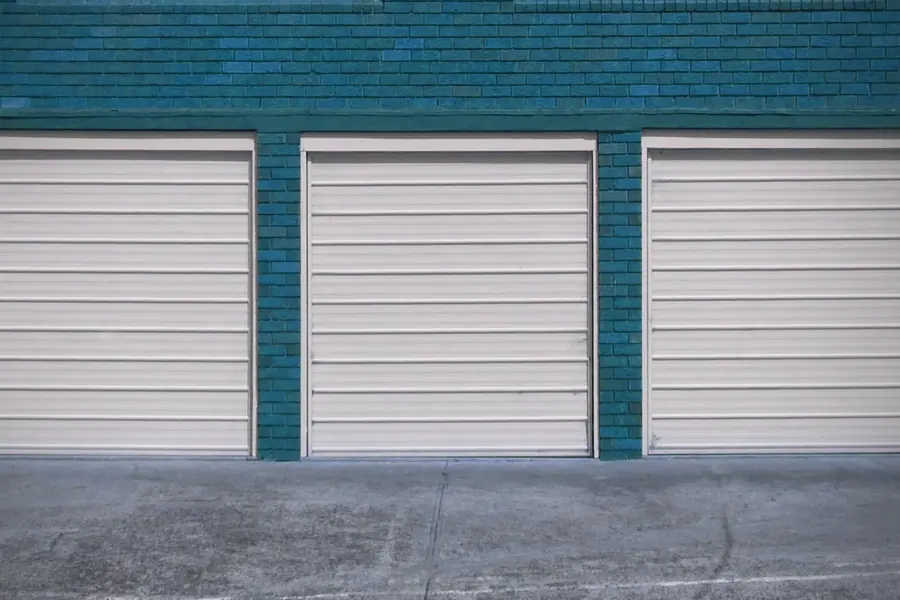
The work illustrated is a thorough tune-up: surfaces cleaned, hardware tightened, moving parts lubricated, springs rebalanced, and the doors adjusted to sit level and close evenly.
The "after" image shows three clean doors, evenly spaced and aligned along the bottom. They look cared for because they have been. In use, the difference is in the feel: doors that rise smoothly, close square and quiet, and put far less strain on their springs and openers. That's what an hour of proper attention buys.
Illustrative exampleThese two photographs are licensed reference images chosen to show the kind of change this service makes. They are not a record of one specific Delafield Garage Door job.
The best time for a tune-up in Wisconsin
You can have one any time. If you're choosing, choose early fall.
Before the cold. Lubricant goes on and penetrates while it's still mild. Come January it's already where it needs to be, and it's a grade that won't turn to paste.
Before springs are tested. Cold is when fatigued springs break. A tune-up in September or October identifies the ones that are close, so they can be replaced in comfort.
Before seals stiffen. Vinyl and rubber are easier to assess and replace when they're pliable. A new bottom seal installed in October won't freeze to the floor in December the way a hardened one will.
Before force settings matter. We set the opener with enough margin for a stiffer winter door, and confirm it still reverses safely.
Before the rush. The first real cold snap fills every garage door company's schedule with breakdowns.
A second, lighter look in spring is worthwhile too: rinse off the salt, check the bottom section and cables for rust, and make sure nothing shifted with the frost.
For homes near Nagawicka, Pewaukee Lake or Okauchee, where the air is damper year-round, we'd lean toward twice a year.
Can you do a tune-up yourself?
Partly, and we'd encourage it. Lubricating hinges and roller bearings, tightening the hinge screws you can reach, wiping the photo-eyes and running the reversal tests are all safe and useful.
What a homeowner shouldn't do is the part that makes the biggest difference: adjusting spring tension to rebalance the door. That needs winding bars and training. Nor should anyone loosen the bottom brackets, the cable drums or the spring cones.
A technician also brings calibrated judgment. We've handled thousands of doors and know what a tired spring feels like, what a roller with a hundred cycles left sounds like, and how much force is the right amount.
Tune-up questions
How long does a garage door tune-up take?
About an hour for a single door, a little more for two or if adjustments are extensive.
What's the difference between a tune-up and a repair?
A tune-up is preventive: inspection, adjustment, lubrication and testing. A repair fixes something that has failed. We often find small repairs during a tune-up and will quote them.
Will a tune-up fix my noisy door?
In most cases it makes a substantial difference. If worn rollers or another part are the cause, we'll show you and offer to replace them.
Do I need a tune-up if my door seems fine?
That's the ideal time. The purpose is to keep it that way and catch wear you can't see.
How often should I get one?
Yearly for most homes; twice a year for heavily used doors or damp locations.
Is the opener included?
Yes. Drive tension, travel limits, force, safety reverse, photo-eyes and controls are all part of the visit.