How to tell a door is finished
We don't push replacement. A sound door with a broken spring needs a spring, not a sales pitch. But some doors are past repair in any sense that's worth paying for, and it helps to know the signs.
Surface rust can be treated. Once you can push a screwdriver through the bottom section, the steel is gone and the panel will keep failing around any patch.
Wood doors rot from the bottom rail and the joints upward. If a section flexes when it shouldn't or the paint won't hold, moisture is already inside.
Creased or bowed panels put the whole door out of plane. Rollers bind, hinges crack and the opener strains.
A single-skin door on an attached garage loses heat all winter and booms like a drum in the wind.
When you've replaced springs, rollers and an opener in quick succession, the door itself may be the common cause.
Manufacturers retire panel designs. If a damaged section can't be matched, replacing the door is often the only tidy fix.
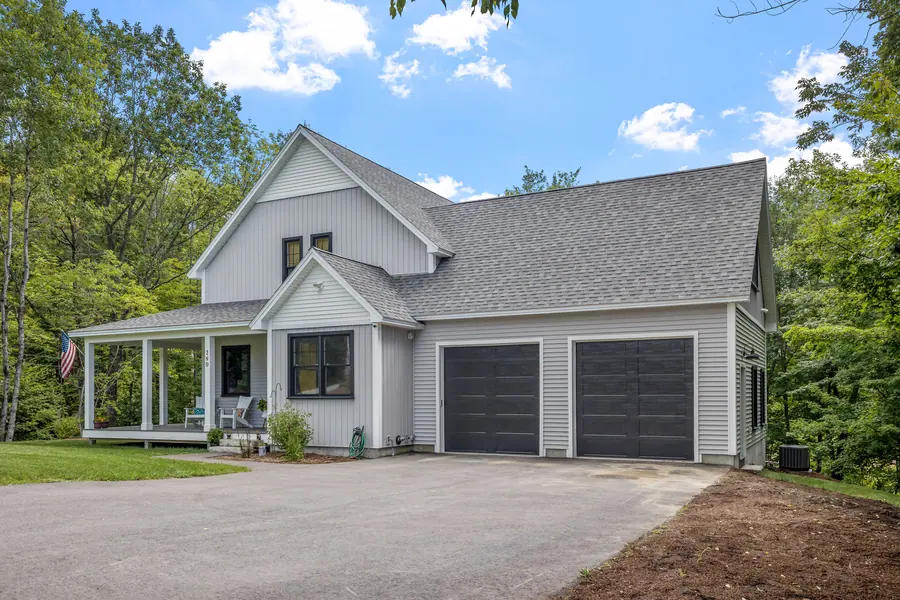
There's a softer reason too. Sometimes a door works fine and simply looks wrong — dated, faded, out of step with a house that's been re-sided or repainted. That's a perfectly good reason to replace it, and we're not going to pretend otherwise.
What replacement involves
Swapping a door is different from installing one in a bare opening. There's an existing door to take down safely, track and hardware that may or may not be worth reusing, and usually an opener that has to be reconnected or replaced.
- Assess what's thereWe check the opening, framing, track, springs and opener, and measure for the new door.
- Agree the new doorMaterial, insulation, style, color, glass and hardware. We'll bring samples and photographs.
- Remove the old doorSprings are unwound under control. Sections come down from the top, one at a time. Old track is removed unless it's in excellent condition and compatible.
- Check and correct the framingRotten jamb trim, loose header boards or a stop molding that's seen better days get dealt with now, while everything is open.
- Fit the new doorNew sections, new track, new springs sized to the new door's weight, new cables and rollers.
- Seal, balance and reconnectPerimeter seals installed, door balanced by hand, opener reattached with a reinforcement bracket and its limits reset.
- Haul-awayThe old door and hardware leave with us.
We nearly always recommend new track and springs with a new door. Track profiles differ between manufacturers, and old springs were sized for a different weight. Reusing either is a false economy.
What you gain from a new door
Comfort
A modern insulated door with a polyurethane core and thermal breaks between the inner and outer skins holds heat far better than the doors installed twenty or thirty years ago. If your garage shares a wall with a kitchen or sits under a bedroom, you'll feel that in the house.
Quiet
Insulated sandwich construction doesn't rattle. Add nylon rollers and a correctly balanced spring system and the door goes from a clatter to a low hum.
Strength and security
Steel bonded to foam on both sides resists dents and flexing. It also resists being pried at, which a tired single-skin door doesn't.
Appearance
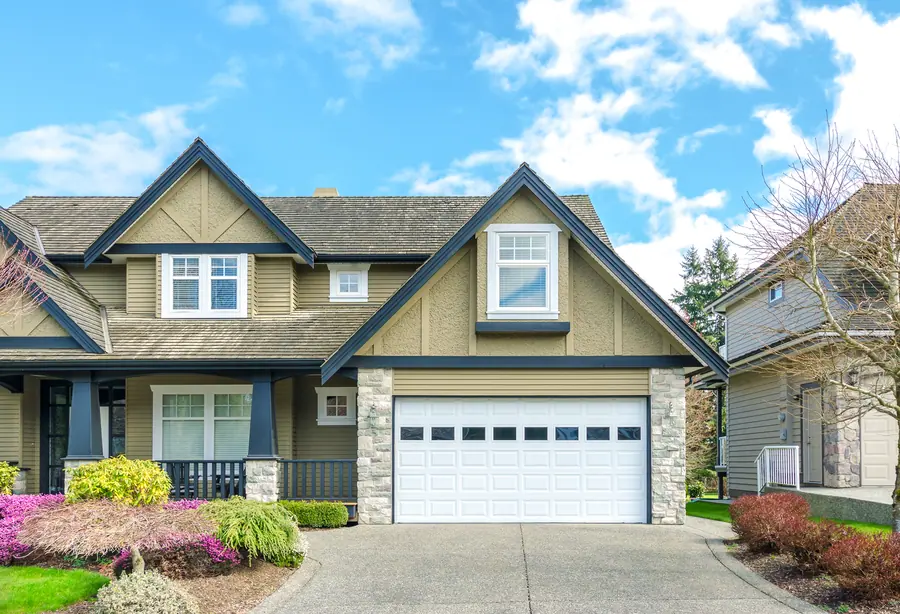
On most houses the garage door is the largest single feature facing the street. Changing it alters the whole front of the home, often more than new paint does.
Less upkeep
Factory-finished steel and composite doors need washing and little else. If you've been repainting a wood door every few years, that alone can be reason enough.
Picking the new door
If you liked your old door, we can usually find something close. If you didn't, this is the chance to change direction.
- Steel, insulated
- The practical default for this climate. Wide range of panel styles, colors and wood-grain finishes, with strong thermal performance.
- Carriage house
- Sectional doors styled to look like swing-out doors. Suits farmhouses, cottages and craftsman homes. More here.
- Contemporary
- Flush panels, long horizontal windows or full-view glass. See options.
- Real wood
- Cedar, hemlock or mahogany, stained or painted. Unmatched warmth, with finish maintenance to plan for. Details.
- Wood-look composite
- The grain and depth of wood on an insulated steel core, without the refinishing.
We'll also talk about windows, which change the look more than almost any other option, and about color — whether the door should match the trim and stand out, or match the siding and step back.
 BEFOREAFTER
Before & after
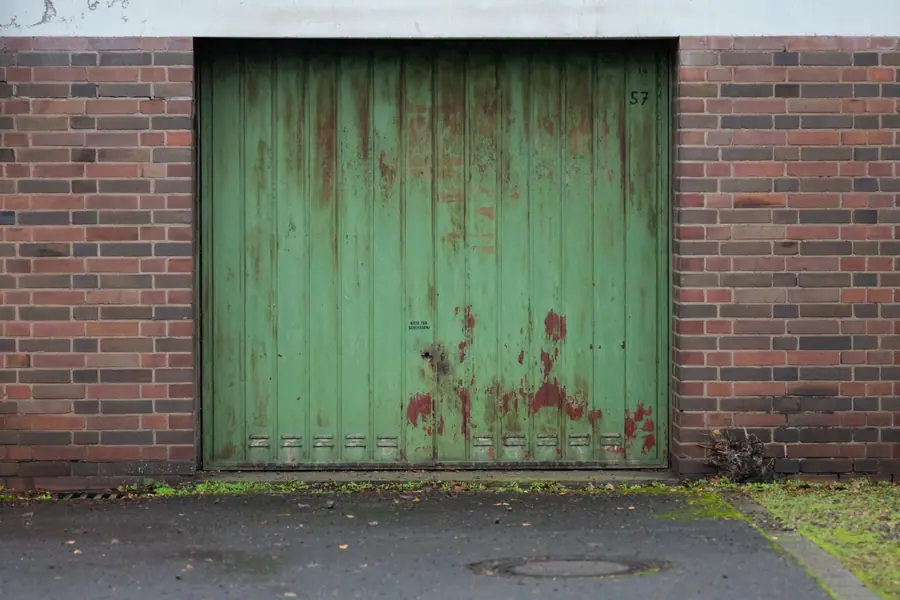
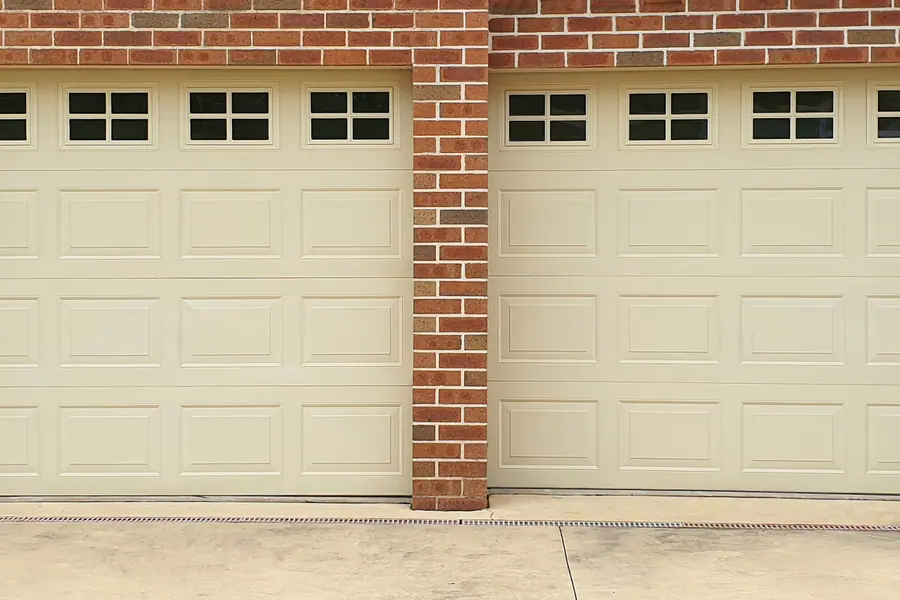
A rusted steel door gives way to new raised-panel doors
The "before" photograph is a door that has reached the end. The green paint has failed across the lower half, rust has taken hold underneath, and the steel has started to pit. A door in this state usually has matching problems behind it: seized rollers, hinges rusted to the sections and a bottom seal that crumbled long ago. Repainting would hide it for a season at most.
The service illustrated is a full replacement in a similar brick opening. The old door, track and springs come out. New track is set to the brick, and new insulated raised-panel doors are hung with springs matched to their weight.
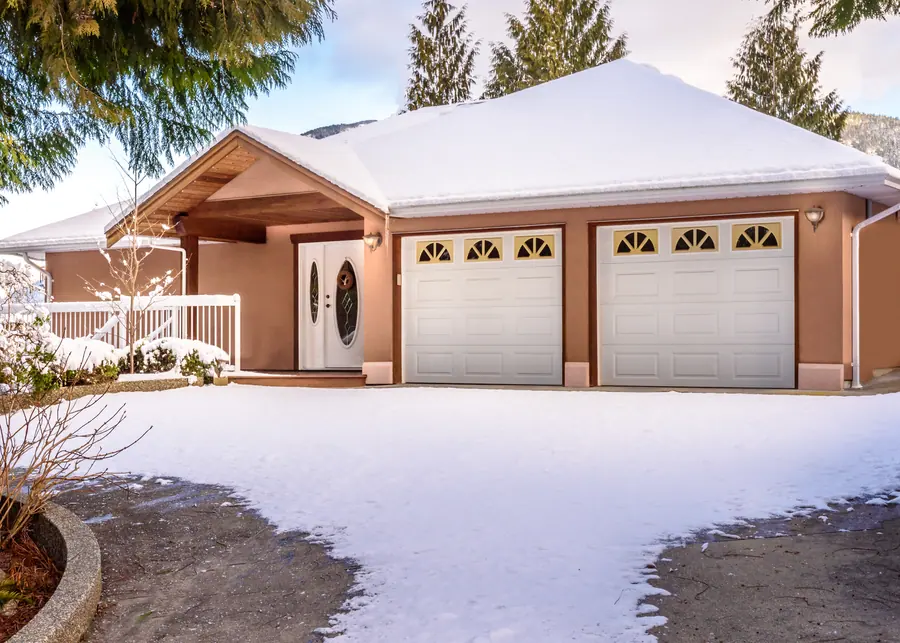
In the "after" image the difference is plain: clean cream panels, a row of small windows that bring daylight into the garage, and tight, even margins against the masonry. Beyond looks, the owner of a door like this gets insulation where there was none, hardware that runs quietly, and a weather seal that actually meets the floor.
Illustrative exampleThese two photographs are licensed reference images chosen to show the kind of change this service makes. They are not a record of one specific Delafield Garage Door job.
The Wisconsin case for replacing an old door
Climate is hard on garage doors here, and it's often what finishes them off. Road salt is the main culprit. Every time a car pulls in during winter it brings slush with it, and that brine sits against the bottom section and lower track for months. Steel doors rust from the inside bottom edge outward, which is why the damage often isn't noticed until it shows through the paint.
Freeze-thaw cycles work on wood the same way. Water gets into a joint, freezes, opens the joint a little further, and the next thaw lets in more. A wood door that looked sound in October can show open seams by April.
Then there's the heat loss. Older doors were often installed with no insulation and minimal seals. On a January night with wind coming across Nagawicka, an attached garage with a door like that can sit not much above the outdoor temperature, and the rooms next to it feel it.
A replacement door built for this climate addresses all three: galvanized steel with a baked-on finish, a foam core, thermal breaks, and seals at the bottom, sides, top and between sections.
Why not just hang a new door yourself?
The removal is the risky part. An old torsion spring under full tension, on hardware that may be corroded, is more dangerous than a new one. Extension springs on older doors frequently lack safety cables and can whip across the garage if they let go while being unhooked.
After that it's about precision. The new door has to be level, the track plumb and parallel, the springs wound to the right turn count, and the opener's force and travel reset so the safety reverse works. Mistakes here don't always show immediately; they show as a cracked top panel or a burnt-out motor a year later.
Replacement questions
Can I keep my existing opener?
Often, yes. If it's in good working order, has functioning photo-eyes and is rated for the new door, we'll reconnect it and reset the limits. If it's old or underpowered we'll tell you, and you can decide whether to replace it now or later.
Do you take the old door away?
Yes. Removal and disposal of the old door, track and springs is part of the job.
Can the new door be a different style from the old one?
Absolutely. As long as it fits the opening and the available headroom, you can change material, panel design, color and windows freely.
How long will I be without a garage door?
In most cases only a few hours. The old door comes out and the new one goes in during the same visit.
Should I replace both doors if only one is damaged?
On a garage with two matching doors, replacing one usually leaves a visible mismatch in color and sheen, even with the same model. Many owners do both for that reason, but it's your call and we'll quote it either way.
Is there a best time of year to replace a door?
We install year-round. Late spring through fall is easier on sealants and gives you an insulated door before the heating season, but a failed door in January still gets replaced in January.