Why dock doors are a special case
A loading dock is a busy, tight space. Trailers back in. Forklifts and pallet jacks run in and out all shift. Loads are tall, visibility is poor and everyone is in a hurry.
The door sits right in the middle of that. It's typically eight or nine feet wide and anywhere from eight to ten feet tall, set above a dock that's four feet off the ground. It opens and closes for every truck. And on most docks, one side of it is January and the other is a heated or refrigerated building.
That combination — high cycles, frequent impacts and a big temperature difference — makes dock doors the most repair-prone doors in commercial property.
The problems we see on docks
- Bottom section damage
- A forklift's forks or mast, or a pallet pushed against a closed door. The lowest section is creased, punctured or torn from its hinges.
- Track damage
- Forklifts clip the vertical track at the jamb. It bends inward, and rollers pop out.
- Door off its track
- The result of either of the above. The door hangs or jams.
- Broken springs
- Dock doors cycle heavily. Standard-cycle springs don't last.
- Frayed or jumped cables
- From impacts, broken springs or worn drums.
- Worn rollers and hinges
- Accelerated by the cycle count and by doors that have been knocked out of alignment.
- Failed seals
- Bottom astragals torn by pallet jacks; side and top seals worn away.
- Damaged dock seals or shelters
- The foam pads or curtains that trailers back against, compressed or ripped.
- Door won't stay open
- Springs under-tensioned, so the door drifts down into traffic.
- Lock damage
- Slide locks bent when the door was lifted while engaged.
- Operator and control faults
- On powered doors.
Repairing impact damage
Most dock repairs start with a hit. Here's how we approach it.
- Secure the doorA damaged dock door may be hanging from one cable or sitting half out of its track above a four-foot drop. Making it safe comes first.
- Assess everythingThe section that took the blow, the sections above it, the hinges, rollers, track, cables, springs and brackets. Damage travels.
- Get the opening closedIf parts need ordering, we secure the door so the building is weathertight and lockable in the meantime.
- Replace damaged sectionsMatching sections are sourced where available. On older doors we'll confirm whether that's possible before recommending it.
- Repair or replace trackBent vertical track is straightened if sound, replaced if creased.
- Renew hardwareHinges, rollers and cables affected by the impact.
- RebalanceSprings adjusted or replaced for the door's weight.
- Test and protectThe door is cycled, and we'll talk about preventing the next strike.
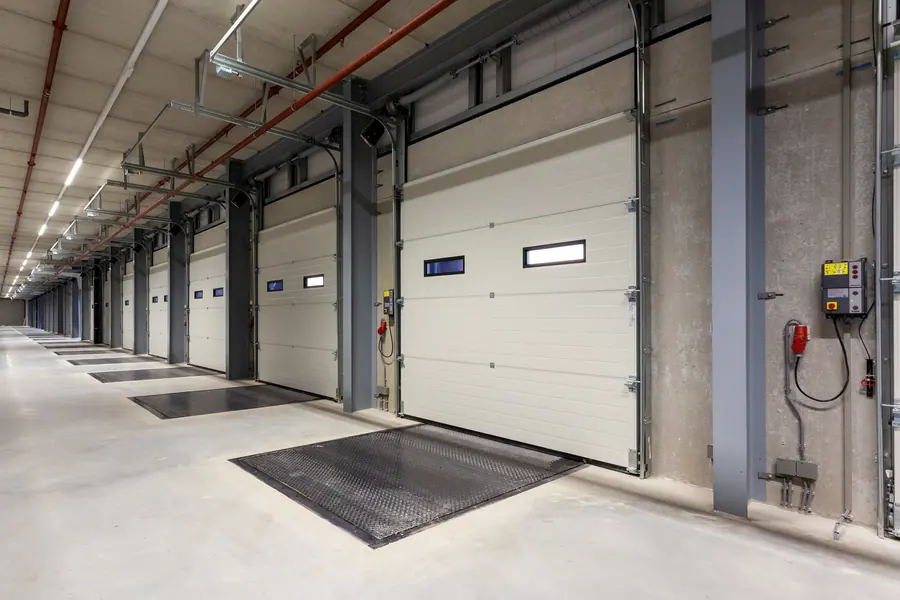
Dock door types and features
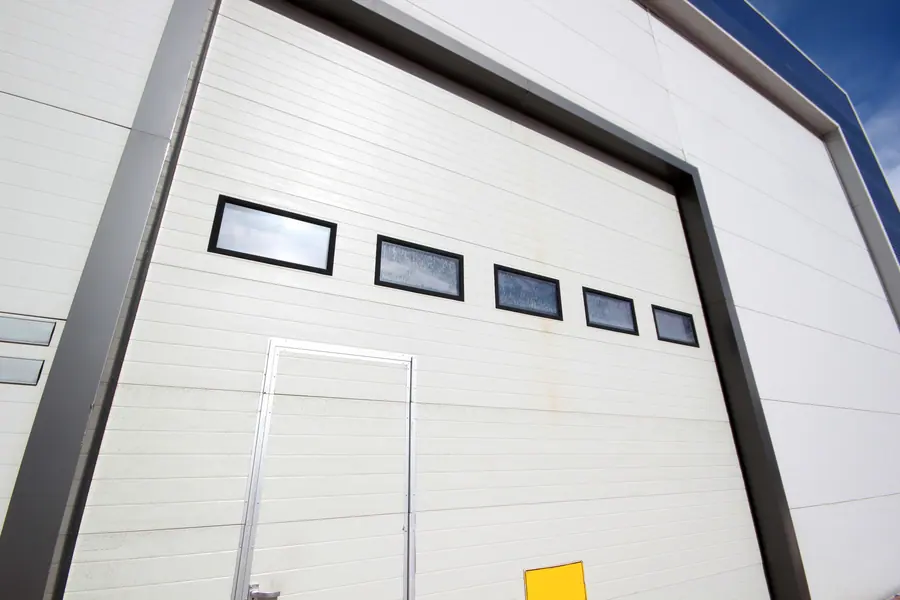
The standard. Steel-skinned foam-core sections, often with a small vision lite at eye level.
Carries the door straight up the wall above the opening so nothing hangs over the dock where forklifts work.
Designed so the sections release from the track when hit and can be reset by hand in minutes, without tools. A major reduction in repair calls on busy docks.
A compromise: only the bottom section releases.
Spring-loaded plungers in place of fixed rollers, allowing the door to pop out and back.
Thicker insulation and heavier seals for coolers and freezers.
Where headroom is limited or security is the priority.
If you're repairing the same door for the third time this year, an impact-resistant door is worth pricing. The upfront cost is higher; the savings come quickly.
Seals and shelters
A dock door is only half of the weather barrier. The other half is what seals the gap between the building and the trailer.
Dock seals are foam pads covered in heavy fabric, fixed to the wall around the opening. The trailer backs into them and compresses them for a tight seal.
Dock shelters are a frame with fabric curtains that close around the trailer's sides and top. They suit a wider range of trailer sizes and take less abuse.
On the door itself, the bottom astragal seals to the dock leveler or floor, and jamb and header seals close the perimeter.
All of these wear. Torn pads, flattened foam and missing door seals let heated air pour out and cold, rain and insects in. Replacing them is unglamorous and one of the better returns in building maintenance.
Reducing repeat damage
Fixing the door is our job. Helping you stop it being hit again is good service.
- Track guards and bollards at each jamb take the forklift strike so the track doesn't
- Set the open limit high so the bottom of the door is fully clear of the opening and any mast
- High-lift or vertical-lift track removes the horizontal track from above the dock
- Vision lites let operators see whether a trailer is at the door
- Painted lanes and wheel guides bring trailers in square
- Dock lights and communication lights reduce guesswork
- A door that stays open. If springs are weak and the door creeps down, it will get hit. Keeping it balanced matters.
- Impact-resistant doors on the positions that take the most abuse
Springs for dock duty
A dock door might cycle forty or more times a day. A 10,000-cycle spring on that door lasts less than a year.
When we replace springs on a dock, we'll ask how many trucks the position sees and recommend a cycle rating to suit — commonly 50,000 or 100,000. The longer spring costs more once and saves several replacements, each of which takes the door out of service.
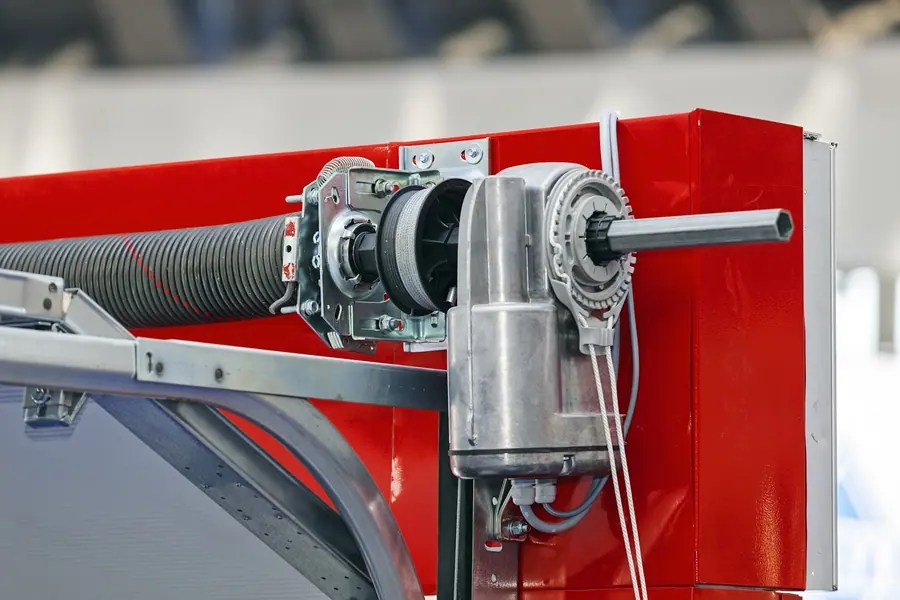
We also replace springs as a set and check the shaft bearings, drums and cables at the same time.
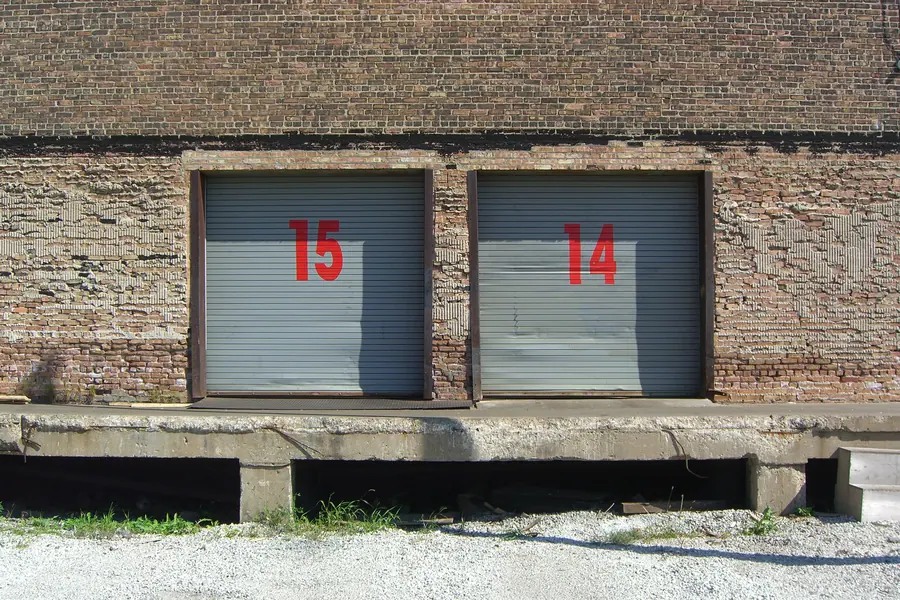
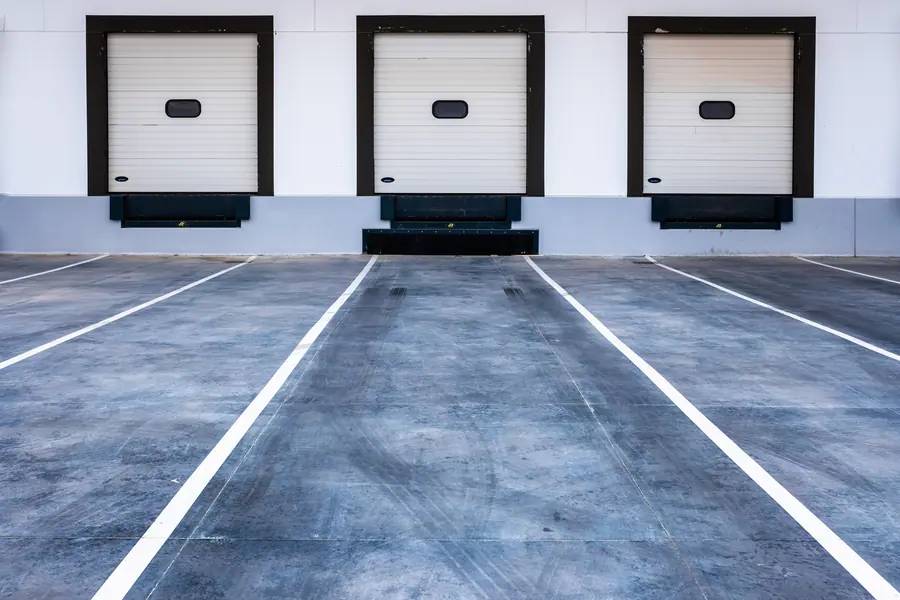 BEFOREAFTER
Before & after
Aged dock doors on a worn building compared with new dock doors and shelters
The "before" image shows two dock doors on a brick warehouse, numbered 15 and 14. The doors are weathered, the brickwork is stained, the dock face is crumbling and there's no seal or shelter around either opening. It's a familiar picture of a dock that's been running for decades with minimal attention: doors that leak air, take a long time to operate and offer trailers nothing to seal against.
The work illustrated is a dock position brought up to current standard. The old doors are replaced with insulated sectional doors with vision lites, shelters are installed around each opening, and the approach is marked.
The "after" image shows three clean white dock doors framed by black shelters, with painted lanes leading to each. For the operation, the change is practical: doors that open and close quickly, a seal against the trailer that keeps conditioned air inside, clear guidance for drivers, and fewer repair calls.
Illustrative exampleThese two photographs are licensed reference images chosen to show the kind of change this service makes. They are not a record of one specific Delafield Garage Door job.
Docks in a Wisconsin winter
A loading dock is the leakiest part of most buildings, and winter makes that expensive.
Heat loss. Every gap around a dock door or between the building and trailer is heated air leaving. With months of sub-freezing weather, worn seals show up on the fuel bill. Insulated doors with good perimeter seals and intact dock seals or shelters make a measurable difference.
Ice at the threshold. Snow blown or tracked onto the dock leveler melts and refreezes under the door. The astragal freezes down and tears when the door is opened.
Condensation and frost. Warm, moist indoor air meets cold steel at the door. Frost builds on tracks and hardware, especially on cooler and freezer docks.
Brittle materials. Vinyl seals and curtains stiffen and crack in deep cold. Cold-rated materials last longer.
Salt. Yards are salted heavily. Track bases, bottom brackets and cables on dock doors corrode from the outside in.
Wind. Docks on the north and west faces of buildings take the worst of it. Shelters and well-sealed doors protect staff as well as product.
Springs. As with every door, the coldest weeks bring the most spring failures. On a dock, that means freight waiting.
A pre-winter check of dock doors and seals — ideally in October — is one of the most useful maintenance visits a facility can schedule.
Why dock doors need a professional
Dock work combines heavy doors, powerful springs, working at height above a dock edge, and an active traffic area. It requires proper equipment, lockout of operators, and coordination with your staff so nobody drives a forklift through the work zone.
Experience matters for diagnosis too. Recognizing that a door keeps coming off because its track was installed too close to the opening, or that springs are failing because the cycle rating is wrong, is what turns a string of repairs into a lasting fix.
Dock door questions
A forklift hit our dock door. Can it be repaired?
Usually. We replace the damaged sections, repair the track and renew affected hardware. If matching sections aren't available, we'll discuss alternatives.
What is an impact-resistant dock door?
A door designed so its sections release from the track on impact and can be reset by hand without tools or parts. It greatly reduces downtime on busy docks.
How often should dock door springs be replaced?
It depends on cycle count and the spring's rating. High-cycle springs suited to dock use last far longer than standard ones.
Can you replace dock seals and shelters?
Yes. We repair and replace dock seals, shelters and the door's own perimeter seals.
How can we stop our dock doors being hit?
Track guards, bollards, correct open-height settings, vision lites, balanced doors and, on problem positions, impact-resistant doors.
Do you offer scheduled maintenance for docks?
Yes. Regular inspections catch worn springs, cables and seals before they stop a dock position.