How a torsion spring works
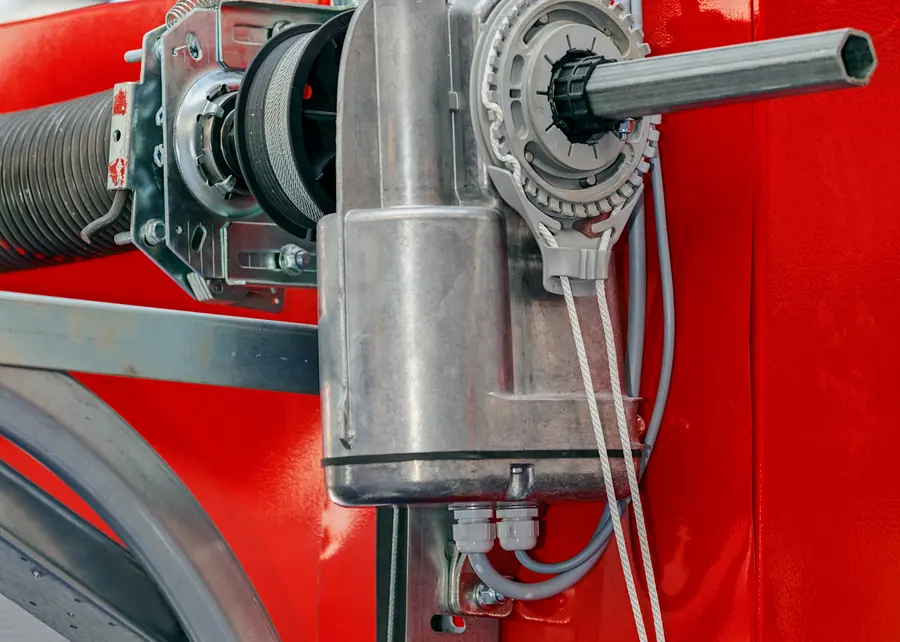
Stand inside your garage and look above the closed door. You'll see a steel tube running the width of the opening, with one or two fat coil springs wrapped around it and a drum at each end. That's the torsion system.
When the door closes, cables attached to its bottom corners wind off the drums and turn the shaft. That rotation twists the springs, storing energy. When the door opens, the springs unwind, the shaft turns the other way, the drums reel in the cables and the door rises. The springs are doing the lifting; the opener, or your hand, only has to tip the balance.
It's an elegant arrangement. Because the spring's force changes as it unwinds and the door's effective weight changes as sections roll onto the horizontal track, a correctly matched spring keeps the door close to weightless through its whole travel. That's what "balanced" means.
The numbers behind a spring
Every torsion spring is described by four things.
- Wire size
- The thickness of the steel wire, measured in thousandths of an inch. Thicker wire is stronger and, at a given lift, lasts longer.
- Inside diameter
- The width of the hole through the coil — commonly 1¾ or 2 inches on residential doors.
- Length
- The length of the coil when unwound. Longer springs spread the stress over more steel.
- Wind direction
- Left-wound or right-wound. A two-spring system uses one of each, mounted either side of the center bracket.
Those figures combine into a rating called IPPT — inch-pounds per turn — which is how much lifting force the spring delivers for each quarter-turn it's wound. The job is to choose a spring whose IPPT, multiplied by the number of turns for the door's height, matches the door's weight through the drums.
That's why we weigh the door. The old spring's dimensions tell us what was there, but not whether it was right. Doors get replaced, insulation gets added, glass gets changed. We've lost count of the doors running on springs that were wrong from the day they were installed.
Cycle life, and why it's worth a conversation
A cycle is one full opening and closing. Spring life is engineered: for the same lifting force, a spring made from heavier wire in a longer coil works at lower stress and survives more cycles.
What most doors leave the factory with. Roughly seven years at four cycles a day.
A modest increase in cost for well over double the life. A sensible choice for most families.
For households where the garage is the main entrance and the door runs a dozen times a day, or for anyone who simply doesn't want to think about springs again for a long while.
The price difference between a standard and a high-cycle spring is small compared with the labor of replacing it, which is the same either way. We'll quote the options side by side.
What gets replaced along with the spring
A spring change opens up the whole counterbalance assembly, so it's the moment to deal with the small parts that wear alongside it.
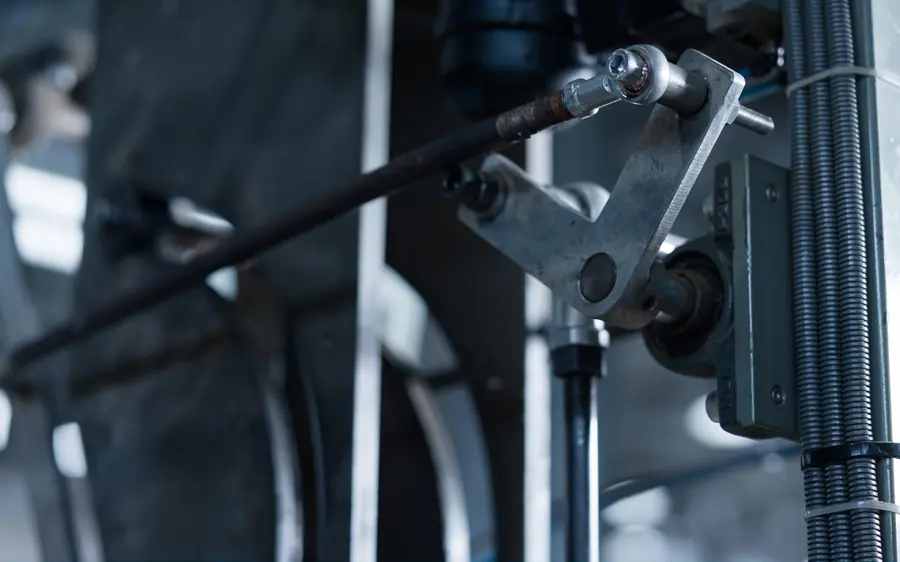
- Center bearing: a nylon or steel bearing in the spring anchor bracket that supports the shaft. Worn ones cause squealing and shaft wobble.
- End bearing plates: the bearings at each end of the shaft. Rough or seized bearings drag on every cycle.
- Cables: if they're frayed, kinked or rusted near the bottom bracket, they should go now.
- Drums: checked for cracks and worn grooves.
- Winding and stationary cones: usually supplied with the new spring; old cones are never reused if cracked.
None of these adds much to the job, and replacing them now avoids taking the system apart again in a year.
Our replacement procedure
- Disconnect and secureThe opener is disengaged and the door clamped down at both tracks.
- UnwindUsing proper steel winding bars, tension is released a quarter-turn at a time from any spring still intact.
- Strip the shaftSet screws on the drums are loosened, cables come off, and the old springs and center bearing are removed.
- Weigh the doorWith the springs off, the door is lifted onto a scale. This is the number everything else is based on.
- Select springsWire, diameter and length are chosen from the door weight, height and drum size.
- RebuildNew bearing, new springs, drums reset, cables seated and tensioned equally on both sides.
- WindEach spring gets the correct number of turns — roughly 30 quarter-turns for a seven-foot door, a little more for eight — then a slight stretch before the set screws are tightened.
- BalanceThe door is tested by hand at several heights and the springs adjusted by quarter-turns until it holds.
- FinishSprings lubricated, opener reconnected, force settings and safety reverse confirmed.
Signs your torsion springs are near the end
Springs give some notice if you know what to look for.
- The door feels heavier than it used to when lifted by hand
- It won't stay open at mid-height and drifts downward
- The opener sounds strained or has started stopping partway
- You can see uneven gaps between coils, or the spring looks stretched
- There's rust between the coils or a fine orange dust on the shaft
- The door closes faster or harder than it did
- The springs are the originals on a door that's eight to twelve years old
If two or three of those apply, replacing the springs proactively is cheaper and far less disruptive than waiting.
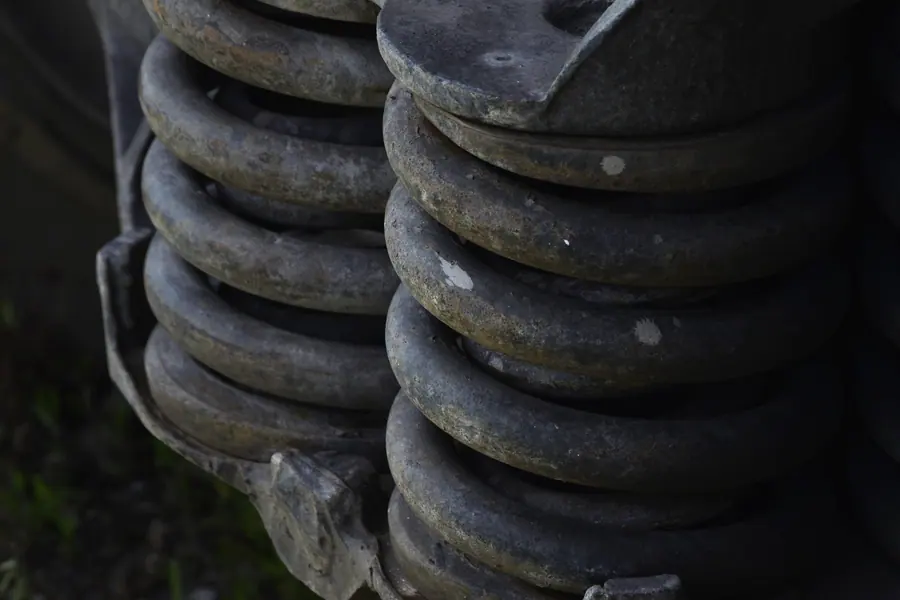
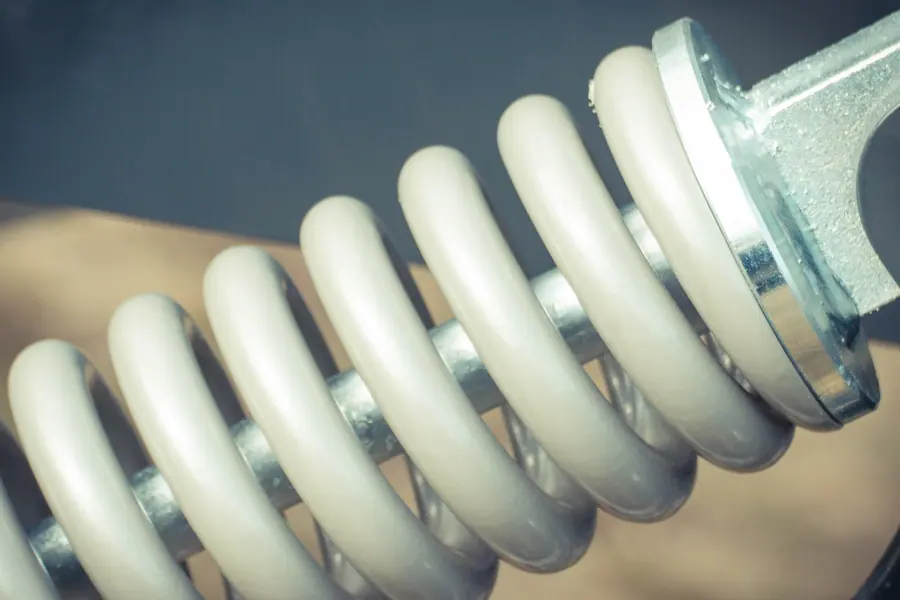 BEFOREAFTER
Before & after
Fatigued, dark springs compared with a new coated spring
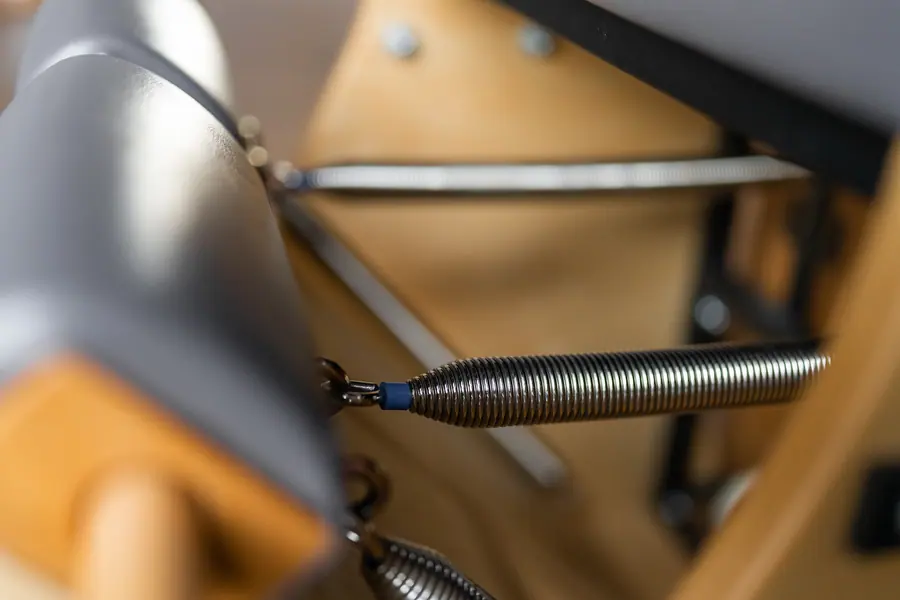
The "before" image shows heavy coil springs that have been in service a long time. The steel has darkened, surface corrosion has set in between the coils, and there's grime packed where lubricant should be. Springs like this haven't broken yet, but friction and pitting are working on them with every cycle, and the door they carry will have been getting gradually heavier for years.
The work illustrated is a planned replacement — changing the springs before they fail. The old coils are unwound and removed, the door is weighed, and a new spring of the correct specification is installed with clean fittings.
The "after" image shows a new coated spring with smooth, evenly spaced coils. The coating slows corrosion and reduces friction between turns. For the homeowner, the result is a door that's back in balance, an opener relieved of extra load, and a fresh count of cycles ahead. Because it was done on a chosen day, nobody was stuck in the garage waiting.
Illustrative exampleThese two photographs are licensed reference images chosen to show the kind of change this service makes. They are not a record of one specific Delafield Garage Door job.
Torsion springs and Wisconsin cold
Steel loses some of its toughness as it gets colder. That's basic metallurgy, and it's why so many springs in this area fail between December and February. An unheated garage in a Delafield cold snap can be far below zero inside, and a spring that's close to its fatigue limit doesn't need much encouragement.
Cold also changes how the whole door behaves. Lubricant thickens, rollers drag, seals stick. The spring is asked to work against more resistance, which is the opposite of what an old spring needs.
Moisture is the other factor. Garages here get wet all winter from snow melting off cars, and that humidity condenses on cold steel. Unprotected springs rust between the coils, where you can't see it.
What helps: a coated or galvanized spring in damp garages, a proper garage-door lubricant applied each fall, and replacement by age if you'd rather not gamble on January.
Why this is strictly professional work
Torsion springs are wound with steel bars inserted into a cone that's fighting to spin back. The forces involved are large and sudden. A bar that slips out, a cone that cracks or a set screw released at the wrong moment can cause serious injuries to hands, arms and faces.
There's no safe shortcut and no substitute tool. Screwdrivers and rebar are how people get hurt.
Then there's the calculation. Buying a spring by length and guesswork is how doors end up unbalanced. We carry a range of wire sizes and lengths so the spring installed is the spring the door needs.
Torsion spring questions
How do I know what size torsion spring my door needs?
It's calculated from the door's weight, height and drum size. We weigh the door with the springs removed and select the spring from that, not just from what was installed before.
Is it worth paying for high-cycle springs?
For most households, yes. The extra cost is modest and the spring lasts several times longer, which means fewer service calls over the life of the door.
Can one torsion spring be replaced with two?
Yes, and on heavier doors it's often a good idea. Two springs share the load and provide a margin of control if one fails.
Do torsion springs need maintenance?
A light coat of garage-door lubricant twice a year reduces friction and rust. Beyond that, an annual balance check is enough.
What's the difference between torsion and extension springs?
Torsion springs twist on a shaft above the door. Extension springs stretch along the tracks at each side. Torsion systems are smoother, longer-lived and safer when they break.
How many turns should a torsion spring have?
It depends on door height and drum size — roughly seven and a half full turns for a seven-foot door. The final setting is always confirmed by a balance test, never by count alone.