What happens to your garage door in a power outage
Nothing. That's the problem.
A standard opener runs on household current. No current, no movement. The remotes do nothing, the keypad does nothing, the wall button does nothing. The door stays wherever it was — which, most of the time, is closed with the car inside.
You do have a fallback. Every opener has a red cord hanging from the trolley. Pull it and the door disconnects from the opener so you can lift it by hand. If the springs are in good shape and the door is balanced, that's manageable for most adults.
But consider the realities. It's dark. The garage has no light. The door weighs a couple of hundred pounds and the springs may be weaker than you think. Perhaps you have a bad shoulder, or you're eighty, or you're holding a toddler. Perhaps the only way into the garage is through the door itself. And once you've got it open and driven out, you have to get out of the car and pull it closed again, then figure out how to lock it.
A battery backup makes all of that unnecessary.
How battery backup works
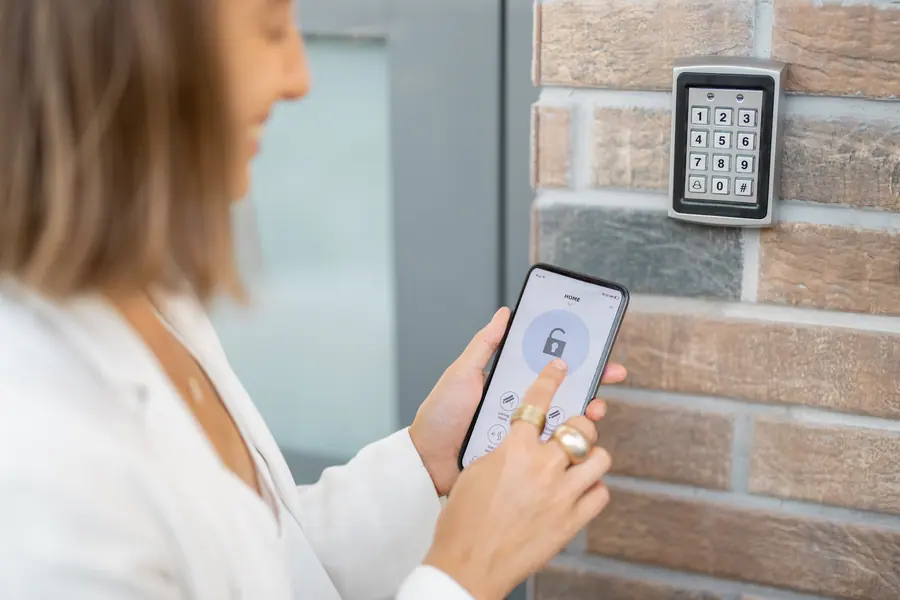
A rechargeable battery sits in or beside the opener, kept topped up from household power. When power fails, the opener switches to the battery automatically. You may not even notice, apart from a beep or an indicator light.
- What keeps working
- The motor, remotes, keypad, wall control and — importantly — the safety sensors and auto-reverse.
- What may not
- The opener's lights are often dimmed or disabled to save energy. Wi-Fi features depend on your router having power too.
- How long it lasts
- Typically around 20 or more full cycles over a 24-hour period on a healthy battery, depending on the model and door.
- Speed
- Some units run a little slower on battery.
- Recharging
- Automatic once power returns, usually over several hours.
- Alerts
- The opener beeps or flashes when it's running on battery and when the battery needs replacing.
Two ways to add it
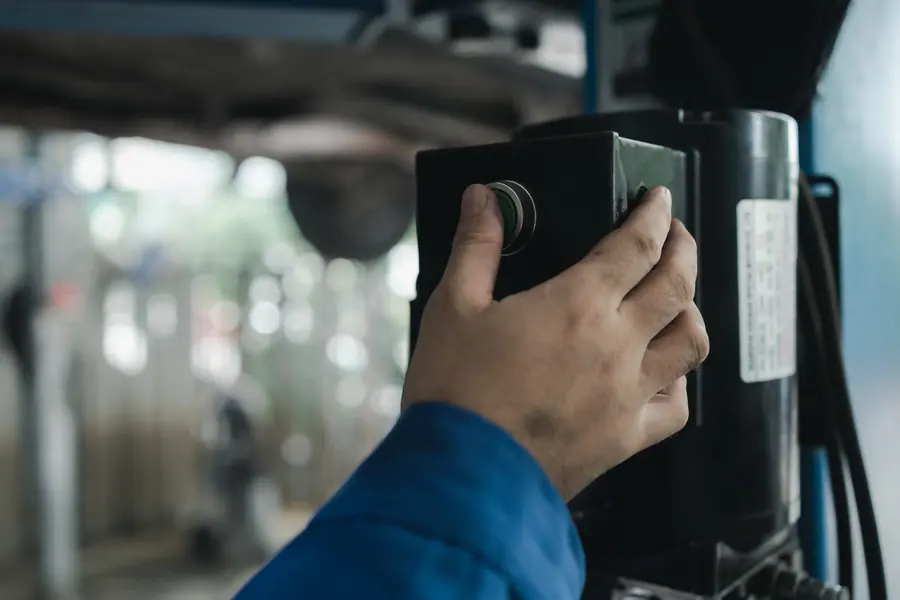
Most current DC-motor openers either include a battery or have a slot for one. The neatest solution: one unit, designed and tested together.
A separate box that mounts near the opener and supplies it during an outage. Available for certain openers that don't have a built-in option.
Sometimes suggested online. We'd be cautious: AC opener motors draw a large surge on starting that many consumer UPS units can't supply, and they aren't designed for an unheated garage.
Whether your present opener can take a battery depends on its motor type and model. Older AC-motor units generally can't. If yours is in that category and more than ten years old, a replacement opener with built-in backup is usually the sensible route, and it brings quieter operation and smart features along with it.
Who benefits most
A battery is useful to anyone. For some households it's close to essential.
- No other way in. Detached garages and some attached ones have no side door. If the opener is dead, you're locked out of the garage.
- Anyone who'd struggle to lift the door. Older residents, people with injuries or limited mobility.
- Heavy doors. Solid wood, carriage-style overlays and oversized doors are hard work by hand even when balanced.
- Medical needs. If someone might need to get to an appointment or a hospital regardless of the weather.
- Emergency responders and on-call workers. People who have to leave when the page comes.
- Rural and wooded properties. Longer outages, because crews reach them later.
- Homes on well water or with sump pumps. If you're already planning around outages, the garage door belongs on the list.
Installing a backup system
- Check the doorA battery has limited energy. A door that's balanced and free-running will get many more cycles from it than one that's dragging. We test balance and travel first.
- Confirm compatibilityOpener model, motor type and whether a battery is supported.
- Fit the battery or new openerIntegrated batteries slot into the motor housing and connect to a dedicated plug. Add-on units mount to the ceiling or wall and wire to the opener.
- Let it chargeThe battery needs time to reach full charge.
- Test on batteryWe unplug the opener and run the door through several cycles, checking that remotes, the wall control and the photo-eyes all work.
- Check the manual releaseBattery or not, everyone in the house should know how the red cord works. We show you.
- Explain the signalsWhat the beeps and lights mean, and when the battery will need replacing.
Looking after the battery
Backup batteries are sealed lead-acid or lithium units, and like all batteries they wear out.
- Expect to replace it every two to three years for lead-acid types; some last a little longer.
- The opener will tell you. A repeating beep or a red or flashing indicator means the battery can no longer hold a proper charge.
- Test it once or twice a year. Unplug the opener and run the door. If it's sluggish or gives only a cycle or two, it's time.
- Cold shortens runtime. A battery delivers less at low temperatures. More on that below.
- Replacement is quick. We carry common types and can swap one in a few minutes during any visit.
A battery that's been beeping for six months has been telling you it won't be there when you need it.
If the power goes out and you don't have a battery
For the record, here's the safe way to use the manual release.
- Make sure the door is fully closedIf it's open or partly open, don't pull the cord — the door could come down hard, especially if a spring is weak.
- Pull the red handle down and backThe trolley disengages from the carriage.
- Lift from the bottom with both handsSmoothly, keeping your back straight. A balanced door should rise without much effort and stay up.
- If it's very heavy or won't stay upStop. The springs need attention. Don't prop it.
- Close it by hand and secure itMany doors have a slide lock on the inside. With the opener disconnected, the door isn't locked otherwise.
- When power returnsPull the cord toward the opener to reset the trolley, then run the opener; it will reconnect.
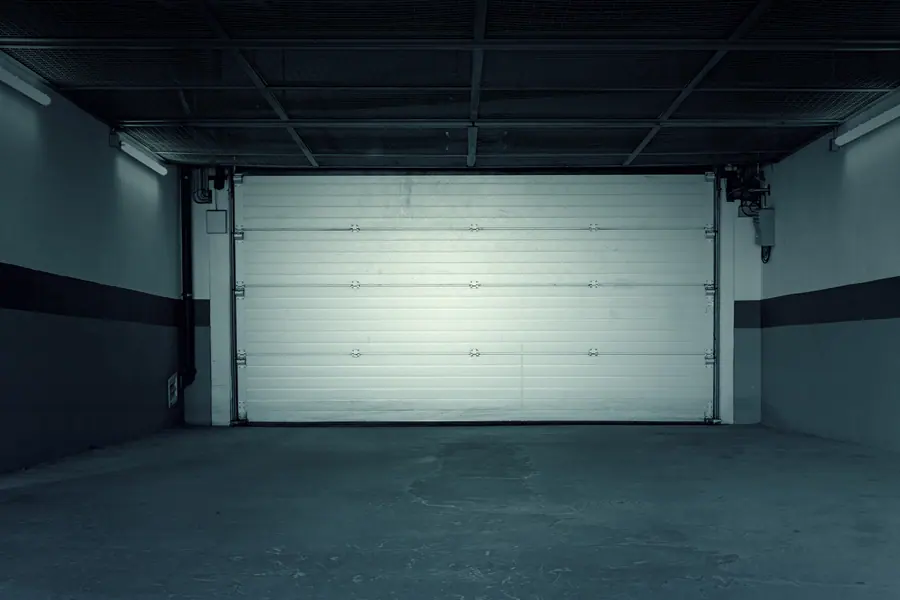
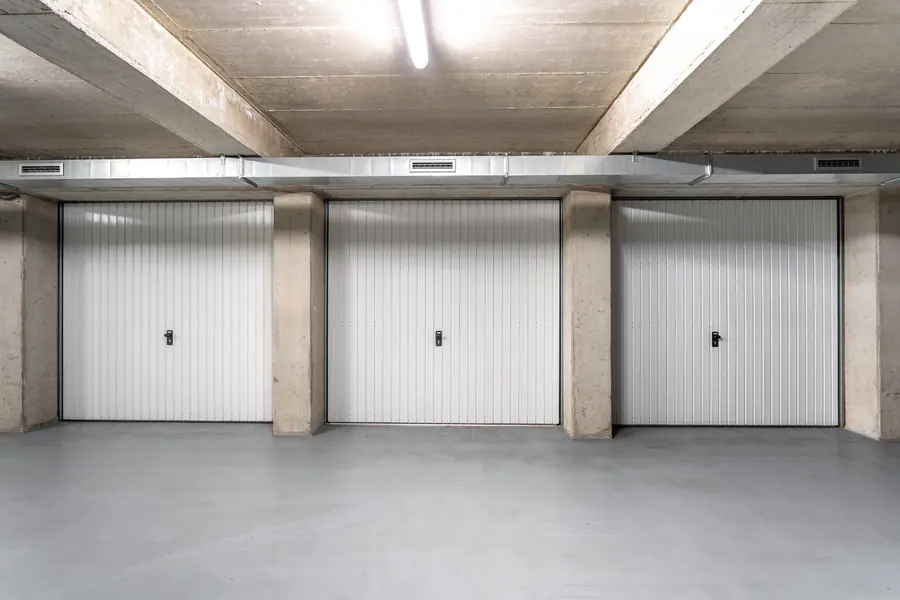 BEFOREAFTER
Before & after
A dark garage with a closed door compared with a bright, working garage
The "before" image is a dim garage interior with the door shut and almost no light. It's what a power outage looks like from inside: the opener silent, the overhead light dead, and the only way out a heavy door that has to be found and lifted by feel. In winter, with snow against the outside and the temperature dropping, that's a poor moment to discover the springs are weaker than you thought.
The service illustrated is a battery backup installation — an opener with an integrated battery, or a standby unit added to a compatible opener — together with a check of the door's balance and safety systems.
The "after" image shows a bright, orderly garage with its doors ready to operate. The difference a battery makes isn't visible day to day. It's there on the one evening the lines go down, when the door opens at the press of a button exactly as it always does, the safety sensors still watching the threshold, and nobody has to pull a release cord in the dark.
Illustrative exampleThese two photographs are licensed reference images chosen to show the kind of change this service makes. They are not a record of one specific Delafield Garage Door job.
Why this matters around Delafield
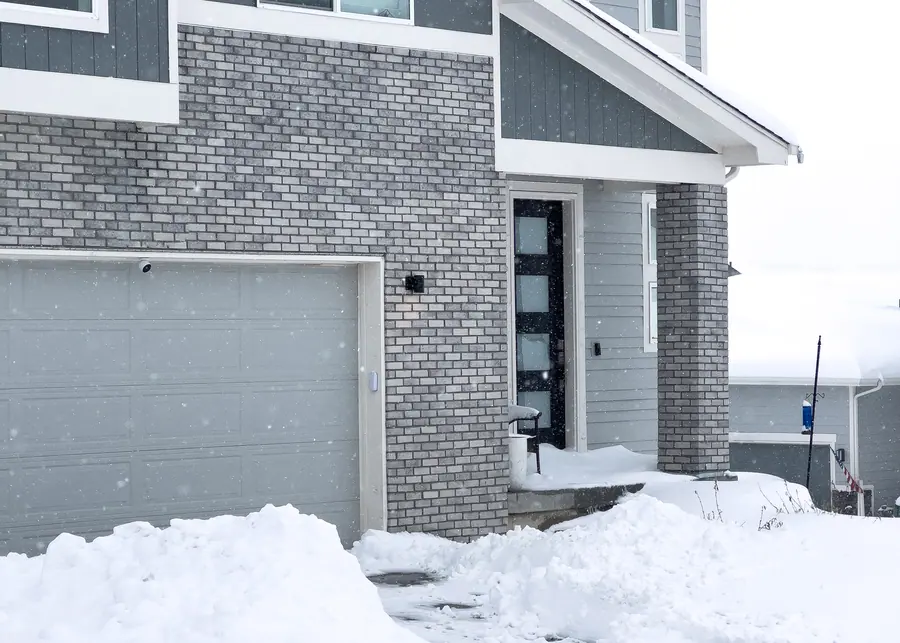
Outages in this part of Wisconsin aren't exotic events. A heavy, wet snow in November or March loads branches until they come down across the lines. Freezing rain does the same. Summer thunderstorms rolling through Lake Country take out transformers. On wooded roads around Nashotah, Chenequa and the lake shores, a single fallen limb can leave a stretch of homes dark for hours, sometimes into the next day.
Winter is when it bites. A power outage at ten below is also the time you might need to leave — to check on a relative, to reach somewhere warm, to get to work. And a cold garage is exactly where a manually lifted door is hardest: springs at their weakest, the bottom seal possibly frozen to the floor, fingers numb.
A few climate-specific notes:
Batteries lose capacity in the cold. In an unheated garage in January, expect fewer cycles than the rated number. That's another reason to keep the door balanced and the battery fresh.
Keep the threshold clear. A battery won't break a door free from ice any better than utility power will.
Pair it with a generator plan. If you run a portable generator, never operate it inside the garage, and remember that the battery lets you open the door before the generator is even started.
Check it each fall. Unplug the opener for a minute and run the door. It's the simplest way to know the backup will be there.
Why have it installed professionally
Fitting a battery into a compatible opener is simple. Knowing whether your opener is compatible, sourcing the correct unit and confirming the door is in a fit state to run on limited power is where we're useful.
A door that's ten pounds out of balance will work fine on utility power and flatten a battery in a handful of cycles. We find and fix that before it matters. We also test the whole system with the power disconnected, so you've seen it work before you need it.
Battery backup questions
How long will a battery backup run my garage door?
Most systems provide around 20 or more cycles within 24 hours on a healthy battery. Cold temperatures and a heavy or unbalanced door reduce that.
Can a battery be added to my existing opener?
It depends on the model. Many DC-motor openers accept a battery; most older AC-motor units don't. We'll check yours.
How often does the battery need replacing?
Typically every two to three years for lead-acid batteries. The opener will beep or show a warning light when it's due.
Do the safety sensors still work on battery power?
Yes. On a properly designed backup system the photo-eyes and auto-reverse remain active.
Will my phone app work during a power outage?
Only if your router and internet connection have power. Remotes, the keypad and the wall control work regardless.
Is battery backup worth it if I can open the door manually?
For many people, yes. It avoids lifting a heavy door in the dark and cold, keeps the safety features active, and is especially valuable if the garage has no other entrance.