Why the garage door matters to the rest of the house
Walk into an attached garage in January and you can usually feel where the cold is coming from. The walls shared with the house are insulated. The ceiling often is. The door — sixteen feet wide and seven feet tall on a typical two-car garage — is frequently a single layer of steel about as thick as a business card.
That's more than a hundred square feet of metal conducting heat straight outdoors. It chills the garage, and the garage chills whatever touches it: the mudroom, the kitchen wall, the bedroom above. Pipes that run through the garage ceiling are at greater risk. The car battery works harder. Anything stored out there freezes.
An insulated door doesn't turn the garage into a living room, but it changes the picture meaningfully. In an unheated attached garage, it's common for the space to stay well above the outdoor temperature on a cold night instead of tracking it closely.
How insulated doors are built
The layers
A non-insulated door is one steel skin. A double-layer door adds a sheet of rigid foam and a thin backer. A triple-layer door sandwiches the insulation between two steel skins, which is where the real gains are — both in warmth and in strength.
The two kinds of foam
- Polystyrene
- Rigid foam board cut to fit and bonded into each section. Affordable and effective. Because it's a pre-formed panel there can be small voids at the edges of the stile.
- Polyurethane
- Liquid foam injected between the steel skins, where it expands, fills every cavity and bonds to both faces. Roughly twice the insulating value of polystyrene for the same thickness, and it makes the section far more rigid.
What R-value tells you — and what it doesn't
R-value measures resistance to heat flow. Higher is better. Polystyrene doors generally fall in the R-6 to R-9 range, and polyurethane doors commonly run from about R-12 to R-18 or more, depending on thickness.
Keep in mind that the published figure usually describes the center of a section, not the whole installed door. Heat also escapes through the joints between sections, the perimeter and any glass. That's why the details below matter as much as the headline number.
The details that make it work
- Thermal breaks: a non-conductive strip separating the outer and inner steel skins so cold can't travel across the edge of the section
- Section joint seals: gaskets between panels that close the gap when the door is down
- Bottom seal: a flexible bulb or fin that conforms to the floor
- Perimeter weatherstripping: vinyl or rubber stops along both jambs and the header
- Insulated glass: double-pane units if you want windows
A high R-value door with poor seals will underperform a modest one that's been installed properly.
Is it worth it for your garage?
We'd rather match the door to the use than sell the highest number on the chart.
The most common situation around Delafield, and the one where insulation pays off most clearly. A polyurethane door in the mid-teens R-value is a sensible target.
Go to the higher end. You're paying to heat the space, so the door should hold it in. Pair it with insulated glass or no glass at all.
Insulation helps keep the floor above from feeling cold, and the stiffer door runs more quietly — a real benefit under a bedroom.
Less critical for energy. A mid-range insulated door is still worthwhile for strength, quiet and dent resistance, but the top-tier R-value isn't necessary.
Treat it like a heated space. Every degree you keep in is fuel you don't burn.
More than warmth
People choose insulated doors for the temperature and end up appreciating the other things.
They're quiet. Foam damps vibration, so the door doesn't rattle as it travels or boom when the wind hits it.
They're strong. A bonded sandwich resists dents from basketballs, bikes and bumpers far better than a hollow panel.
They last. Rigid sections put less stress on hinges, rollers and the opener, and they hold their shape across a wide opening.
They keep summer heat out too. July sun on a west-facing door can turn a garage into an oven. Insulation works in both directions.
Installing an insulated door properly
- Measure and assessOpening dimensions, headroom, the condition of the jambs and the existing track and opener.
- Choose the constructionCore type, thickness, steel gauge, panel style, color and whether to include glass.
- Remove the old doorSprings unwound safely, sections and old track taken out.
- Prepare the perimeterJambs and header checked, old stop molding removed, any rot or gaps addressed.
- Hang the new doorNew track, new springs matched to the heavier insulated sections, struts where the width calls for them.
- Seal itNew perimeter weatherstripping set to press lightly on the face; bottom seal adjusted to the floor.
- Balance and connectThe door is balanced by hand, then the opener is attached and its force and limits reset.
Insulated doors weigh more than hollow ones, so springs from the old door are never reused. We also check that the existing opener is up to the job.
Problems an insulated door solves — and a few it doesn't
It will noticeably raise the temperature of an attached garage, cut drafts and reduce noise. It will not make up for an uninsulated garage ceiling, a leaky service door or gaps around the sill plate. If you're serious about a warm garage, think of the door as the biggest piece of a larger job.
It also won't fix condensation on its own. A warmer, tighter garage that's regularly filled with a wet, snow-covered car can hold a lot of moisture. A little ventilation, or simply cracking the door on a mild afternoon, helps.
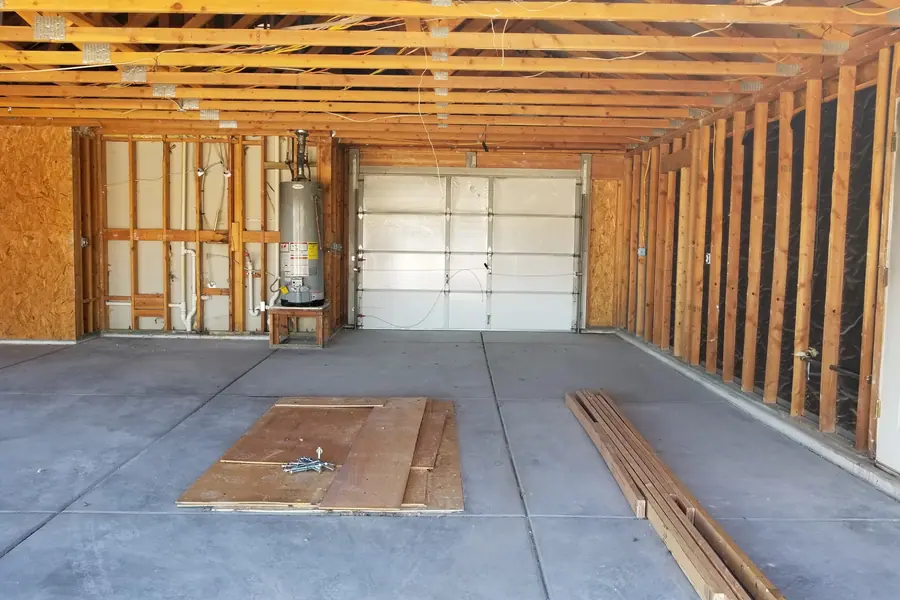
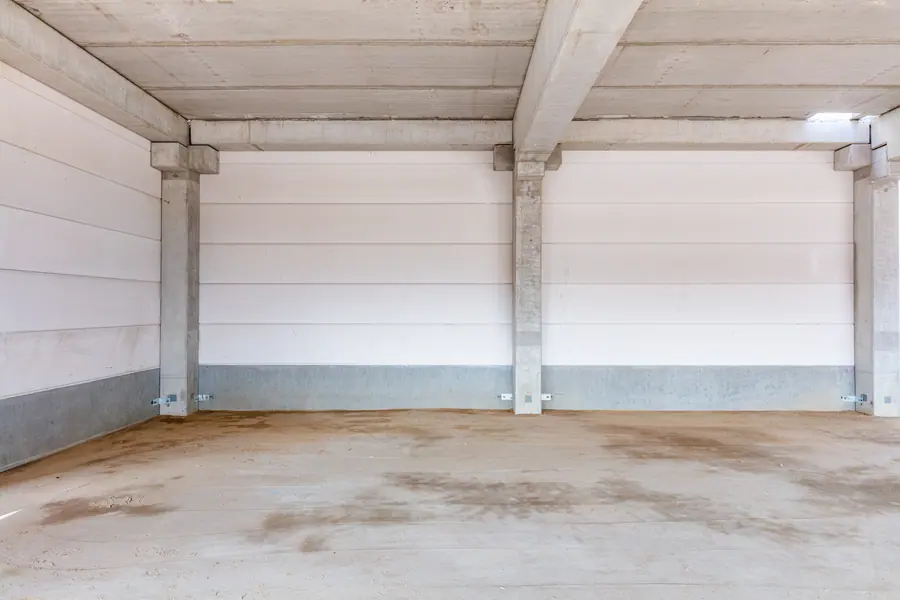 BEFOREAFTER
Before & after
A bare, unfinished garage interior compared with a finished, insulated one
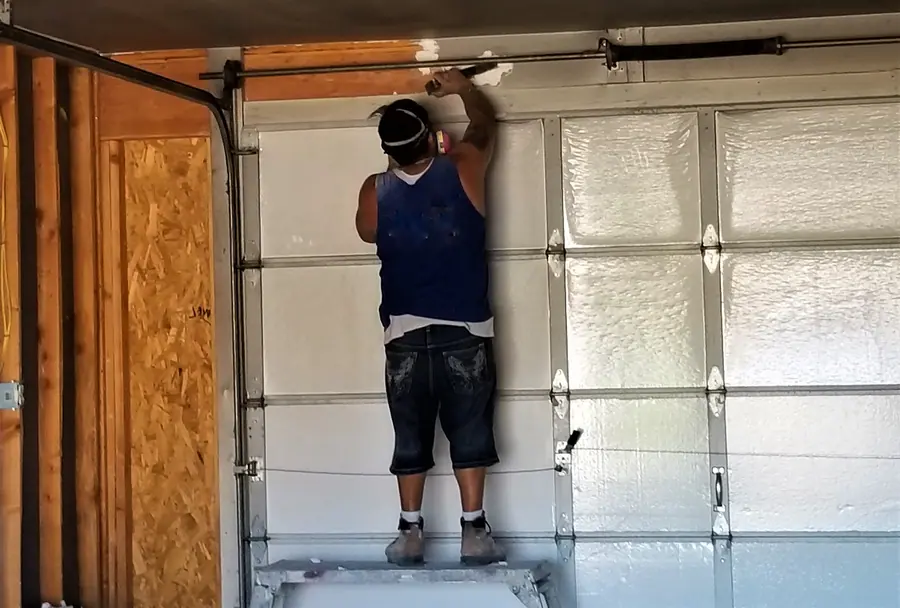
The "before" image shows a garage in its rawest state: open stud walls, exposed joists, no insulation anywhere and a basic door at the far end. Plenty of garages in the area were left like this when the house was built. In winter a space like this runs barely warmer than the driveway, and the door contributes most of the loss.
The illustration is of a garage brought up to a finished standard, with insulated sectional doors as the centrepiece. The doors have a foam core between steel skins, section-joint seals and proper perimeter weatherstripping. The walls and ceiling have been closed in to match.
In the "after" image the space is bright, clean and enclosed. The white interior faces of the doors are smooth steel, not bare foam board. What the owner gains is a garage that's usable through the cold months — a place to work on a project, start a car that isn't frozen, or simply walk through without bracing for it.
Illustrative exampleThese two photographs are licensed reference images chosen to show the kind of change this service makes. They are not a record of one specific Delafield Garage Door job.
Why this matters more in Waukesha County than in most places
Our heating season is long. From November into April the outdoor temperature is routinely far below what you'd want in any space attached to the house, and stretches below zero are normal. Add wind coming across open farmland or off the lakes and a thin door doesn't stand a chance.
Cold also exposes weaknesses in seals. Vinyl stiffens, rubber shrinks, and gaps that were invisible in September start whistling in January. We specify cold-flexible seals and set them with enough contact to stay closed when the materials contract.
And because the swing between seasons is so wide, a door needs to be stable. Polyurethane-core doors move less with temperature than hollow steel, which means they stay aligned and sealed year-round.
Insulated door questions
What R-value do I need for a garage door in Wisconsin?
For an attached garage, look at polyurethane doors in roughly the R-12 to R-18 range. For a heated workshop, aim toward the higher end. For a detached, unheated garage, a mid-range door is plenty.
Can I add insulation to my existing door?
Retrofit kits exist and help a little, but they add weight the springs weren't sized for, don't seal the section joints and don't add strength. If the door is otherwise near the end of its life, replacement gives a much better result.
Do insulated doors need different springs or openers?
They need springs matched to their weight, which is higher than a hollow door. Most modern openers handle a residential insulated door comfortably; we'll check yours.
Do windows reduce the insulation?
Glass insulates less than a foam panel, but double-pane units keep the loss modest. If daylight matters to you, it's a reasonable trade.
Will an insulated door lower my heating bill?
It reduces heat loss through the garage and into adjoining rooms. How much you save depends on the house, how the garage is used and what else is insulated. Comfort is usually the more noticeable change.
Are insulated doors really quieter?
Yes. The foam core stiffens the sections and absorbs vibration, so there's less rattle during travel and less drumming in the wind.