What makes a door "traditional"
Ask someone to draw a garage door and they'll sketch a grid of rectangles. That's the raised-panel door: each section stamped or built with a row of panels whose centers stand slightly proud of the surrounding frame, the way the panels on a well-made interior door or a kitchen cabinet do.
It became the default on American houses because it works with almost anything. The pattern echoes the proportions of window panes, shutters and entry doors. It adds shadow and depth without drawing too much attention. And because it's so widely made, it's available in every size, every level of insulation and nearly every color.
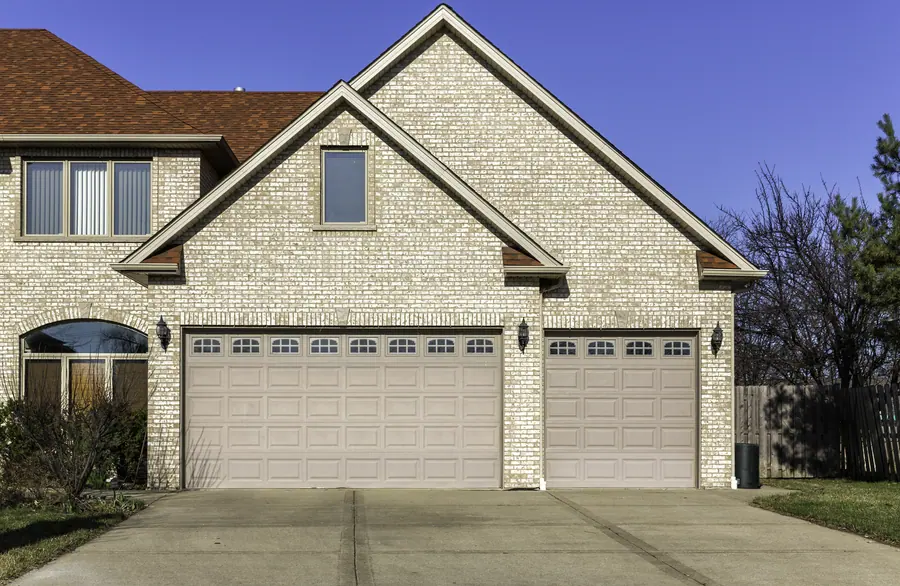
In Delafield you'll see it on the brick colonials in the established neighbourhoods, on ranch homes from the sixties and seventies, and on plenty of newer builds where the garage isn't meant to be the star.
Short panel, long panel and the ones in between
The choice that matters most is the panel proportion.
Four panels across a single door, eight across a double. A busier grid that suits colonial, Georgian and Cape Cod homes with small-paned windows.
Two wide panels across a single, four across a double. Calmer and more horizontal. A natural fit for ranch houses and anything with wide picture windows.
The center sits back instead of forward, for a Shaker-like look that bridges traditional and modern.
Fine vertical grooves within each panel add texture and lean slightly toward cottage style.
No panels at all, just a wood-grain texture. The plainest option, sometimes the right one on a simple house.
A simple rule: echo the windows. If the house has multi-pane sashes, short panels pick up the rhythm. If it has broad, undivided glass, long panels sit more comfortably.
Construction choices
A traditional look tells you nothing about how the door is built. The same panel pattern can be had as a light single-skin door or a heavy insulated one.
- Steel gauge
- Lower numbers are thicker. 24- or 25-gauge resists dents better than 27- or 28-gauge. It matters on a door that faces a driveway full of bikes and basketballs.
- Layers
- Single-layer is bare steel. Double-layer adds foam and a backer. Triple-layer has steel on both faces around the insulation.
- Insulation
- Polystyrene for good value; injected polyurethane for the best warmth and stiffness. See our insulated doors page.
- Finish
- Factory-baked paint over galvanized steel. Smooth or wood-grain embossed. Some lines offer stained wood-look finishes.
- Wind reinforcement
- Struts across the back of wider doors stop the center from bowing in a gale.
For an attached garage in this climate, we'd nearly always suggest a triple-layer door. The price difference is modest against the life of the door, and you'll notice the improvement in warmth and noise right away.
Windows, color and hardware
Glass
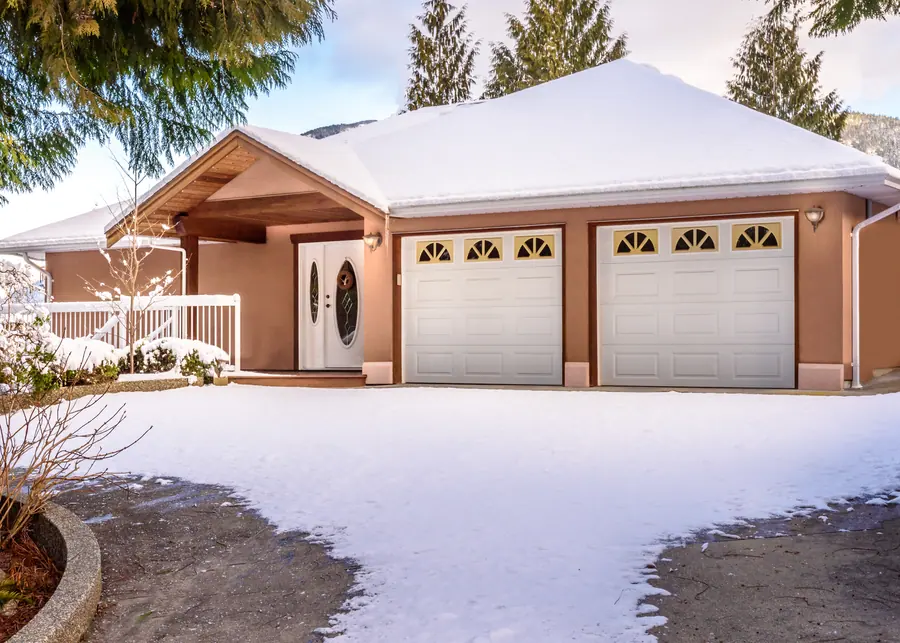
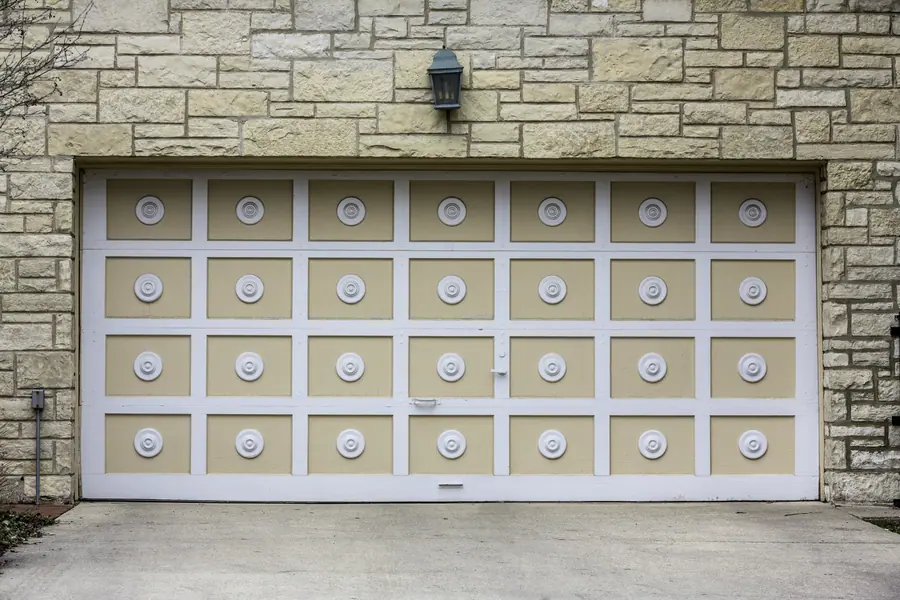
A row of windows in the top section, or the one below it, brings in daylight and breaks up the mass of a large door. Options range from plain rectangular lites to arched "cathedral" tops and decorative inserts that snap in and can be changed later. Sunburst inserts were everywhere in the eighties and nineties; today most people choose simple grids or clear rectangles that age better.
For privacy, frosted or obscure glass lets in the light without displaying what's in the garage. For warmth, insist on insulated glass.
Color
White remains the most common choice and it's rarely wrong. Almond, sandstone and taupe sit well against brick. Deep greens, grays and browns have their place when the trim calls for it. If you want a wood look without wood, several manufacturers offer convincing grain finishes on a raised-panel steel door.
One caution: very dark colors on a south- or west-facing door absorb a lot of heat. Good-quality doors handle it, but ask before you choose black for a wall that bakes all afternoon.
Hardware
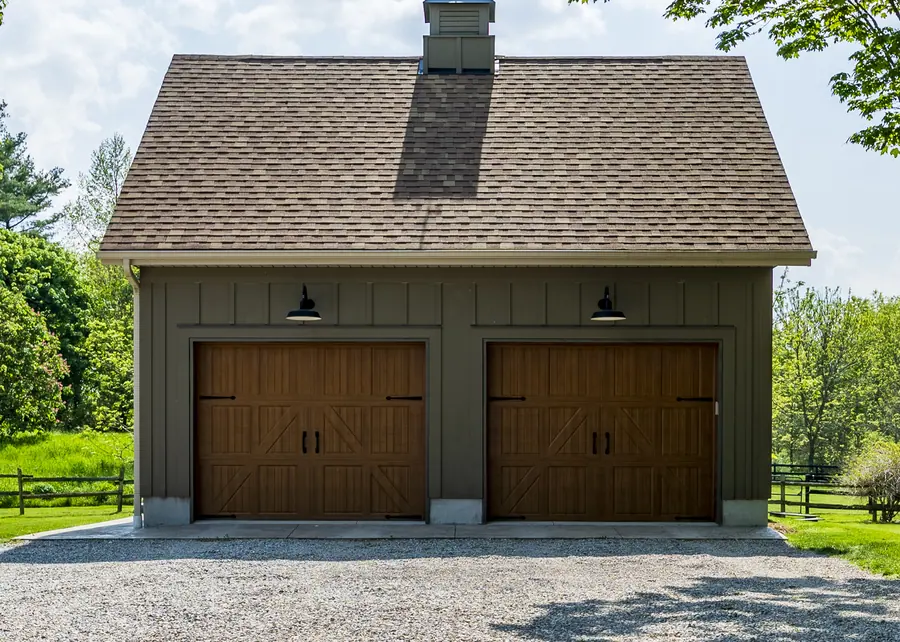
Traditional doors don't need decoration. A plain lift handle, if any, is enough. If you want strap hinges and pulls, you're probably after a carriage house door.
Where raised-panel doors go wrong
They're so common that they're often chosen without thought, and that's when they disappoint.
- A thin, uninsulated version on an attached garage, which rattles and leaks heat
- A panel pattern that clashes with the home's windows
- Builder-grade steel that dents the first time something leans on it
- Windows set at a height that lines up with nothing else on the elevation
- A bright white door on a house with cream trim, so one or the other looks dirty
None of these is the style's fault. A well-specified traditional door, in the right color and proportion, looks as good as anything.
How we install one
- Measure and reviewOpening, headroom, framing, existing track and opener.
- SelectPanel style, construction, color and glass. We bring samples so you can hold them against the house.
- Remove the old doorSprings released safely; old sections, track and hardware taken out.
- Fit the new doorNew track set plumb, sections stacked and hinged, struts added on wide doors.
- Springs and balanceNew torsion springs matched to the door's weight, wound and adjusted until the door stays where it's left.
- SealNew perimeter weatherstripping and a bottom seal installed to the floor.
- Opener and testingOpener reconnected or replaced; limits, force and safety reverse checked.
Most traditional doors are stocked or quick to order, so the wait is usually short.
 BEFOREAFTER
Before & after
A dated sunburst-window door updated with clean raised panels
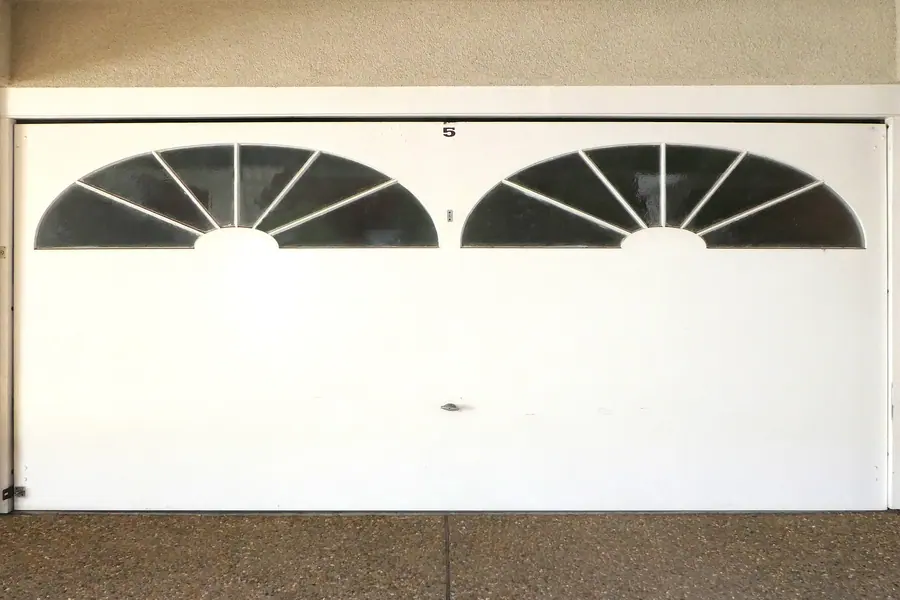
The "before" image is a door many people will recognize: a plain white slab with two fan-shaped sunburst windows. The paint has dulled, there are scuffs along the lower edge, and the style firmly dates the house. Doors of this age were often lightly built, with little or no insulation, and the plastic window inserts tend to yellow and crack.
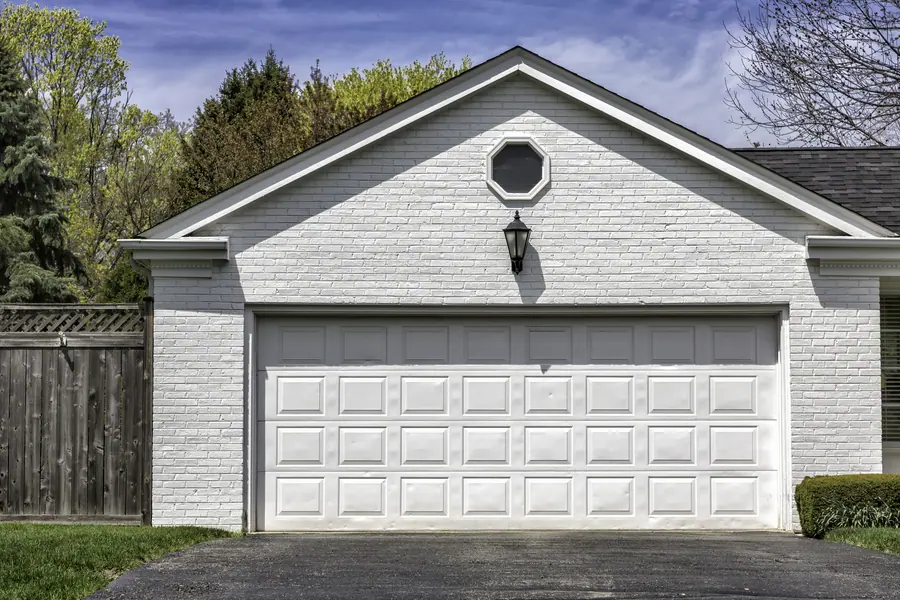
The service illustrated is a like-for-like replacement with a modern raised-panel door. The opening stays the same; what changes is the door, the track, the springs and the seals. The surrounding brick has been painted, and new exterior trim finishes the opening.
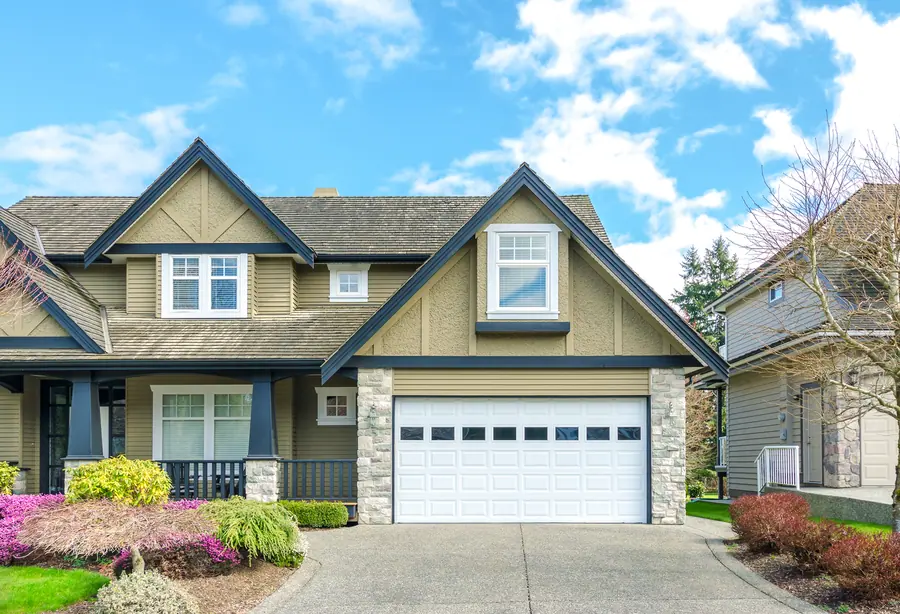
The "after" image shows a clean grid of short raised panels in bright white, sitting evenly in the opening. It's a quiet change, but it makes the whole garage look cared for. In use the owner gets an insulated, stiffer door that's quieter, seals better and will shrug off the knocks that dented the old one.
Illustrative exampleThese two photographs are licensed reference images chosen to show the kind of change this service makes. They are not a record of one specific Delafield Garage Door job.
Traditional doors in a Wisconsin winter
Steel raised-panel doors are well suited to our weather when they're built properly. Galvanized steel under a baked finish resists rust, and the bonded foam core in a triple-layer door keeps the sections flat and stable through big temperature swings.
Where they suffer is at the bottom. Salt-laden slush splashes the lowest section every time a car comes in, and if the finish gets chipped the steel underneath starts to corrode. A rinse at the end of winter and a dab of touch-up paint on any chips goes a long way.
Seals deserve attention too. The gaskets between sections and the vinyl around the perimeter stiffen in deep cold. We install seals that stay flexible at low temperatures and set them for light, even contact so they don't freeze to the door face.
If the garage is unheated but attached, an insulated traditional door makes a clear difference to the rooms nearby. It's one of the more cost-effective improvements you can make to a home in this part of the state.
Why have it professionally installed
A raised-panel door is the simplest door to buy and no simpler than any other to install. The springs still store enough energy to injure. The track still has to be plumb and parallel. The opener still needs its force set so the safety reverse works.
A professional installation also means the old door disappears, the framing gets checked, and somebody notices if the opening needs a low-headroom kit or a reinforcement bracket before the door arrives.
Questions about traditional doors
Are raised-panel doors out of style?
No. They've been continuously popular because they suit so many houses. What dates a door is usually its condition, a faded color or period details like sunburst windows — not the panel pattern.
Short panel or long panel — how do I decide?
Look at your windows and the overall shape of the house. Small panes and vertical proportions favor short panels; wide windows and low rooflines favor long ones. We'll show you both against your home.
Can I paint a steel garage door?
Yes, with a quality exterior acrylic latex after proper cleaning. Avoid oil-based paints. If you want a dark color, check the manufacturer's guidance first.
How long does a steel raised-panel door last?
With basic care, decades. Springs, rollers and seals will need replacing along the way, but the door itself is long-lived, particularly insulated triple-layer models.
Can I replace just the windows in my existing door?
Often the decorative inserts can be changed. Replacing the glass frames themselves depends on the make and age of the door. We can take a look.
Is a traditional door cheaper than other styles?
Generally, yes. Because it's the most widely produced style, it offers the most door for the money at every insulation level.