Sections, panels and what we mean by each
The terms get used loosely, so let's be clear. A sectional garage door is made of horizontal sections — usually four on a seven-foot door, five on an eight-foot one — hinged together so the door can bend around the curve of the track. Each section may be stamped with a row of raised or recessed panels. When people say "I need a new panel," they nearly always mean a whole section.
That distinction matters because a section is the smallest piece that can be replaced. You can't swap one raised rectangle out of a steel door. You can, however, replace the bottom section, or the top one, or any in between, without touching the rest.
How sections get damaged
The clear leader. Someone reverses before the door has fully opened, or pulls in a little too far. Usually the bottom one or two sections.
The top section buckles where the opener arm attaches, because no reinforcement bracket or strut was installed.
The bottom section corrodes from the lower edge up, where salt and water sit against it.
Wide doors without enough strutting bow in the middle and eventually crack along the hinge line.
Basketballs, bikes, ladders and lawnmowers leave dents in thin single-skin doors.
Running the opener with a broken spring or a frozen door bends sections at the hinges.
On timber doors, the bottom rail and lower panels soften where the finish has failed.
Repair, reinforce or replace: how we decide
Not all damage is equal. When we look at a hurt section, we're asking three questions: is it structural, will it get worse, and does it affect how the door runs?
Cosmetic dents
A shallow dent in an otherwise flat, sound section is mostly a matter of appearance. On insulated triple-layer doors, the foam behind the steel limits how much can be pushed back. We'll be honest about the likely result. Sometimes the answer is to live with it; sometimes it bothers you enough to change the section.
Bends and creases that can be reinforced
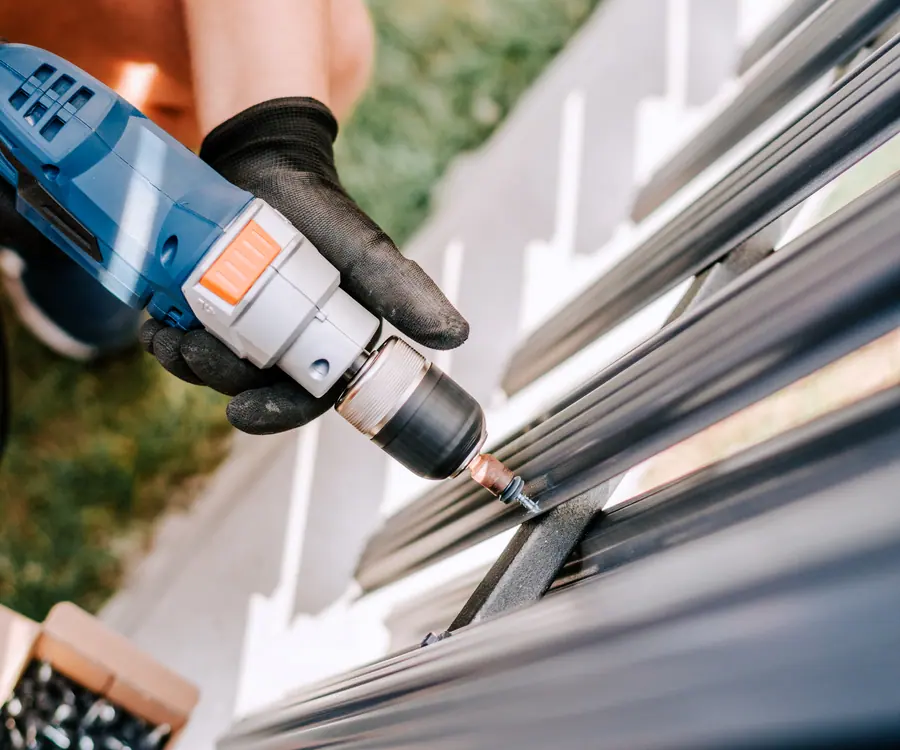
A section that's bowed but not creased through can often be straightened and held with a steel strut screwed across its back. Struts are U-shaped stiffeners running the width of the door. Added to a cracked top section along with a proper opener bracket, they can save a panel that would otherwise fail.
Damage that needs a new section
A sharp crease, a tear, a puncture, rust-through or a split along the hinge mounts means the section has lost its strength. It will keep cracking, the hinges will pull loose, and the door will start to bind. That section should be replaced.
When the whole door makes more sense
If two or more sections are damaged, if the door is old and uninsulated, or if a matching section can't be had, replacing the door is frequently the better value. We'll price it both ways.
Finding a matching section
This is the part that decides whether a single-section replacement is practical.
- Manufacturer and model
- A section from one maker won't join to another's. We look for the label on the edge or inside face of the door, or identify it from the profile.
- Size
- Door width and the height of the individual section, which varies between 18, 21 and 24 inches depending on the door.
- Panel design
- Short, long, flush, carriage — and the exact stamping, which manufacturers change over the years.
- Color and finish
- Even the same white from the same factory will look brighter than a section that's had ten summers of sun. We'll warn you about that.
- Insulation and thickness
- The replacement has to match so the joints align and the weight is right.
- Availability
- Current models are straightforward. Discontinued designs can be difficult or impossible.
If the color difference would be noticeable, the door can be painted to bring everything back to one shade. Good exterior acrylic over a properly cleaned factory finish holds well.
Replacing a section: what's involved
- Identify and orderWe confirm the make, model, size and color, and order the section. Until it arrives, the door is made safe and, where possible, usable.
- Secure the doorOpener disconnected. Depending on which section is being changed, the springs may need to be unwound.
- Remove hinges and rollersThe hardware joining the damaged section to its neighbors comes off.
- Take out the sectionSections above are supported or removed in order. The damaged one slides out.
- Fit the new sectionPositioned, leveled and hinged back in, with rollers reseated in the track.
- Transfer or replace hardwareGood hinges are reused; worn ones are changed. A bottom section gets its seal retainer and brackets moved across or renewed.
- Add reinforcementStruts and an opener bracket are added if the original damage was down to a lack of them.
- RebalanceA new section rarely weighs exactly what the old one did. Springs are adjusted and the door tested by hand.
- TestOpener reconnected, travel and safety reverse checked.
The bottom section is the most involved, because the bottom brackets carry the lift cables under spring tension. Those are only removed once the springs have been safely unwound.
Preventing the next one
A little reinforcement and a couple of habits go a long way.
- Fit an opener reinforcement bracket. It spreads the push-pull force of the opener across the full height of the top section.
- Add struts to wide doors. A sixteen-foot door wants at least one on the top section and often more.
- Don't run the opener against a stuck door. If it's frozen down or a spring has broken, forcing it bends panels.
- Wait for the door. Give it time to open fully before reversing out. A parking aid or a simple marker helps.
- Rinse the bottom section in spring to wash away road salt.
- Touch up chips and scratches before rust gets a start.
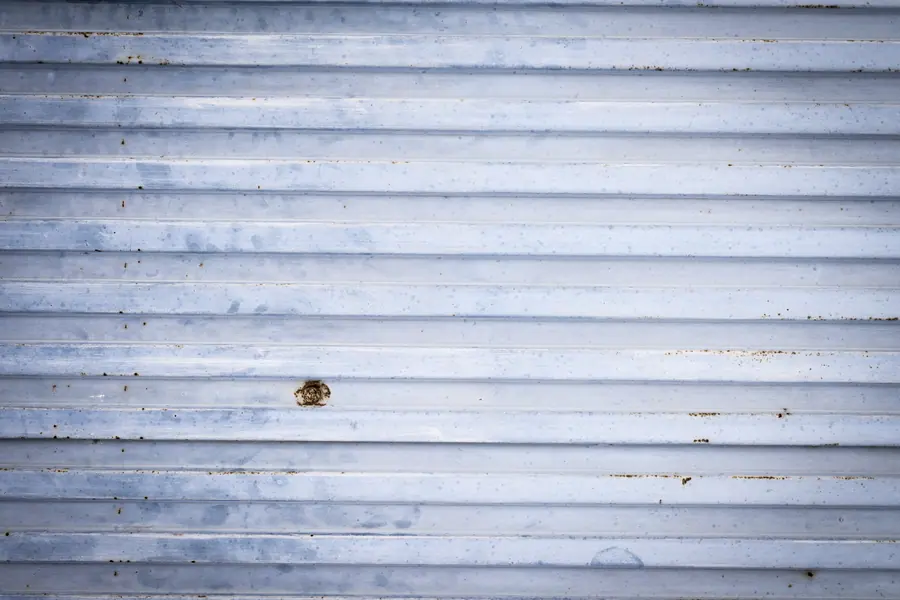
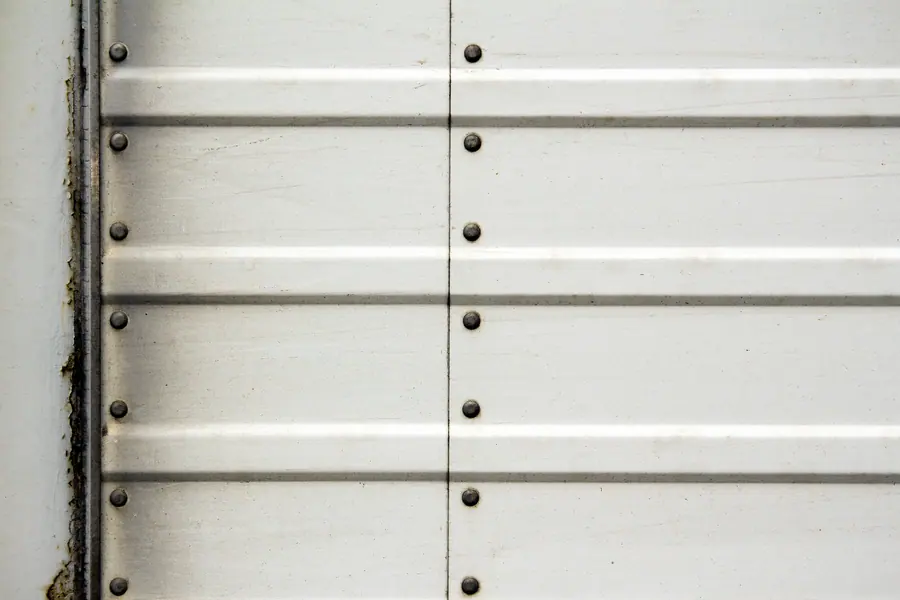 BEFOREAFTER
Before & after
A dented, punctured section compared with straight, sound sections
The "before" image shows steel door sections that have taken a blow. The ribs are pushed in across several courses, the surface is rippled, and there's a hole punched clean through one of them. Damage like this is more than cosmetic. A punctured section lets water into the core, the dented ribs no longer stiffen the door, and the hinge line nearby has almost certainly been stressed.
The repair illustrated is a section replacement: the damaged pieces are removed and new matching sections installed, with hinges renewed where they'd been pulled and the door rebalanced for any change in weight.
The "after" image shows flat, clean white sections with neat rows of fasteners and tight, even joints. The door is one plane again. For the owner, that restores what the damage took away: a weatherproof face, a rigid structure that won't flex and crack further, and smooth travel with no catch at the hinge line.
Illustrative exampleThese two photographs are licensed reference images chosen to show the kind of change this service makes. They are not a record of one specific Delafield Garage Door job.
Panel damage and Wisconsin conditions
Around here the bottom section lives a harder life than any other part of the door.
From the first snow to the last, it's splashed with salt brine every time a car comes in. It sits in meltwater at the threshold. Its lower edge freezes to the slab and gets yanked free by the opener. And it's the section that meets the bumper when someone's in a hurry on a dark December morning.
The result is predictable. On older steel doors we see rust creeping up from the bottom edge, starting on the inside where the retainer holds water against the steel. On wood doors it's the bottom rail that goes soft first.
Cold also makes steel a touch more brittle and vinyl trim much more so. An impact that would leave a shallow dent in July can crack a section in January.
If your bottom section is rusting but the rest of the door is sound, replacing that one section — with a new seal and retainer — can add years to the door. It's one of the more cost-effective repairs we do.
Why this needs a professional
Changing a middle section looks approachable. The catch is the door's weight and the springs. Every section above the one being replaced has to be supported. If the bottom section is involved, the cable brackets must come off, and that means unwinding the springs first.
After the work, the door has to be rebalanced. Even a small change in section weight moves the balance point, and an unbalanced door stresses the opener.
Sourcing matters as well. Identifying a ten-year-old door from its edge profile, and knowing whether a matching section still exists, is something we do routinely.
Panel questions
Can you replace just one panel on my garage door?
Often, yes — provided a matching section is still available from the manufacturer. We'll identify your door and check.
Will the new section match the color?
It will be the same factory color, but older sections fade. A slight difference is common. Painting the door afterward evens it out.
Can a dented panel be repaired without replacing it?
Shallow dents on sound sections can sometimes be improved, and bowed sections can be reinforced with struts. Creased, torn or punctured sections should be replaced.
How long does it take to get a replacement section?
It depends on the manufacturer and model. Common doors are quick; others take longer. We'll secure the door in the meantime.
Is it safe to use the door with a damaged panel?
If the door runs smoothly and the section isn't creased at a hinge, light use is usually fine. If it binds, catches or the section is visibly folding, stop using it.
When should I replace the whole door instead?
When several sections are damaged, when matching parts are unavailable, or when the door is old, uninsulated and near the end of its life anyway.