Noise is information
A healthy garage door isn't silent, but it's close. You should hear a low hum from the opener and a soft roll from the wheels. Anything sharper than that is a part telling you it's dry, loose, worn or out of line.
That's useful. Each kind of noise has a short list of likely causes, and an experienced ear can narrow it down before a tool comes out. It also means noise is worth acting on. The part making the racket is wearing itself out, and often wearing something else out with it.
What the sound is telling you
- Grinding
- Metal on metal. Usually steel rollers with failed bearings dragging in the track, or a stripped gear inside the opener.
- Squealing or screeching
- A dry bearing or pivot: rollers, hinges, the center bearing on the spring shaft, or the end bearings.
- Rattling
- Loose hardware. Track bolts, hinge screws, the opener's mounting brackets or a chain slapping against the rail.
- Popping or cracking
- A torsion spring whose coils are binding as they wind, a cracked hinge flexing, or sections shifting against each other.
- Banging on closing
- The door is coming down too fast or too hard. Springs are weak or the close limit is set too far.
- A bang on opening
- The door was stuck to the floor and broke free, or the opener is jerking it into motion.
- Rumbling or vibration
- The opener's motor vibration is being carried into the framing and through the house, or the door is out of balance.
- Scraping
- The door edge or a roller stem is rubbing the track, or the bottom seal is dragging.
- Clicking or ticking
- A bent track joint catching each roller, or an opener relay that's cycling.
- Humming with no movement
- The opener's motor is running but can't turn. A stripped gear or a failed capacitor.
The usual suspects, in order
After listening to a great many loud doors, we find the same causes come up in roughly this order.
Rollers
Far and away the leader. Builder-grade plastic or steel rollers lose their bearings within a few years. Each one becomes a small noisemaker, and there are ten or twelve of them. Changing to sealed nylon rollers is the single biggest improvement on most doors.
Dry hinges and pivots
Every hinge is a steel-on-steel pivot. Without lubricant, they creak and grind. A proper garage-door lubricant on each one makes an immediate difference.
Loose fasteners
A door vibrates as it runs, and that vibration backs out screws and bolts over time. A hinge that's a turn loose will rattle against the section on every cycle. We go over every fastener on the door and track.
Springs
Torsion springs wind and unwind with the coils rubbing against each other. Unlubricated, they groan and twang. A coat of lubricant quiets them and slows corrosion.
The opener
Chain-drive openers are inherently the noisiest: a steel chain running over a sprocket along a steel rail. If the chain is slack it slaps the rail as well. Older AC motors also start with a jolt.
Balance
A door that's out of balance forces the opener to work harder, and a laboring motor is a loud motor.
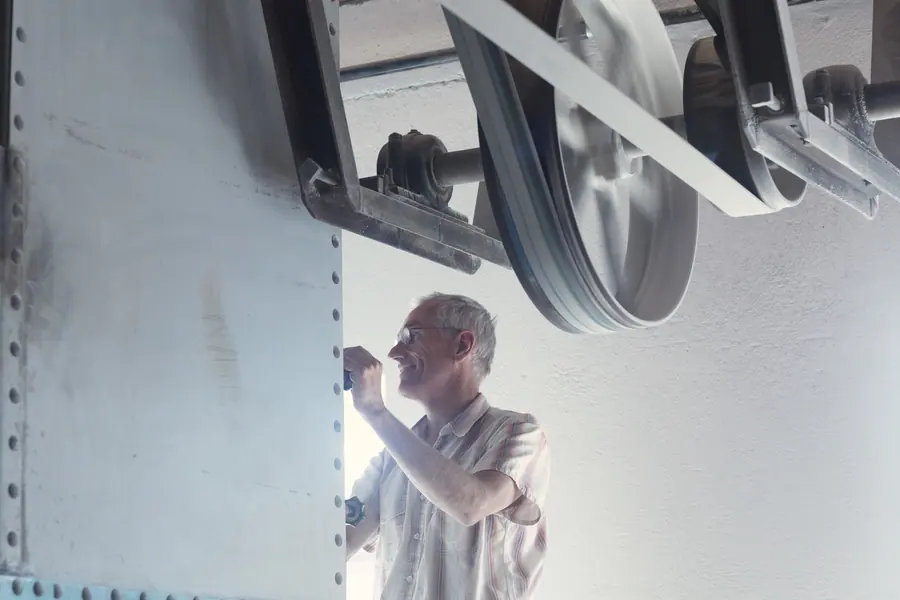
How we quiet a door
- Listen with the opener connectedWe run the door and note where and when each sound occurs.
- Listen with it disconnectedRunning the door by hand separates door noise from opener noise. If it's quiet by hand and loud under power, the opener is the source.
- InspectRollers, hinges, springs, bearings, track joints, fasteners and the opener's drive, mounts and rail.
- TightenEvery hinge screw, track bolt and bracket lag is checked.
- Replace what's wornRollers and cracked hinges most often; bearings and occasionally an opener gear or sprocket.
- Lubricate correctlySprings, hinges, roller bearings and the opener rail get the right product. Tracks are wiped clean, not greased.
- BalanceSprings adjusted so the door stays put at mid-height.
- Adjust the openerChain or belt tension set; travel limits and force reset so the door lands softly.
- Isolate vibrationWhere the opener is transmitting noise into the structure, rubber isolators are installed between the motor unit and its mounting.
Upgrades that make a lasting difference
If you want the door as quiet as it can be, these are the changes that count.
Replaces rolling steel with a quiet nylon tire on a sealed bearing. The biggest single gain.
A reinforced rubber belt replaces the chain. No metal-on-metal contact in the drive.
The door eases into motion and slows before it lands, removing the jolt at each end.
Mounts beside the door and turns the shaft directly. No rail, no trolley and nothing bolted to the ceiling under a bedroom.
Rubber mounts that decouple the opener from the joists.
Foam-filled sections don't rattle or drum the way hollow steel does.
Not every door needs all of these. A set of rollers and a thorough service transforms most. But if your garage sits under a bedroom, a belt or wall-mount opener is worth serious thought.
Rooms above and beside the garage
Many homes around Delafield built over the last few decades have a bonus room, bedroom or home office over the garage. In those houses the door isn't just heard — it's felt.
The mechanism is structure-borne vibration. The opener hangs from the ceiling joists, which are also the floor joists of the room above. Motor vibration travels through the mounting angle into the wood and radiates into the room like a speaker. Track brackets fixed to the wall studs do the same.
The cures are specific. Isolating the opener from the joists with rubber mounts cuts the path. A belt drive or DC motor reduces vibration at the source. A wall-mounted opener removes the ceiling connection altogether. And a balanced door on quiet rollers gives the motor less to do. Put together, the change in the room upstairs can be striking.
Quick fixes that make things worse
- Don't spray penetrating oil on everything. Products meant for freeing rusted bolts aren't lubricants. They quiet a squeak for a few days and then evaporate, taking the existing grease with them.
- Don't grease the tracks. It collects grit, makes the rollers slide instead of roll, and turns to paste in the cold.
- Don't over-tighten the chain. A chain that's too tight wears the sprocket and adds noise.
- Don't turn up the opener's force to push through resistance. Find the resistance.
- Don't ignore a sudden change. A door that goes from normal to loud overnight has had something fail.

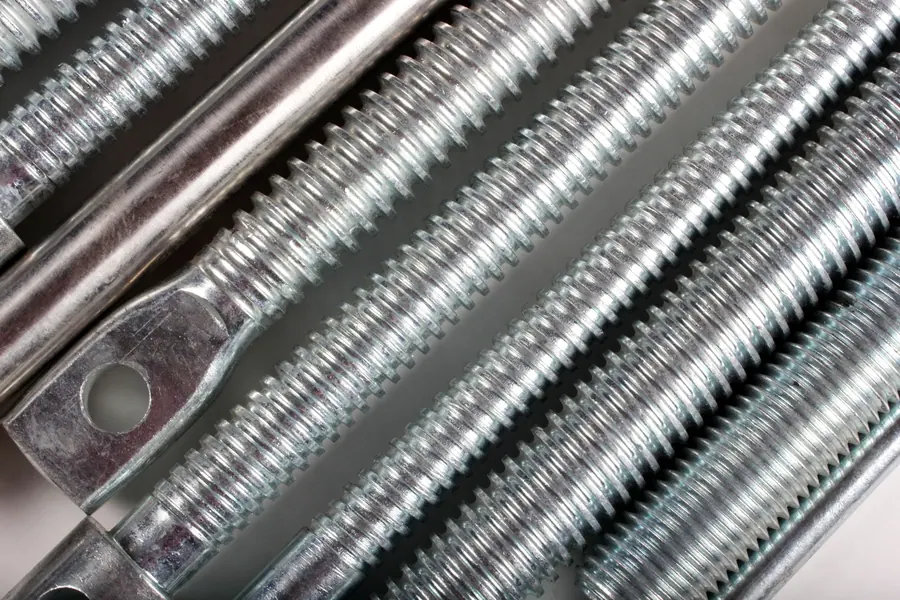 BEFOREAFTER
Before & after
Dry, rusted moving parts compared with clean, bright hardware
The "before" image shows old winding hardware left dry for far too long. The gears are caked in rust, there's no lubricant on the teeth, and the cable beside them has begun to fray. It's an exaggerated version of what's happening inside a neglected garage door system: steel surfaces grinding against each other with nothing between them. Hardware in this condition is loud because it's destroying itself.
The work illustrated is a noise-reduction service in the full sense — worn components replaced, fasteners renewed, and every moving surface cleaned and properly lubricated.
The "after" image shows new threaded steel hardware, clean and bright. It stands in for the outcome across the door: parts that fit as they should, turn freely and have a protective film where they meet. The practical result is a door that's dramatically quieter, an opener that isn't fighting friction, and components that will last because they're no longer wearing against each other.
Illustrative exampleThese two photographs are licensed reference images chosen to show the kind of change this service makes. They are not a record of one specific Delafield Garage Door job.
Why doors get louder in a Wisconsin winter
Almost everyone notices it. The door that was tolerable in September is howling by January. There are solid reasons.
Lubricants stiffen. Grease and oil thicken as the temperature drops. Bearings that turned freely start to drag and squeal. Heavy greases are the worst offenders, which is why we use products rated for low temperatures.
Metal contracts. Steel track, hinges and fasteners shrink slightly in deep cold, changing clearances. Parts that had a little play get tight; others get loose.
Nylon and plastic harden. Cheap plastic rollers become brittle and noisy. Quality nylon copes far better.
Seals stick. A bottom seal frozen to the floor lets go with a bang. Stiff perimeter seals drag and squeak against the door face.
Springs complain. Cold steel coils with thickened lubricant between them bind and pop as they wind.
The house is closed up. With windows shut and the furnace off between cycles, there's simply less background sound to mask the door.
A pre-winter service with cold-rated lubricant, tight hardware and good rollers heads most of this off. If your door is only loud in the cold, it's telling you the lubricant or the rollers aren't up to the conditions.
Why bring in a professional
Lubricating hinges and tightening a few screws is well within reach of most homeowners, and we'd encourage it. Past that, the fixes for noise overlap with parts that need care: spring bearings, bottom rollers, door balance and opener force.
The other benefit is diagnosis. Noise travels through steel, and the place it seems to come from often isn't the source. We've traced "opener" noises to a single cracked hinge and "roller" noises to a dry center bearing more than once.
Noise questions
Why is my garage door suddenly so loud?
A sudden change usually means something has failed: a roller bearing, a hinge, a spring or an opener gear. It's worth having it looked at before using the door heavily.
What's the quietest type of garage door opener?
Belt-drive openers with DC motors and wall-mounted direct-drive openers are the quietest. Chain drives are the loudest.
Will lubricating my door make it quieter?
Often, yes — if dryness is the cause. Use a silicone or lithium garage-door lubricant on hinges, roller bearings and springs. If the noise returns within days, a part is worn.
Can you reduce noise in the room above my garage?
Yes. Vibration isolators, quieter rollers, a balanced door and, where appropriate, a belt-drive or wall-mounted opener all reduce what reaches the room.
Is a noisy door dangerous?
Not always, but grinding, popping and banging can indicate parts close to failure. It's sensible to find out which.
Do nylon rollers really make a difference?
Yes. On most doors they're the most effective single change for reducing travel noise.