Start by asking the right question
When a garage door won't open, the opener gets the blame. Reasonably so: it's the thing you pressed, and it's the thing that didn't respond.
In our experience, though, somewhere around half of "opener problems" are door problems. A broken spring, a seized roller, a door frozen to the floor — the opener senses the extra load and stops, exactly as it's designed to. Replace the opener in that situation and the new one will do the same thing.
So the first step in any opener call is to take the opener out of the picture. We pull the release, run the door by hand and see whether it's balanced and free. If it isn't, that gets fixed first. If it is, we turn to the motor unit.
Symptoms and what usually causes them
- Nothing happens at all
- No power to the unit — a tripped breaker or GFCI outlet, an unplugged cord, a blown fuse on the board — or a failed logic board.
- Wall button works, remotes don't
- Dead remote batteries, the lock feature switched on at the wall control, lost programming, or radio interference.
- Remotes work, wall button doesn't
- A broken wire or a failed wall control.
- Motor hums but the door doesn't move
- A stripped drive gear, a failed start capacitor, or the trolley disengaged from the carriage.
- Motor runs, chain or belt moves, door stays put
- The trolley has been released, or the door arm has come off.
- Door starts down then reverses
- Photo-eyes blocked or misaligned, close force too low, or something binding in the door's travel.
- Door closes, touches the floor and goes back up
- The close limit is set too far. The opener thinks it has hit an obstruction.
- Door doesn't open or close fully
- Travel limits need adjusting, or the door is binding near one end.
- Door opens by itself
- A stuck button on a remote or wall control, a shorted control wire, or on very old units a neighbor's remote on the same code.
- Lights flash and it clicks
- A diagnostic code. Most openers blink a pattern that identifies the fault, usually the safety sensors.
- Works when warm, fails when cold
- A weak capacitor, stiff lubricant on the rail, or a door that's dragging in low temperatures.
- Grinding and plastic shavings on the floor
- The main drive gear is breaking up.
What's inside the box
It helps to know what can go wrong.
The motor. AC motors on older units use a start capacitor to get moving; when the capacitor fails the motor hums and stalls. Newer DC motors are quieter, start gently and rarely fail on their own.
The drive gear. Many chain and belt openers turn the drive sprocket through a nylon gear. It's a sacrificial part by design: if the door jams, the gear strips instead of the motor burning out. It's also the most common mechanical failure.
The logic board. The circuit board that runs everything, including the radio receiver. Vulnerable to power surges and lightning.
Travel and force controls. Mechanical limit switches on older models; electronic settings on newer ones.
The rail assembly. The chain, belt or screw, plus the trolley that carries the door arm.
Safety sensors. The photo-eyes at the floor, and the wiring back to the unit.
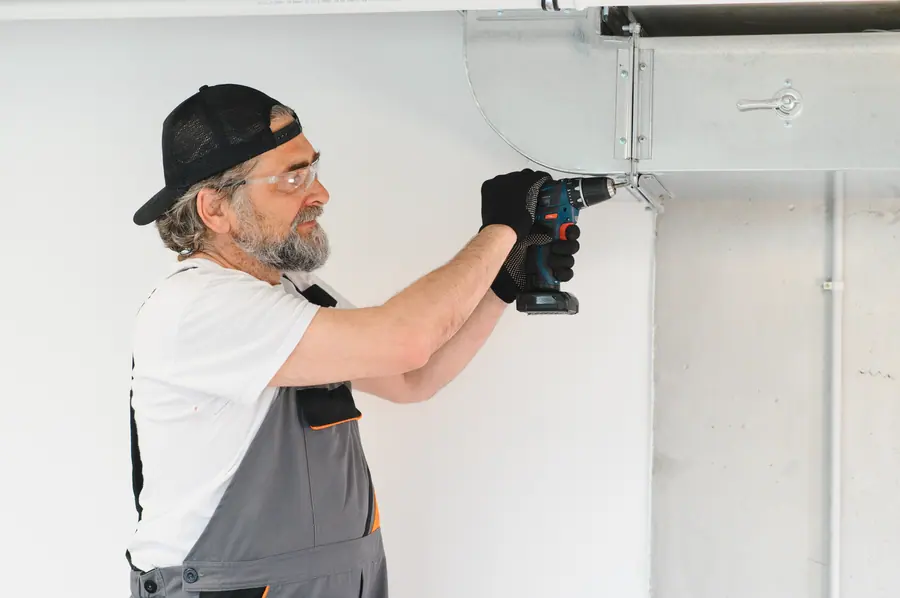
Repairs we carry out regularly
New drive gear, worm gear and bushings installed and greased. Restores many units that are otherwise in good shape.
A quick, inexpensive fix for a motor that hums and won't start.
Where a board is available and the unit justifies it. Remotes are reprogrammed afterward.
Realignment, rewiring or new photo-eyes.
Resetting travel and sensitivity so the door stops where it should and reverses when it must.
Worn or broken trolleys replaced, release mechanisms restored.
Tension set correctly; damaged belts or stretched chains replaced.
Damaged wall-control or sensor wire traced and replaced.
How we diagnose an opener
- Ask what it's doingThe exact behavior, when it started, any recent storms or power outages.
- Check the door by handBalance and free movement, with the opener disengaged.
- Check power and controlsOutlet, breaker, wall control, remotes and the lock function.
- Read the diagnosticsIndicator lights and blink codes on the unit and the sensors.
- Open the unit if neededInspect the gear, capacitor, board and wiring.
- Test the rail and trolleyTension, wear and straightness.
- Explain and priceWhat's failed, what it will cost, and how that compares with the age and value of the unit.
- Repair and resetFit the parts, set travel and force, then test the safety reverse and photo-eyes.
Repair or replace the opener?
We'll give you a straight answer on this, because it isn't always worth repairing.
Repair usually makes sense when the opener is under ten years old, the fault is a single known part, and the unit has modern safety features.
Replacement makes more sense when:
- The unit is fifteen years old or more
- It has no photo-eyes or uses a fixed-code radio
- The logic board has failed and a replacement costs a large share of a new opener
- Parts have been discontinued
- It's been repaired repeatedly
- You'd like features it can't provide: quiet belt drive, battery backup, phone control
If we think a repair is throwing good money after bad, we'll say so. Details are on our opener replacement page.
Things worth checking before you call
A few minutes might save you a visit.
- Is the opener plugged in, and does the outlet have power? Garage outlets are often on a GFCI that trips.
- Is the lock or vacation switch on the wall control turned on? It disables the remotes.
- Do the remote batteries need replacing?
- Are both photo-eye lights on steady? If one is blinking or dark, check for obstructions, wipe the lenses and make sure they're pointing at each other.
- Was the red release cord pulled? If the trolley is disengaged, the motor runs without moving the door.
- Is the door frozen to the floor?
If none of that solves it, we're ready to help.
 BEFOREAFTER
Before & after
A worn-out drive motor compared with a clean, working opener installation
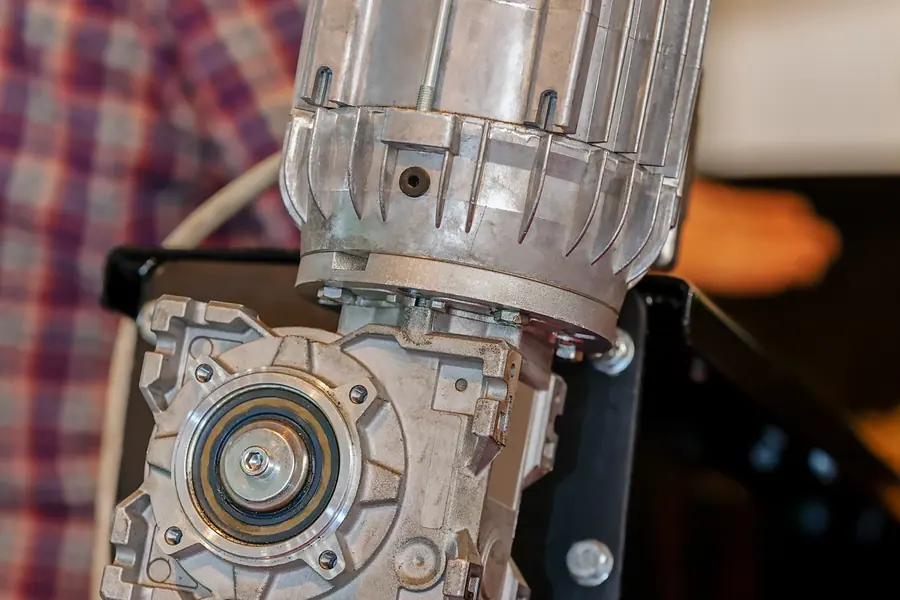
The "before" image shows an electric gear motor removed from service, its housing grimy and its gearbox worn. This is the part at the center of an opener. When it reaches this stage the symptoms are familiar: grinding, hesitation, a hum with no movement, or travel that stops short. Sometimes one failed gear is all that's wrong; sometimes the wear runs through the whole assembly.
The repair illustrated is the restoration of a working opener system — the failed drive components replaced, the rail and trolley serviced, travel limits and force reset, and the safety reverse confirmed.
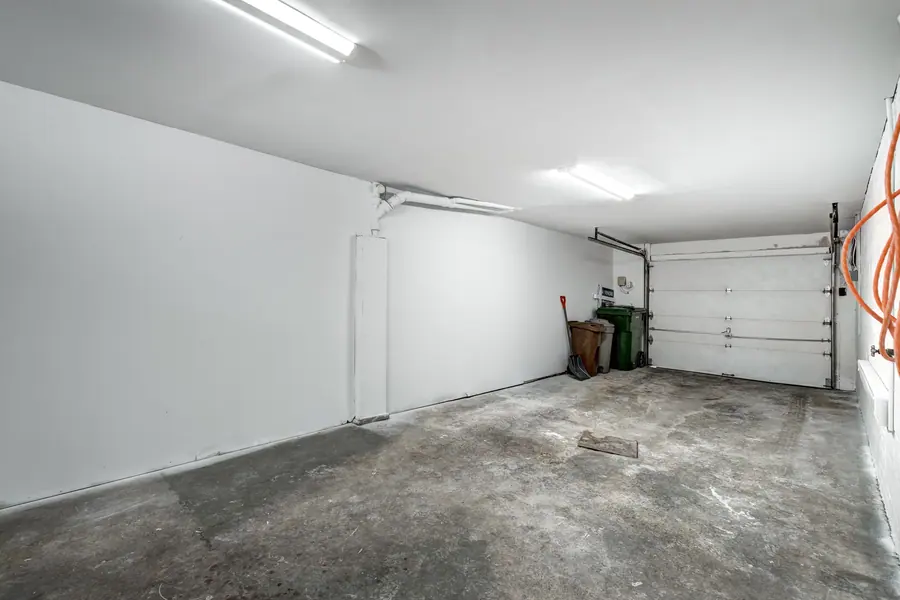
The "after" image shows a clean garage with a white sectional door and its opener rail running straight back along the ceiling. There's nothing dramatic to see, which is the point. An opener in good order is quiet and uneventful: the door goes up when asked, comes down gently, and reverses if anything is in the way.
Illustrative exampleThese two photographs are licensed reference images chosen to show the kind of change this service makes. They are not a record of one specific Delafield Garage Door job.
Openers and Wisconsin winters
Cold weather is when openers get tested, and many of the faults we see between December and March aren't really faults at all.
The door gets heavier to move. Stiff lubricant, hardened seals and contracting steel all add drag. An opener with its force set for summer may decide the door is obstructed and reverse. The fix is rarely more force. It's a lubricated, balanced door.
Frozen thresholds strip gears. A door stuck to the slab doesn't move when the motor starts. The nylon drive gear takes the load and its teeth shear. We replace a lot of gears in January for exactly this reason.
Capacitors struggle. An aging start capacitor that works at sixty degrees may not have enough left to start the motor at zero.
Screw drives stiffen. The grease on a screw-drive rail thickens in the cold. These units need a low-temperature lubricant.
Sensors get confused. Low winter sun, frost on the lenses and snow knocked against the brackets cause false trips.
Power is less reliable. Ice and heavy snow bring outages and surges, and surges damage logic boards. A surge protector on the opener's outlet is inexpensive insurance.
Why professional repair
Much of opener troubleshooting is safe for a homeowner: batteries, sensors, the lock switch, the outlet. Opening the motor housing is a different matter. There's line voltage inside and a capacitor that can hold a charge after the unit is unplugged.
There's also the adjustment afterward. Force and travel settings are safety settings. Set too high, the door won't reverse on a person or a car. We test the reversal on every repair.
And there's the judgment about the door. An opener repaired on an unbalanced door will fail again. Finding and fixing the real cause is what makes the repair last.
Opener repair questions
Why does my opener hum but not open the door?
Most often a stripped drive gear or a failed start capacitor. It can also mean the door is jammed or a spring has broken. We check the door first.
How long do garage door openers last?
Typically ten to fifteen years, sometimes longer on a well-balanced, maintained door.
Can you repair any brand?
We work on most major residential brands. Parts availability for older or discontinued models varies, and we'll confirm before recommending a repair.
Why did my remotes stop working after a storm?
A power surge may have damaged the logic board or its radio receiver. Check the wall control's lock switch first; if that isn't it, the board likely needs attention.
Is it worth repairing a 15-year-old opener?
Sometimes for a minor part. For a board or motor failure at that age, replacement is usually better value and brings current safety and convenience features.
My opener works in summer but not in winter. Why?
Cold makes the door harder to move and weak components more likely to fail. A service of the door and a check of the opener's capacitor and settings usually resolves it.