Why something so small causes so much frustration
A garage door remote is a tiny radio transmitter. Press the button and it sends a coded signal; the receiver in the opener hears it, checks it and runs the door. It ought to be trouble-free, and most of the time it is.
Then a remote goes through the wash. Or you buy a universal one that turns out not to be. Or the car's built-in buttons refuse to learn the opener after six attempts on a stepladder. Or the keypad outside starts ignoring the code everyone has used for years.
Different generations of opener use different radio frequencies and security schemes, and they aren't interchangeable. Knowing which is which is most of the job.
A short history of garage door codes
Understanding the type you have explains what will and won't work with it.
- Fixed code with DIP switches
- Openers from before the mid-1990s. A row of tiny switches inside the remote is set to match a row in the opener. The code never changes. Simple, but easy to copy and prone to interference from neighbors.
- Early rolling code
- From the mid-1990s. The code changes with every press, following a sequence both remote and opener know. Much more secure.
- Later rolling code generations
- Successive improvements with different frequencies and encryption. Often identified by the color of the opener's learn button.
- Current encrypted systems
- Multi-frequency signals and stronger encryption, usually alongside Wi-Fi.
On most openers there's a small "learn" button on the motor unit, behind the light cover or on the back panel. Its color is the quickest way to identify the radio system, which in turn tells us exactly which remotes and keypads are compatible.
What we can program
Original-brand and compatible replacements, single or multi-button.
Handy for walkers, cyclists and teenagers.
Mounted outside the door, operated with a PIN. Great for kids, guests and anyone out for a run without keys.
The built-in transmitters in a car's visor, mirror or overhead console.
One remote controlling two or three doors, or a mix of opener brands.
Replacement or upgrade of the button inside the garage, including models with lock and light functions.
Phone-based control and digital keys; see smart openers.
How programming works
The details vary by brand, but the principle is the same on any rolling-code opener.
- Identify the systemBrand, age and learn-button color.
- Check compatibilityConfirm the remote or keypad is made for that system.
- Put the opener in learn modeA press of the learn button starts a short window, usually about thirty seconds.
- Send the signalPress the remote button, or enter the new PIN and press enter on the keypad.
- ConfirmThe opener's light blinks or the unit clicks to show it has stored the code.
- TestFrom the driveway, at a normal distance.
In-car systems add a step. The car first learns the remote's signal, then the opener has to learn the car. With newer openers, some vehicles need a small compatibility bridge that translates between the two.
Lost or stolen remote? Erase them all
This is the most important thing on this page.
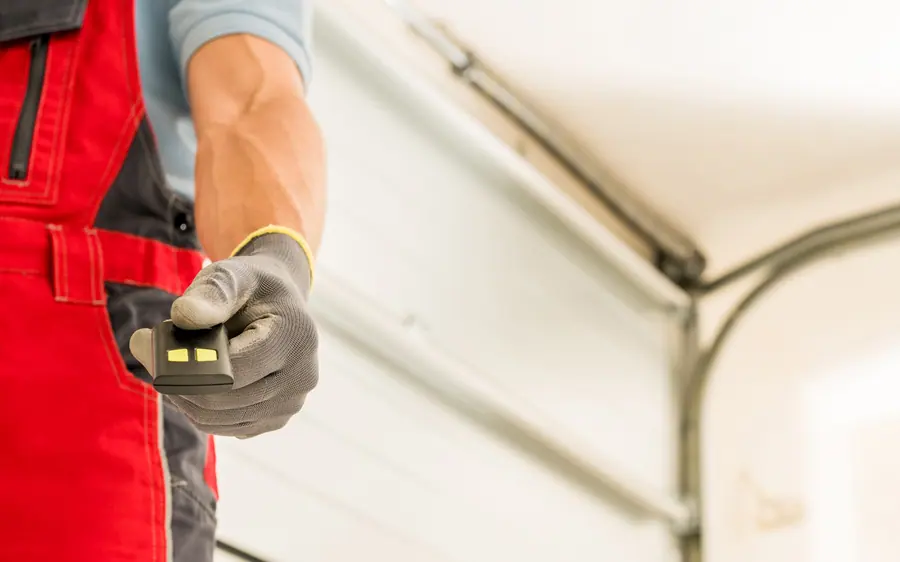
If a remote goes missing — left in a sold car, taken from an unlocked vehicle, simply vanished — whoever has it can open your garage. And if the garage is attached, that's a route into the house.
You can't erase a single remote from an opener's memory. What you can do is wipe the memory completely, which removes every remote and keypad code at once, and then program back only the devices you still have. It takes a few minutes and closes the gap entirely.
We do this routinely for people who have:
- Lost a remote or had a car broken into
- Just bought a house and don't know who has remotes
- Had tenants, contractors or house-sitters move on
- Sold a car without clearing its built-in buttons
If you've just moved into a home around Delafield, it's a worthwhile job in the first week. Change the keypad PIN at the same time.
When a remote doesn't work: troubleshooting
Before assuming the remote is dead, we run through a short list.
- Battery
- The first suspect. Most remotes use a coin cell or a small 12-volt battery. Cold weakens them.
- Lock mode
- Many wall controls have a lock or vacation button that disables all remotes. It gets pressed by accident surprisingly often.
- Out of memory
- Openers store a limited number of devices. A new one may push out the oldest.
- Range and interference
- LED and CFL bulbs in the opener, nearby electronics and some power supplies emit radio noise that drowns out the remote.
- Antenna
- The short wire hanging from the motor unit should point straight down and be undamaged.
- Worn contacts
- Buttons that need a hard press have worn out.
- Receiver failure
- If no remote works but the wall button does, the opener's radio receiver or logic board may have failed, sometimes after a power surge.
- Incompatibility
- The remote simply isn't made for that opener, whatever the packaging suggested.
The light-bulb problem
This one deserves its own mention because it's so common and so unexpected. Certain LED bulbs produce radio-frequency interference when lit. Put one in the opener and the remote's range drops from the end of the driveway to a few feet — but only while the light is on, which is right after you've used the door. Swapping to a bulb designed for garage door openers cures it immediately.
Keypads
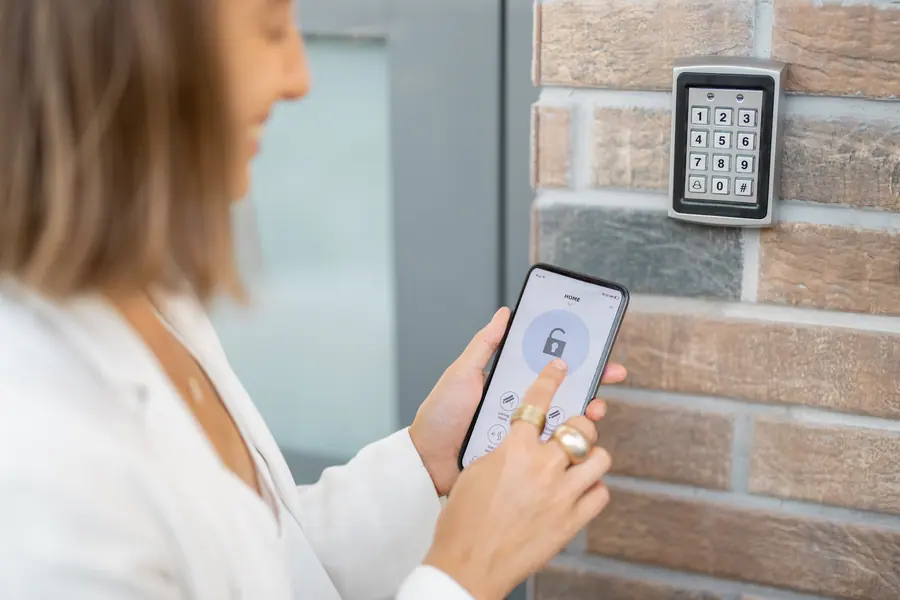
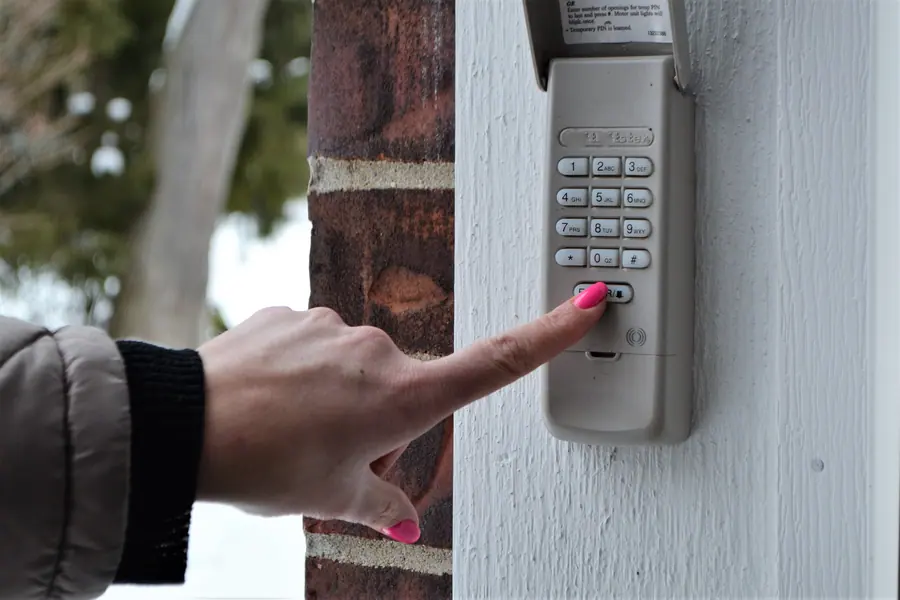
A wireless keypad by the door is one of the most useful accessories you can add. Children can let themselves in after school. You can go for a walk without keys. A neighbor can get in to feed the cat.
A few practical points:
- Choose a PIN that isn't your house number or 1-2-3-4
- Change it when someone who knew it no longer needs access
- Many keypads allow a temporary PIN that expires after a set time or number of uses
- Replace the battery every year or two; a weak battery is the usual cause of an unresponsive keypad
- Mount it out of direct weather where possible, at a comfortable height, at least five feet up
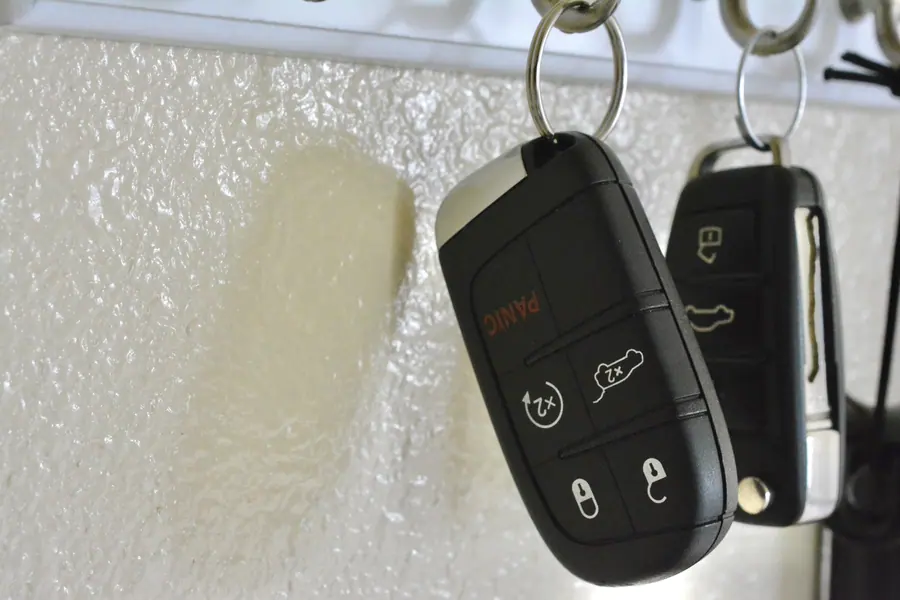
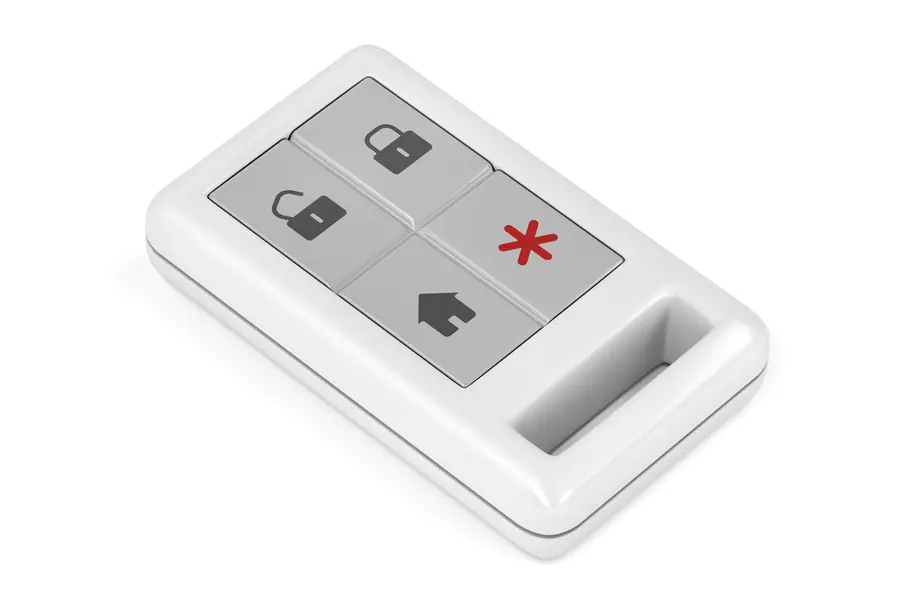 BEFOREAFTER
Before & after
Worn key fobs compared with a new multi-button remote
The "before" image shows a pair of well-used key fobs hanging on a hook. They're scuffed, the button markings are worn, and they've clearly been through years of pockets and cup holders. Remotes in this state become unreliable: contacts wear, cases crack and batteries make poor connection. Often there are more of them in circulation than anyone can account for.
The service illustrated is a clean start. The opener's memory is erased so that every old or missing transmitter stops working, and new remotes are paired along with the keypad and any in-car buttons.
The "after" image shows a new four-button remote with clearly marked functions. It's a small thing, but it reflects a tidy outcome: the owner knows exactly which devices can open the door, each one works first time from the driveway, and any remote that went astray over the years is now just a piece of plastic.
Illustrative exampleThese two photographs are licensed reference images chosen to show the kind of change this service makes. They are not a record of one specific Delafield Garage Door job.
Remotes, keypads and Wisconsin winters
Cold weather affects these small devices more than you'd expect.
Batteries fade in the cold. A coin cell that's fine at room temperature loses much of its output at zero. A remote that lives in a car overnight, or a keypad on a north-facing wall, shows it first. If your remote's range shrinks every January, a fresh battery is the fix.
Keypads take the weather. Snow, ice and freezing rain get into button membranes. Backlights dim. We recommend keypads with a flip cover, mounted under whatever shelter the door trim offers.
Gloves and buttons don't mix. Larger-button remotes and keypads are easier to use in winter gear.
Sun and frost on sensors can make it seem like the remote isn't working when in fact the opener is refusing to close. If the door opens by remote but won't close, look at the photo-eyes before blaming the transmitter.
Dark evenings. A lit keypad and a remote with a clear layout are appreciated at five o'clock in December.
Power surges. Winter storms sometimes take out the opener's radio receiver. If every remote stops at once after an outage, that's the likely reason.
Why call a professional for this?
Many remotes can be programmed by following the instructions, and we'd never discourage anyone from trying. People call us when it hasn't worked, when they aren't sure what to buy, or when they would rather stay off the ladder.
What we add is certainty about compatibility, a stock of the right remotes and keypads, the bridge modules some cars need, and the experience to recognize interference or a failing receiver when programming isn't the real problem.
It's also a natural job to combine with other work. If we're there for a tune-up or repair, adding a keypad or clearing the memory takes very little extra time.
Remote and keypad questions
I lost a remote. Can you disable just that one?
Not individually. We erase the opener's memory, which disables every remote and keypad, and then reprogram the ones you still have.
Why does my remote only work up close?
Usually a weak battery or radio interference, often from an LED bulb in the opener. A damaged antenna wire is another cause.
Will a universal remote work with my opener?
Some do, many don't. Compatibility depends on the opener's brand and radio generation. We supply remotes matched to your unit.
Can you program my car's built-in garage buttons?
Yes. Most vehicles pair without trouble; some newer openers require a small bridge module, which we can provide.
How many remotes can one opener remember?
It varies by model, from a handful to several dozen. If the memory is full, the oldest may be overwritten.
How do I change my keypad code?
The procedure depends on the brand, but it generally involves the opener's learn button and entering the new PIN. We're glad to do it or talk you through it.