The seals around the door
A garage door has to move, so it can't be fixed tight in its opening the way a window is. There's a necessary gap all the way round. Weatherstripping is what closes that gap when the door is shut.
This page covers the seals at the sides, the top and between the sections. The seal along the bottom edge, where the door meets the floor, has its own page: weather seal replacement. The two work as a set, and we often replace them together.
When perimeter seals are in good condition you barely notice them. A soft vinyl flap rests against the face of the door on three sides and bends out of the way as the door opens. When they've failed, you notice plenty: a whistle in the wind, a line of snow blown in along the jamb, daylight at the corners, a cold garage and a higher heating bill.
Where the seals are
- Jamb seals (side stop)
- A strip running up each side of the opening, fixed to the door jamb. A rigid molding carries a flexible flap that presses against the door's outer face.
- Header seal (top stop)
- The same arrangement across the top of the opening.
- Top-section seal
- A flap or bulb fixed to the top edge of the door itself, sealing against the header. Installed on some doors in addition to, or instead of, the header stop.
- Section-joint seals
- Gaskets, or a tongue-and-groove profile, between each horizontal section. They close the gaps where the door hinges.
- Corner seals
- Small blocks or flaps that close the gap at the bottom corners, where the jamb seal and bottom seal meet.
- Brush seals
- Dense bristle strips used where a flexible flap won't work, such as on uneven surfaces or commercial doors.
Signs they need replacing
- Daylight visible at the sides or top with the door closed
- Drafts you can feel with a hand near the jamb
- Cracked, brittle or missing flap. Vinyl hardens with sun and cold and eventually snaps off
- Flap curled away from the door instead of resting against it
- Shrunken seals that have pulled back from the corners, leaving a gap
- Rotted or split molding on wood-backed stop
- Paint sealing the flap to the door, so it tears when the door opens
- Snow or rain tracking in along the jambs
- Insects and spider webs concentrated at the edges
- Rattling in the wind, because the door has room to move
- A garage that's noticeably colder than it used to be
A simple test: close the door, switch off the lights in daylight and look around the perimeter. Any light is a leak.
Types of weatherstripping
The most common. A rigid PVC strip nailed or screwed to the jamb with a co-extruded flexible flap. Won't rot, comes in colors to match trim, and is paintable.
Traditional on older homes. A wood molding with a kerf holding a replaceable vinyl flap. Suits historic trim, though the wood needs paint and can rot at the bottom.
A metal carrier with a replaceable seal. Durable and common on commercial doors.
Stay flexible in deep cold and last longer than vinyl. Our preference where available.
Nylon bristles in an aluminum holder. Good for irregular surfaces, rolling doors and wide gaps.
Two flaps or a hollow bulb for a better seal on doors that stand slightly off the jamb.
For most homes here, PVC stop with a quality flexible flap, or a rubber-flap equivalent, is the practical choice. It doesn't rot at the bottom where snow piles against it, and it holds paint.
How we replace it
Fitting weatherstripping looks like basic carpentry, and it mostly is. The skill is in the positioning.
- Inspect the door and openingWe check that the door closes fully and sits evenly against the jambs. If it stands off at the top or bottom, the track needs adjusting first — no seal will make up for a door in the wrong place.
- Remove the old stopPried off carefully so the jamb and paint aren't damaged. Old nails and caulk are cleaned away.
- Check the jambSoft or rotted wood behind the old stop is identified. Seals fixed to rotten jambs don't stay.
- Cut the new stopHeader piece first, then the sides, mitred or butted neatly at the top corners.
- Position with the door closedThe flap should rest against the door with light, even pressure, bending slightly. Too tight and it drags, wears and can freeze to the door. Too loose and it leaks.
- FastenWith rust-resistant nails or screws at regular intervals.
- Seal the back edgeA bead of caulk between the molding and the trim stops air and water getting behind it.
- Fit corner and top sealsWhere the door design calls for them.
- Run the doorSeveral cycles to confirm the flap flexes freely and doesn't catch.
- Check the openerA snug new seal adds a little resistance at closing. We verify the door still seats and the safety reverse isn't triggered.
Getting the pressure right
This is where most DIY jobs go slightly wrong, so it's worth a few lines.
The instinct is to push the stop hard against the door for a tight seal. In summer that seems fine. Then winter comes. Vinyl stiffens, the door contracts, and moisture on the face of the door freezes the flap to it. Now the opener has to peel the door off its own weatherstripping, the flap tears, and you're back where you started.
Correctly set, the flap just touches the door along its length and deflects by a fraction of an inch. That's enough to stop air and still let the door move freely in any weather.
Why the door's alignment matters
Weatherstripping can only seal against a door that's where it should be. Garage door track is designed so the door moves toward the jamb as it closes, pressing against the stop at the last moment.
If the track is set too far from the jamb, or the top fixtures aren't adjusted, the door stands off and no flap will reach it. If one side is tight and the other loose, the tracks aren't parallel.
We check that as part of the job. Sometimes a small track adjustment does more for the seal than new stop molding would.
 BEFOREAFTER
Before & after
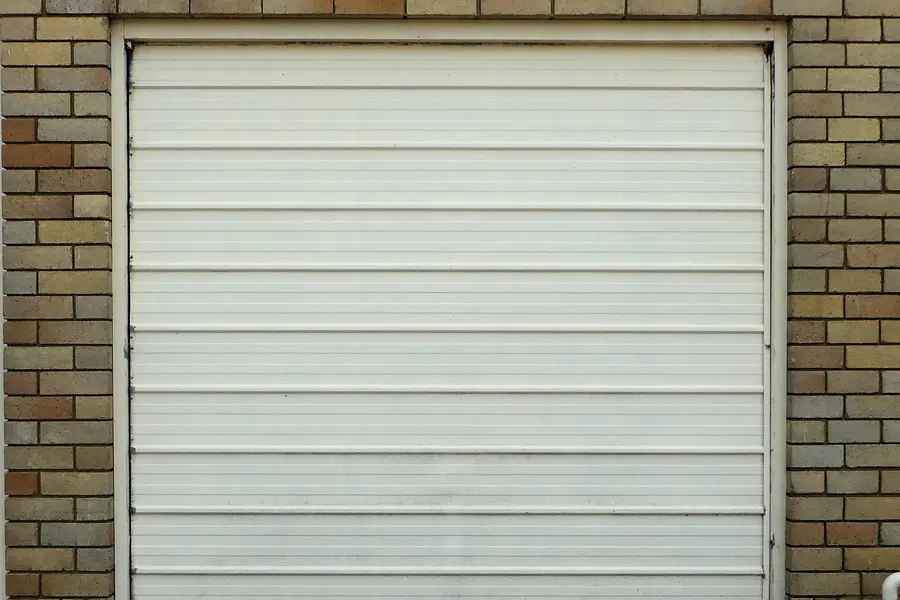
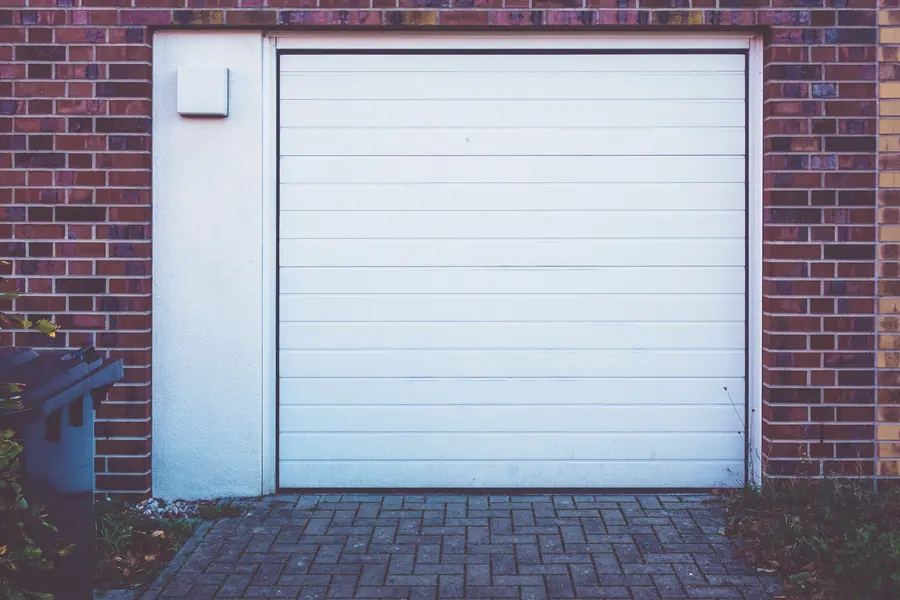
A weathered door with gaps at the frame compared with a door sealed tight in its opening
The "before" image shows a plain steel door in a brick wall, weathered and marked, its edges standing slightly proud of the masonry. There's nothing sealing the gap between door and brick. Air moves freely around a door like this, rain tracks in at the sides, and in winter you'd find a ridge of snow inside along each jamb.
The work illustrated is perimeter sealing done properly: the door adjusted so it closes evenly against the opening, new stop molding with flexible seals installed to both jambs and the header, corners closed, and the back edge caulked.
The "after" image shows a white sectional door sitting snugly in its brick opening, with clean, tight margins all round. Visually it's neater. Practically, it's a garage with far fewer drafts, no blown snow at the edges, less dust and fewer insects, and — on an attached garage — less cold reaching the rooms next door.
Illustrative exampleThese two photographs are licensed reference images chosen to show the kind of change this service makes. They are not a record of one specific Delafield Garage Door job.
Weatherstripping and the Wisconsin winter
No part of the country gives garage door seals an easier life, but ours is harder than most.
Cold makes vinyl brittle. Standard vinyl flaps lose their flexibility well before zero. They stop conforming to the door, and a knock from a shovel or a broom snaps them. Rubber and cold-rated vinyl stay supple.
Wind finds every gap. Homes on open ground toward Wales and Summit, and those facing across Nagawicka or Pewaukee Lake, take sustained winter wind. A gap you'd never notice in July becomes a jet of cold air in January.
Snow piles against the jambs. Drifting and shovelled snow sits against the bottom foot of the side stops for months. Wood molding rots there. PVC doesn't.
Ice bonds seals to the door. Melt and refreeze on the door face can glue an over-tight flap in place. Correct pressure and a wipe of silicone on the flap in the fall prevent it.
Sun does damage too. South- and west-facing doors get strong UV all year. It's sun that makes vinyl chalky and brittle; the cold just finishes it off.
Heat loss adds up. Over a heating season that runs from October into April, the leakage around a sixteen-foot door is considerable. Perimeter seals are among the cheapest energy improvements you can make to an attached garage, particularly alongside an insulated door.
Timing. Seals are best replaced in mild weather, when vinyl is flexible and caulk cures properly. Early fall is ideal. That said, we install them year-round; a leaking seal in January is still worth fixing in January.
DIY or professional?
Of all garage door jobs, this is one of the more approachable for a homeowner with a saw and a hammer, and we wouldn't talk anyone out of trying.
Where a professional earns the fee is in the things around the seal. Noticing that the door isn't closing tight because the track has shifted. Finding the soft spot in the jamb. Setting the flap pressure for winter, not summer. Matching the profile and color so it looks original. And replacing the bottom seal, checking the corners and adjusting the opener at the same visit, so the whole perimeter is done at once.
Weatherstripping questions
How long does garage door weatherstripping last?
It depends on the material and exposure. Standard vinyl may last five to ten years; less on a south- or west-facing door. Rubber and better-grade vinyl last longer.
What's the difference between weatherstripping and a bottom seal?
Weatherstripping seals the sides and top of the opening. The bottom seal is fixed to the door and seals against the floor. They're different parts and usually both need attention eventually.
Can weatherstripping be painted?
The rigid molding can be painted to match trim. Avoid painting the flexible flap; paint makes it stiff and can stick it to the door.
Why does my door stick to the weatherstripping in winter?
The seal is set too tight, or moisture has frozen between the flap and the door. Adjusting the stop for lighter contact solves it.
Will new weatherstripping make my garage warmer?
It reduces drafts, which often makes a noticeable difference. For the best result, combine it with a good bottom seal and, ideally, an insulated door.
Should the weatherstripping match my trim?
PVC stop comes in common colors such as white, almond, brown and sandstone, and can be painted. We'll match your trim as closely as possible.